 how-to
Calculate Moon Position in Lunar Mansions
Table of Contents
- What Are the 28 Lunar Mansions
- Understanding the Moon Position Calculator
- Step-by-Step: Calculate Moon Position Using Celestial Longitude
- Lunar Mansion Timing Guide for Daily Practice
- Natal Lunar Mansion Calculation and Personal Insight
- Common Mistakes When Calculating Moon Position
- Conclusion
- Frequently Asked Questions
Last Updated: September 18, 2026
What Are the 28 Lunar Mansions
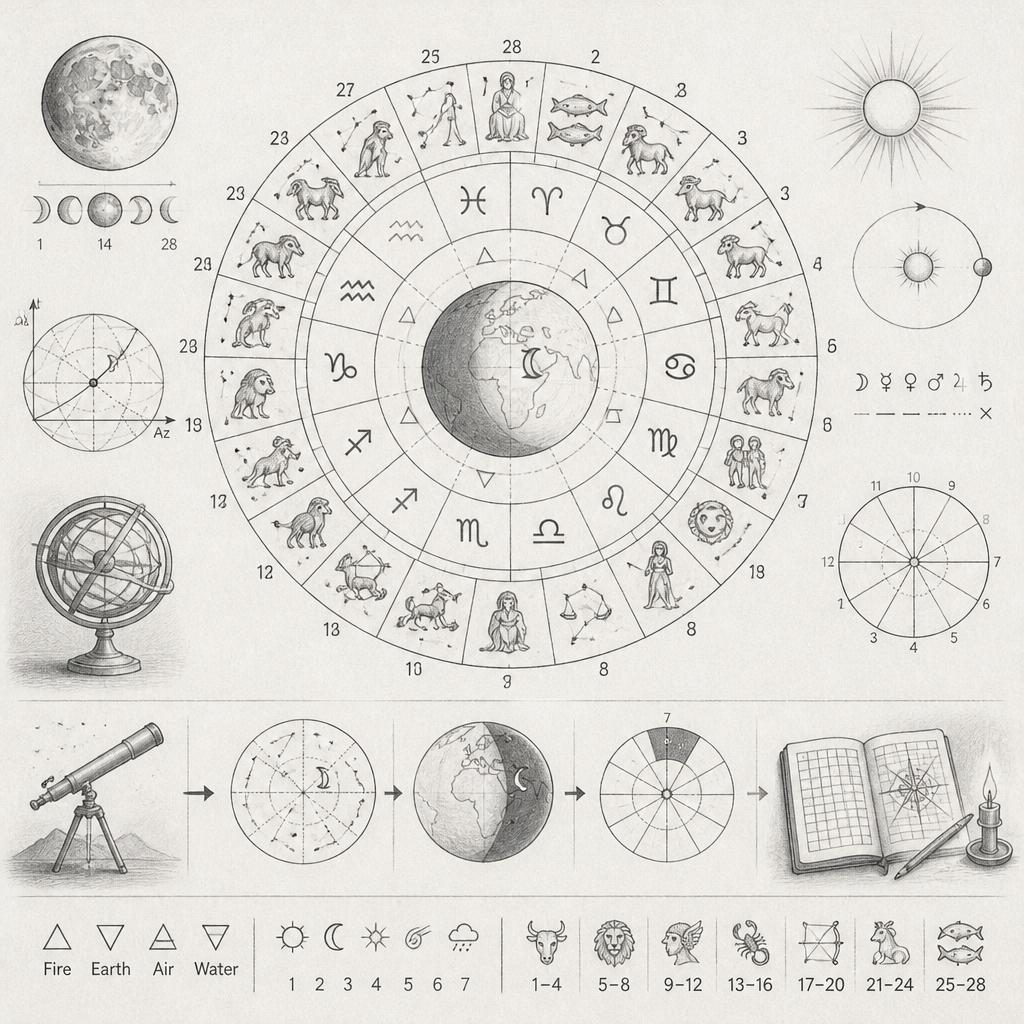
The 28 lunar mansions represent a classical system of celestial divisions that allows you to calculate moon position in lunar mansions throughout the Moon's monthly cycle. This ancient framework maps the Moon's journey across the ecliptic, the apparent path the Sun takes through the sky, dividing it into 28 equal segments.
Each mansion corresponds to a specific arc of celestial longitude, and together they form a complete lunar calendar. This system originated in Arabic and Islamic astronomy, documented extensively in medieval texts like the Picatrix, and remains one of the most precise methods for calculating the Moon's exact position at any given moment.
The Historical Foundation
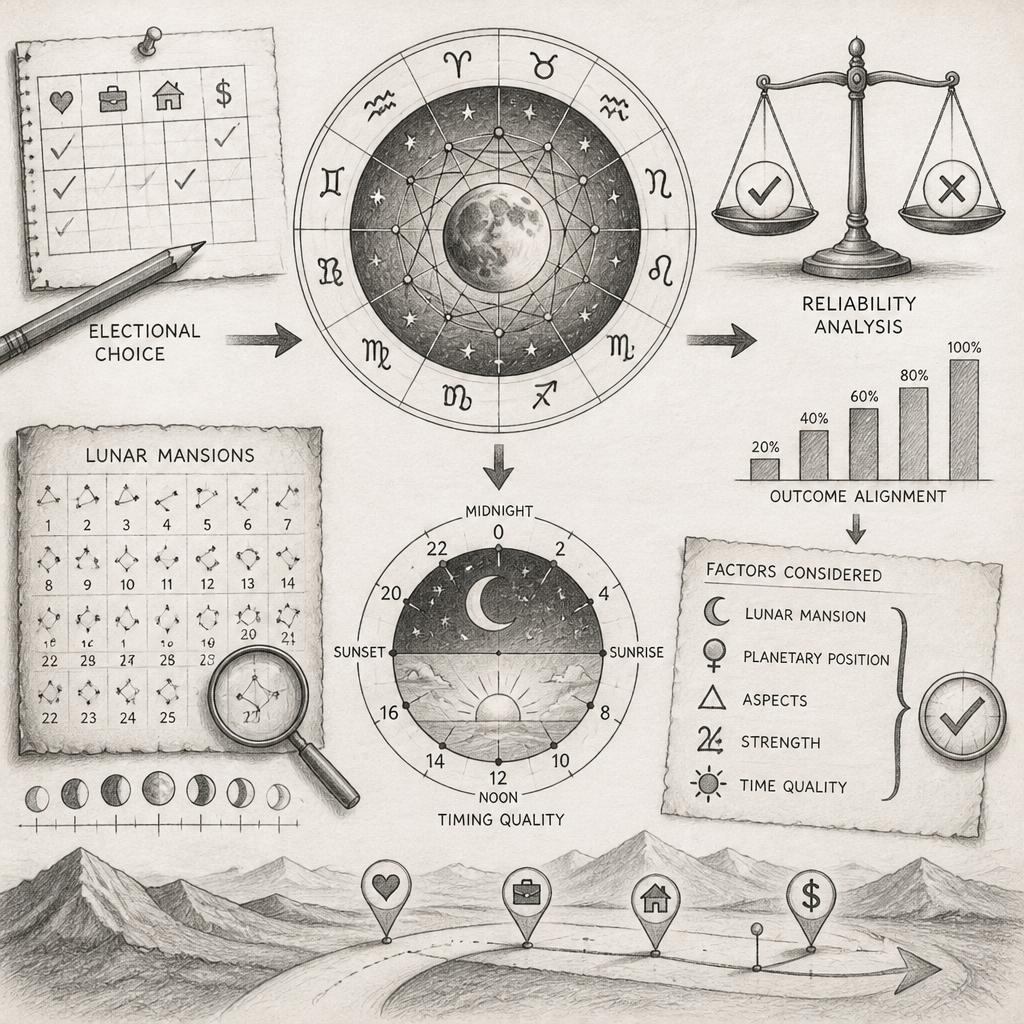
The roots of lunar mansion calculations run deep into medieval Islamic astronomy. Scholars and astronomers in the Islamic Golden Age developed this system as a practical tool for timing activities, rituals, and journeys according to the lunar cycle. The Picatrix, a foundational grimoire of classical timing wisdom, preserves much of this knowledge and provides guidance on how to use lunar mansion positions for electional timing, choosing optimal moments for specific activities.
What makes this system particularly valuable is its mathematical precision. Medieval astronomers understood orbital motion and calculated lunar mansion positions using ephemeris data, tables showing the exact positions of celestial bodies at specific times. This wasn't guesswork; it was rigorous astronomical observation translated into usable timing guidance.
How the Mansions Divide the Ecliptic
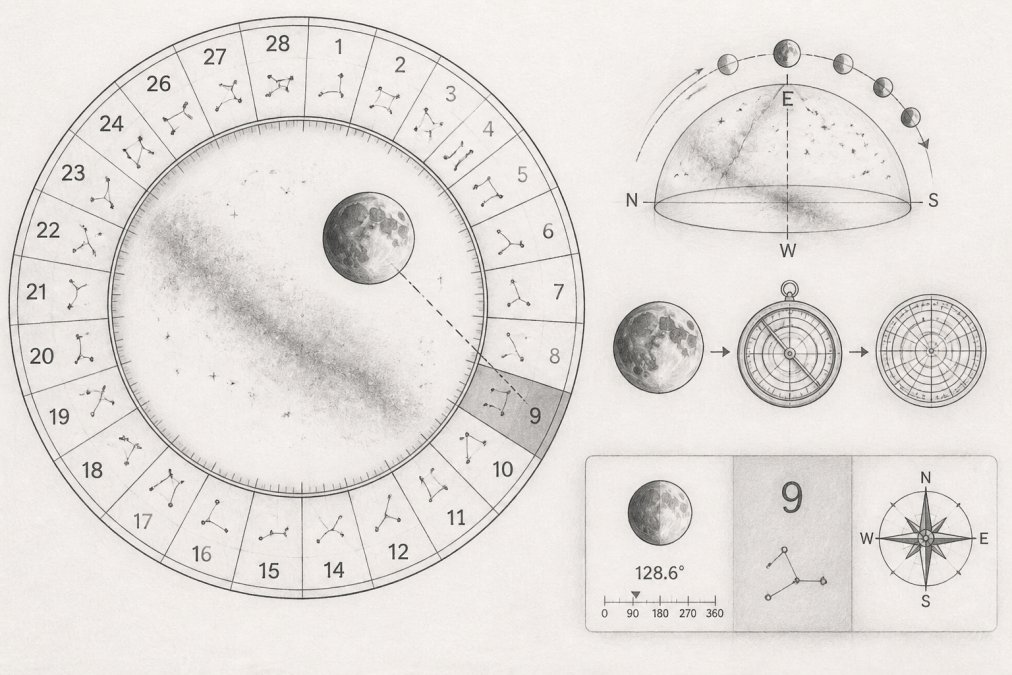
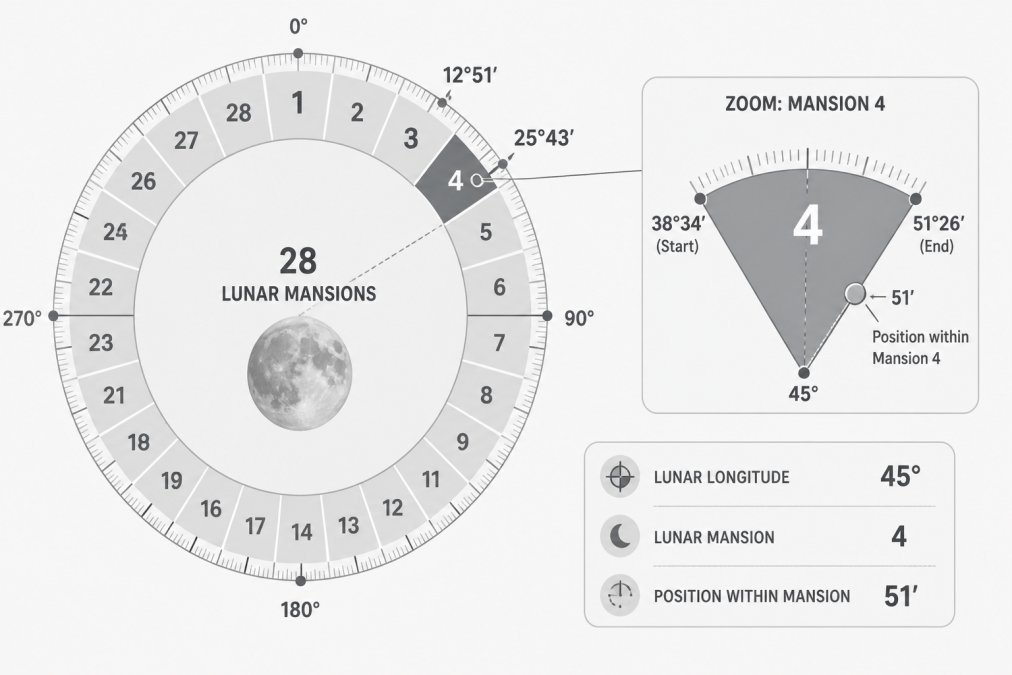
The ecliptic is divided into 360 degrees of celestial longitude. The 28 lunar mansions split this circle nearly evenly, with each mansion occupying approximately 12 degrees and 51 arc minutes (12°51'). This precise degree division ensures that as the Moon travels through its orbit, it spends roughly one day in each mansion.
Understanding this division is essential for accurate calculation. The zodiacal degrees and arc minutes matter because they determine which mansion the Moon currently occupies. A mansion calculator must track lunar longitude with precision to the arc minute to give reliable results.
Understanding the Moon Position Calculator
A moon position calculator serves a specific purpose: it translates astronomical data into usable information about which mansion the Moon currently occupies. The best calculators combine three essential elements: precise astronomical algorithms, real-time or historical ephemeris data, and a clear mapping system that shows users exactly where the Moon is in its cycle.
Mansions of the Moon provides a free, browser-based calculator that handles all of this automatically. Users input their date, time, and location, and the tool instantly returns the current lunar mansion number, the exact celestial longitude, and additional data like moonrise, moonset, and phase information. The interface pairs this data with unique generative artwork for each mansion, making the abstract concept of celestial longitude tangible and visually engaging.
The calculator runs entirely in the browser, meaning no data is stored and no account is required. This transparency addresses a common concern: users can verify the accuracy of calculations and understand exactly how the tool works.
Step-by-Step: Calculate Moon Position Using Celestial Longitude
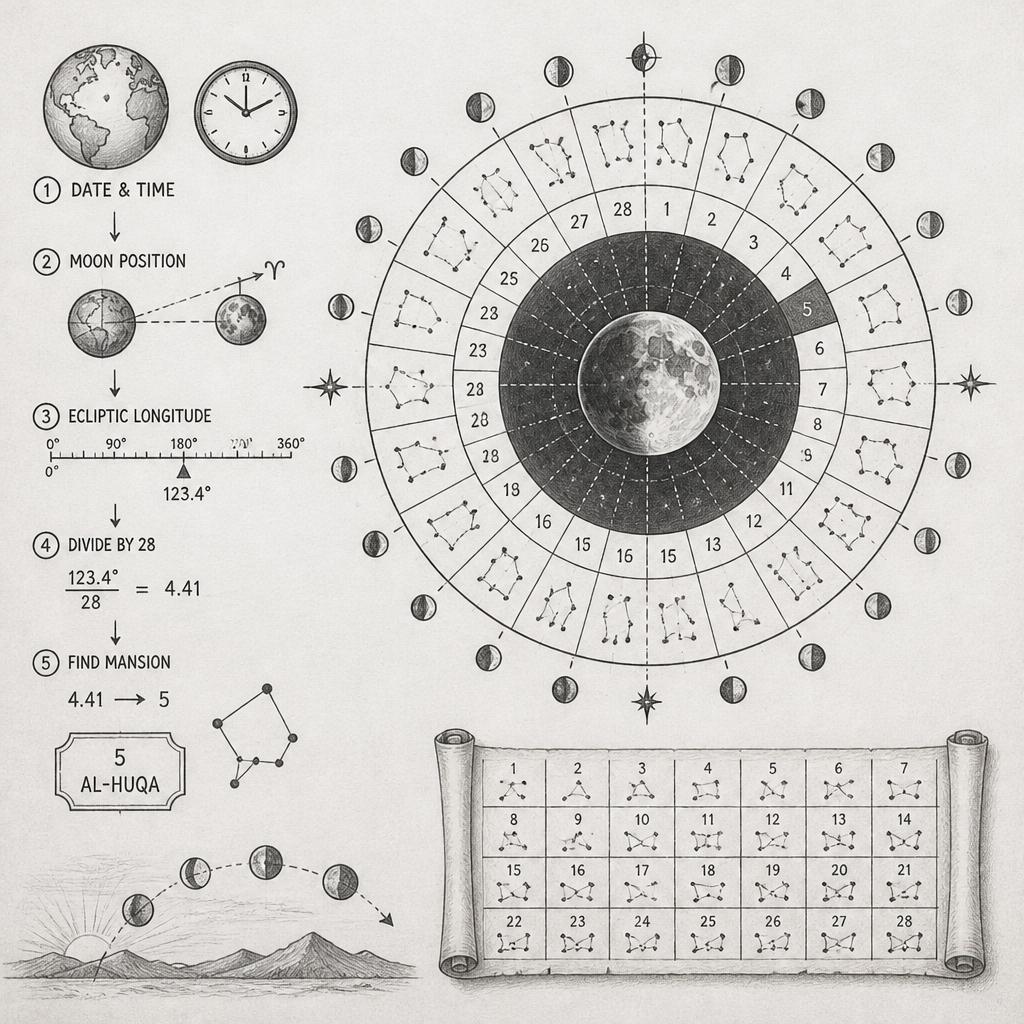
Calculating moon position in lunar mansions requires four distinct steps. Each builds on the previous one, moving from gathering raw data to identifying the specific mansion and its meaning for daily practice.
Step 1: Gather Your Date, Time, and Location Data
Start with three pieces of information: the exact date, the precise time, and the geographic location. Time must be as accurate as possible, ideally to the minute. Location requires latitude and longitude, though most calculators accept city names and convert them automatically.
For natal lunar mansion calculations, use your birth date, birth time, and birthplace. If you don't know your exact birth time, many birth certificates or hospital records contain this information. Even a few minutes of difference can shift the Moon's position slightly, so precision matters.
For tracking current moon position, use today's date and your current time zone. The calculator will adjust for daylight saving time automatically if you specify your location correctly.
Step 2: Determine Sidereal vs. Tropical Zodiac
This step separates casual users from serious practitioners. The sidereal zodiac and tropical zodiac differ in how they measure the ecliptic. The tropical zodiac uses the spring equinox as its reference point (0 degrees Aries). The sidereal zodiac uses the actual position of the fixed stars.
Lunar mansion calculations traditionally use the sidereal zodiac because it reflects the actual astronomical positions of celestial bodies. This is critical: using tropical zodiac coordinates will produce incorrect mansion assignments. Mansions of the Moon uses sidereal calculations by default, ensuring accuracy aligned with classical sources.
Step 3: Use Ephemeris Data to Find Lunar Longitude
Ephemeris data is the foundation of accurate calculation. An ephemeris is a table or dataset showing the exact positions of celestial bodies at specific times. Modern calculators access ephemeris data through astronomical algorithms that compute the Moon's position based on orbital mechanics.
The Moon's longitude is measured in degrees, arc minutes, and arc seconds from 0° to 360° along the ecliptic. A calculator must determine this value to the nearest arc minute for reliable mansion assignment. This is where precision matters: an error of even a few arc minutes can place the Moon in the wrong mansion.
Step 4: Map Longitude to Mansion Number and Degree Division
Once the calculator has the lunar longitude, it divides this value by approximately 12.857 (360 degrees ÷ 28 mansions) to determine which mansion the Moon occupies. The remainder tells you how far through that mansion the Moon has progressed.
For example, if the lunar longitude is 45 degrees:
- 45 ÷ 12.857 ≈ 3.5
- The Moon is in mansion 4 (counting from 1)
- It is halfway through that mansion
Lunar Mansion Timing Guide for Daily Practice
Understanding where the Moon is astronomically is only the first step. The real value comes from using lunar mansion positions to plan activities and time intentions according to classical guidance.
Tracking Daily Moon Transit Through the Mansions
The Moon transits one mansion approximately every 24 hours. Tracking this daily movement allows practitioners to align activities with specific lunar mansion meanings. Some mansions favor journeys, others support creative work, and still others are traditionally associated with rest and reflection.
Using Lunar Mansion Meaning for Activity Planning
Each of the 28 mansions carries traditional meanings rooted in classical sources. Some are associated with protection and safe travel, others with new beginnings, healing, or communication. The Picatrix and other medieval texts provide detailed guidance on the proper use of each mansion's timing.
Natal Lunar Mansion Calculation and Personal Insight
Your natal lunar mansion, the mansion the Moon occupied at your exact time of birth, carries personal significance. It represents a kind of lunar "birth mark" that some traditions associate with natural talents, emotional patterns, and life themes.
Common Mistakes When Calculating Moon Position
Several predictable errors can throw off lunar mansion calculations. Recognizing these mistakes helps you verify results and troubleshoot when different tools give conflicting answers.
Conclusion
Calculating moon position in lunar mansions connects ancient astronomical wisdom to modern precision. The 28 mansions divide the ecliptic into precise celestial segments, each with classical timing associations rooted in medieval Islamic astronomy and texts like the Picatrix. Understanding how to map lunar longitude to the correct mansion opens the door to practical electional timing, choosing optimal moments for journeys, new projects, healing work, and other intentions.
Frequently Asked Questions
How do I calculate my moon position in the lunar mansions?
To calculate moon position in lunar mansions, you need your birth date, time, and location. Use an ephemeris to find the Moon's celestial longitude at that moment, then convert it to sidereal zodiac degrees. Divide the ecliptic into 28 equal segments of approximately 12 degrees and 51 arc minutes each. Your lunar longitude falls into one of these 28 mansions. A moon position calculator automates this process by handling the astronomical calculations instantly.
What is the difference between tropical and sidereal zodiac when calculating moon position?
The tropical zodiac is based on the spring equinox and shifts with Earth's precession, while the sidereal zodiac is fixed to actual star positions. Lunar mansion systems use the sidereal zodiac, which means your calculated moon position will differ from tropical zodiac placements by roughly 24 degrees. When calculating moon position in lunar mansions, always use sidereal coordinates to ensure accurate mansion assignment and proper alignment with classical Islamic astronomy sources like the Picatrix.
What are the 28 lunar mansions and how are they named?
The 28 lunar mansions are stations that divide the Moon's orbital path into equal segments, each spanning approximately 12 degrees and 51 arc minutes of celestial longitude. These mansions originate from medieval Islamic astronomy and classical sources. Each mansion has a traditional name reflecting its astrological meaning and historical significance. The mansions are numbered 1 through 28 and follow the Moon's transit around the ecliptic, completing one full cycle approximately every 27.3 days. Understanding what the 28 lunar mansions represent helps you apply lunar mansion timing to your personal practice.
How can I use lunar mansion timing to plan my daily activities?
Track the Moon's daily position through the mansions using a moon position calculator. Each mansion carries specific timing guidance from classical sources like the Picatrix, certain mansions favor beginnings, journeys, or spiritual work, while others support rest or completion. By checking which mansion the Moon occupies each day, you can align activities like starting projects, travel, rituals, or important decisions with favorable lunar mansion energy. This electional timing approach helps you work with natural lunar cycles rather than against them.