 how-to
How to Interpret Generative Astrological Art: A 2026 Guide
Table of Contents
- Start With the Prompt, Not the Picture
- A Step-by-Step Method for Reading Astrological Art
- Lunar Mansion Symbolism in Generated Imagery
- Generative Art Interpretation Examples: Two Worked Readings
- Moon Phase Journaling Prompts for Astrological Art
- Choosing an Astrology Art Generator That Gives You Something to Read
- What Generative Astrological Art Cannot Tell You
- Frequently Asked Questions
Last Updated: October 18, 2026
Start With the Prompt, Not the Picture
To interpret generative astrological art, read the prompt before you read the image. The prompt is the source code.
Here is the core tension. A generated image looks authoritative. It has color, symmetry, and mood. None of that proves it carries meaning.
The prompt holds the actual intent:
- Which mansion or placement the image was built around
- Which symbols were requested
- Which style and palette were specified
- Which model produced the output
Most guides skip this step. They jump straight to "what does the picture mean" without asking what the picture was asked to be.
A Step-by-Step Method for Reading Astrological Art
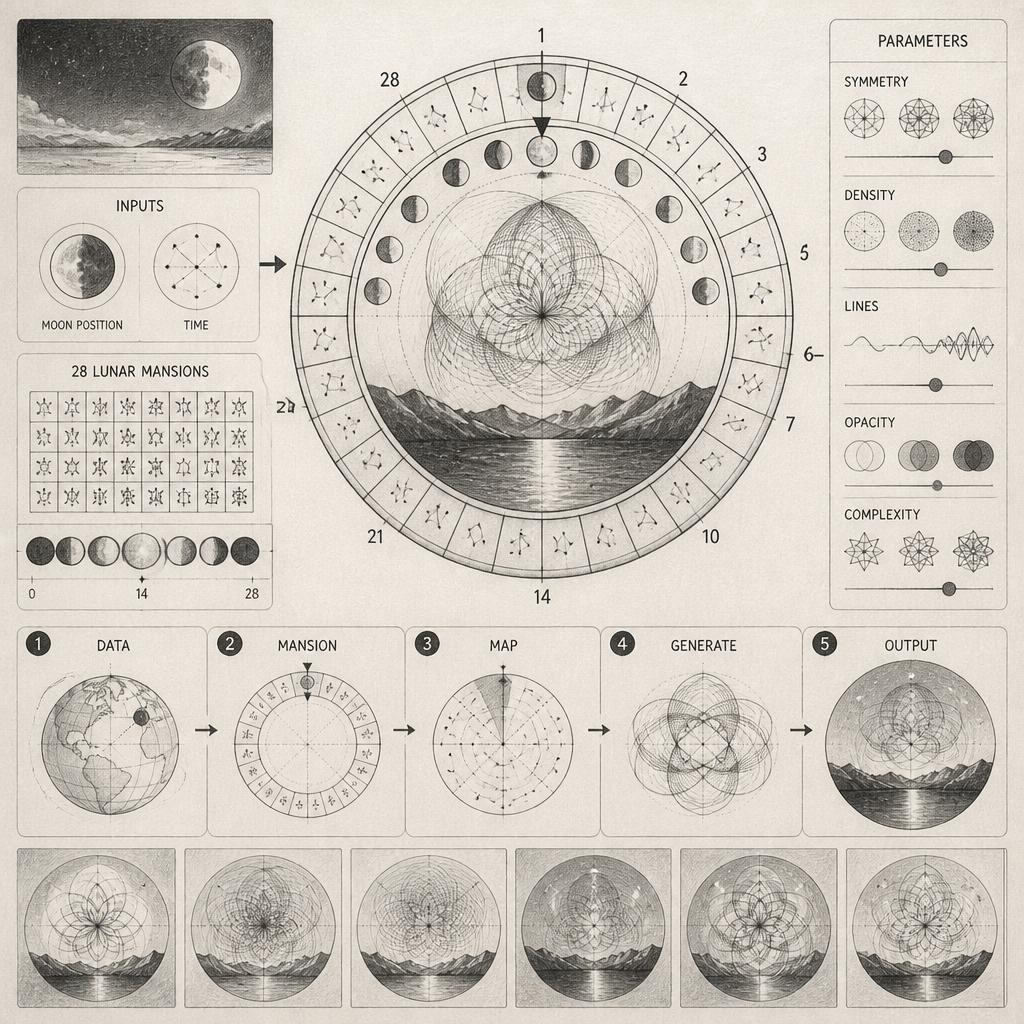
Reading astrological art is a five-step process: record the prompt and placements, inventory the visual elements, match motifs to mansion symbolism, flag AI artifacts, and write a provisional interpretation.
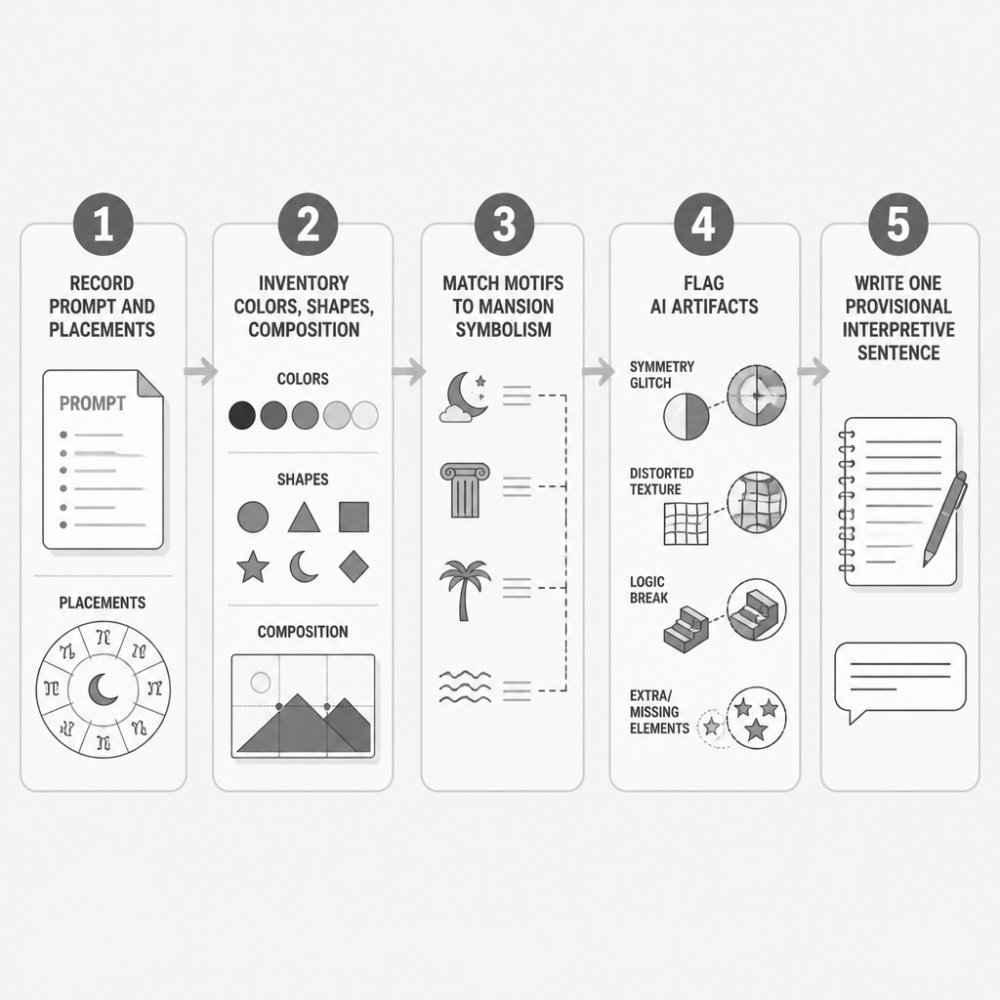
Step 1: Note the Chart Placements Behind the Image
Write down what the image was generated from before you look at it. That means the mansion, the Moon phase, and any placement the prompt referenced. A Moon sign or Ascendant may shape the mood of a prompt, but the mansion is the anchor.
Keep a simple record:
- Mansion name and number
- Moon phase at generation
- Prompt text, word for word
- Model and settings used
This record is your baseline. Every later claim gets checked against it.
Step 2: Build a Visual-Symbol Glossary
A visual-symbol glossary is a personal reference list that assigns meaning to recurring colors, shapes, and motifs in generated images. Build it once, then reuse it.
Start with four columns: element, common appearance, traditional association, and confidence level. Add entries as you notice patterns.
Here is a starter glossary you can copy into a notebook or spreadsheet.
| Element | Common appearance | Association to test | Confidence |
|---|---|---|---|
| Deep blue | Night sky, still water | Quiet, inward, receptive | Medium |
| Gold or amber | Glow, halo, warm light | Illumination, clarity, exposure | Medium |
| Red or rust | Fire, soil, heat | Urgency, drive, grounding | Low |
| Circular forms | Moons, rings, orbits | Cycles, return, completion | High |
| Spiral | Coils, whirls, winding paths | Movement, unfolding, change | Medium |
| Vertical line | Pillars, trunks, rays | Structure, ascent, direction | Medium |
| Horizontal line | Horizons, ground, water | Stability, rest, foundation | High |
| Threshold | Doorways, gates, bridges | Transition, decision, passage | Medium |
| Water | Rivers, pools, rain | Emotion, flow, memory | Medium |
| Stone | Cliffs, blocks, ruins | Endurance, weight, patience | High |
| Winged forms | Birds, feathers, flight | Release, message, distance | Low |
| Eyes or gaze | Faces, watchers, openings | Attention, witness, scrutiny | Low |
| Broken geometry | Melted edges, split shapes | Usually an artifact, not a symbol | High |
| Extra limbs or objects | Duplicated hands, twin moons | Usually an artifact, not a symbol | High |
Two rules keep the glossary honest.
Step 3: Separate Symbolism From AI Artifacts
Generative models add things nobody asked for. Extra hands, melted geometry, floating objects, and invented glyphs are artifacts, not messages. The test is simple: if an element does not trace back to the prompt or the mansion tradition, label it an artifact and set it aside.
This is where most interpretations go wrong. A strange shape feels meaningful because it is strange. It usually is not.
Step 4: Match Motifs to Mansion Symbolism
Take your inventory list and hold it against the mansion named in the prompt record. Note three outcomes: agreement (the motif fits the mansion's character), drift (the motif is plausible but vague), and invention (the motif has no basis in the mansion tradition). Agreement supports a reading. Drift means the prompt was underspecified. Invention means the model filled the gap on its own.
Step 5: Write One Provisional Sentence
Close the session with a single sentence that starts with "This image suggests..." and cites the strongest agreement you found. One sentence forces you to commit to the clearest signal and prevents the vague, everything-means-something readings that make generative art hard to take seriously.
Lunar Mansion Symbolism in Generated Imagery
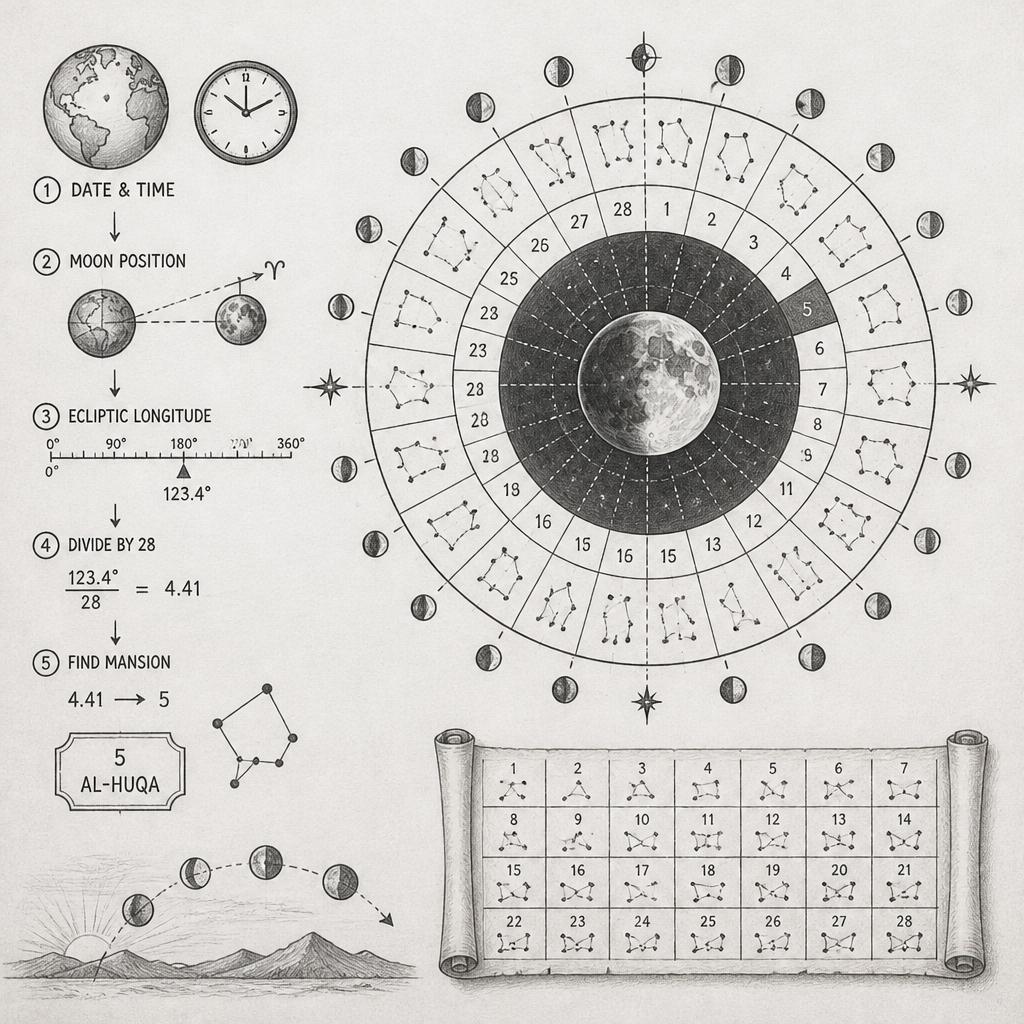
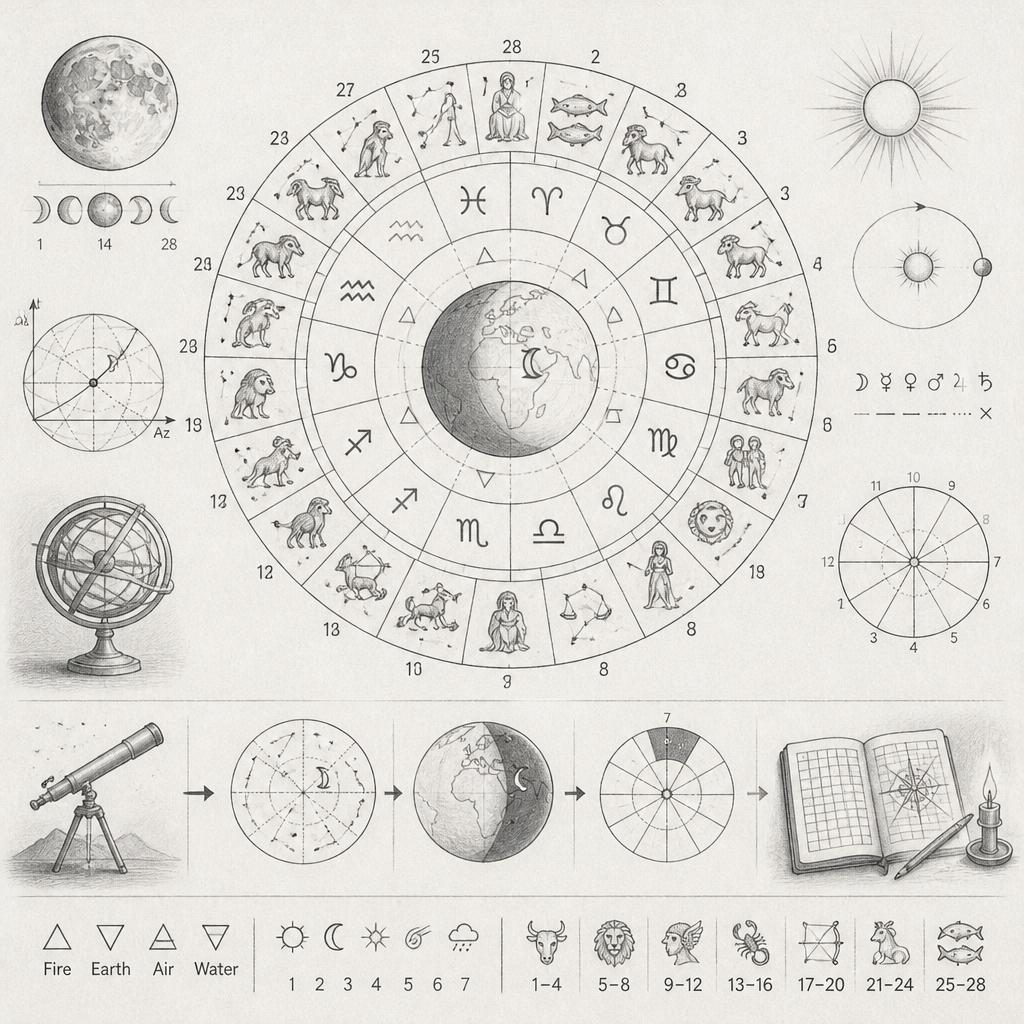
Lunar mansion symbolism gives generated imagery its structure. The 28 mansions of traditional Islamic astronomy each carry their own associations, and a good generator ties the artwork to the mansion rather than to a generic celestial theme. The 28 Lunar Mansions reference lays out each one.
When reading an image, ask which mansion it was built for, then check whether the visual motifs match that mansion's character. Mismatches are common and worth noting. They usually mean the prompt was too vague.
A practical reading order:
- Identify the mansion from the prompt record
- List the motifs the image actually shows
- Compare the two lists
- Note agreement, drift, and invention
Agreement supports an interpretation. Drift suggests the model filled gaps. Invention means the model added something the tradition never claimed.
Generative Art Interpretation Examples: Two Worked Readings
Generative art interpretation examples work best when they show the full chain: prompt, placements, image, reading. Here are two worked readings that follow the five-step method, with the prompt text included so you can see exactly where each interpretive claim comes from.
Reading One: A Mansion of Steadiness
Prompt record. "A quiet earth-toned landscape for a mansion of steadiness and slow beginnings. Low horizon, heavy stone forms, muted browns, no figures.
Placements. Mansion tied to steadiness; waxing crescent Moon.
Inventory. Low horizon, stacked stone forms, brown and ochre palette, one small blurred shape at the lower right edge.
Find Your Natal Moon Mansion →
Match. All three named motifs, low horizon, stone, brown palette, align with the mansion's steady character.
Artifacts. The blurred shape appeared in only one of three outputs from the same prompt, so it is flagged as noise and not read as a symbol.
Reading Two: A Mansion of Movement
Prompt record. "A bright open sky with a winding path for a mansion of movement and travel.
Placements. Mansion tied to movement and travel; full Moon.
Inventory. Bright sky, winding path, distant hills, two moons in the upper left.
Match. The path and sky fit the travel theme. The full Moon fits the named phase.
Artifacts. The second moon appeared in two of three outputs, which is a warning sign rather than a clean artifact.
What the Two Readings Show
The pattern holds across both. What matches the prompt earns meaning. What appears once and matches nothing gets set aside. What appears repeatedly but matches nothing gets flagged as a prompt ambiguity to fix next time, not as a symbol to interpret.
A third pattern is worth naming: the same element can shift meaning depending on the mansion. A winding path in a travel mansion reads as motion; the same path in a mansion of stillness would read as drift, because the prompt and the mansion disagree.
Moon Phase Journaling Prompts for Astrological Art
Moon phase journaling prompts turn a generated image into a reflection exercise. The idea is to write a short entry beside each image, tying the visuals to the phase under which it was made. This builds a personal archive you can read back over months.
Try these prompts:
- What did the prompt ask for, in one sentence?
- Which three visual elements stand out first?
- Which of those trace back to the mansion tradition?
- Which look like model artifacts?
Keep entries short. Five lines is enough. The value comes from repetition, not length.
Choosing an Astrology Art Generator That Gives You Something to Read
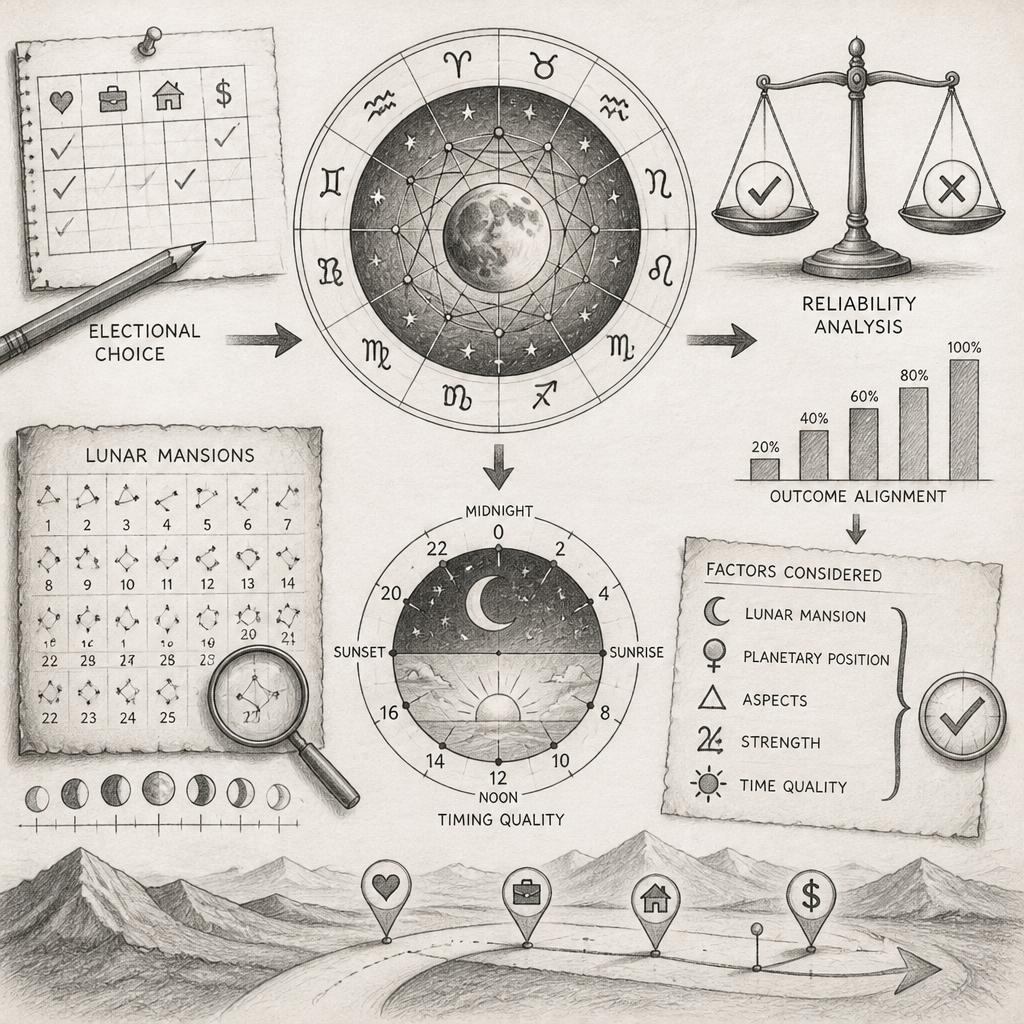
An astrology art generator is only useful if it gives you something to interpret. That means a visible prompt, a named mansion, and artwork tied to a specific placement rather than generic celestial decoration.
Use this checklist before committing to any generator:
- Does it show the prompt or the placement behind each image?
- Does the artwork change meaningfully by mansion or phase?
- Can you save or export the prompt text?
- Are the underlying calculations explained or sourced?
- Does it label which mansion each image belongs to?
Moon Mansion Calculator was built around this idea. Readers who want to plan around the lunar cycle can also use the Sacred Calendar and the Natal Deep Report to anchor readings in their own placements.
What Generative Astrological Art Cannot Tell You
Generative astrological art cannot predict events, confirm a placement, or settle a question about your life. It is an interpretive aid, not an oracle. The model does not know the tradition.
That gap produces three limits worth naming:
- Bias. Models repeat whatever visual clichés dominated their training, which skews toward certain palettes and symbols.
- Non-determinism. The same prompt produces different images each run, so no single output is definitive (Non-Determinism of “Deterministic” LLM Settings).
- No verification. An image cannot confirm that a calculation is correct. Only the underlying astronomy can do that.
Treat every reading as provisional.
The honest position is this: generative art is a reflective guide. It helps you notice patterns and ask better questions. It does not answer them for you.
Reading generative astrological art well comes down to discipline: record the prompt, inventory the visuals, filter the artifacts, and keep every interpretation provisional. The Activity Timing Advisor adds timing guidance for planning around the lunar cycle. Find your natal mansion and start building a reading record you can trust.
Frequently Asked Questions
What is generative astrological art, and how is it different from a regular illustration?
Generative astrological art is imagery produced by an AI model from a text prompt that encodes chart data, such as a lunar mansion, Moon phase, or planetary placement. Unlike a hand-drawn illustration made to a fixed brief, the model assembles the picture from patterns learned across many images, so two runs of the same prompt can differ. That variability is the point: the image is a starting surface for interpretation, not a fixed diagram. Treat it as a reflective guide, record the prompt and placements that produced it, and read the visual choices as prompts for your own thinking rather than as decoded facts.
How do lunar mansion symbolism and Moon phase journaling prompts work together?
Lunar mansion symbolism gives the image its subject: each of the 28 mansions carries classical associations from sources such as the Picatrix, and a generated picture built around one mansion tends to repeat a small set of motifs. Moon phase journaling prompts give you the question to ask of that picture. Pair them by writing the mansion's traditional theme at the top of the page, then answering a phase-appropriate prompt underneath, such as what to release during a waning Moon. The image becomes the evidence you describe, and the prompt becomes the question you answer.
Can AI-generated astrological art carry personal meaning, or am I reading into random noise?
Both things happen at once, and knowing which is which is the skill. The model has no knowledge of your life, so any personal resonance comes from you matching motifs to your own circumstances. That is legitimate reflective work, but it is not prediction. Keep a simple test: if a detail would appear in almost any image from that prompt, treat it as generic style; if it recurs across several generations of the same mansion, treat it as a stable motif worth journaling about. Mark your conclusions as provisional and revisit them after the next Moon phase.
What should I check before trusting an astrology art generator's output?
Check three things. First, whether the tool states the astronomical basis for its placements, since a picture is only as meaningful as the chart data behind it. Second, whether it shows the mansion name and phase alongside the image, so you can verify the symbolism yourself against a reference. Third, whether the artwork is tied to the actual current or natal position rather than a decorative rotation. Moon Mansion Calculator publishes its mansion reference and pairs each of the 28 mansions with its own generated artwork, which makes that verification straightforward.