 listicle
Free Electional Astrology Timing Calculator Tools
Table of Contents
- What Electional Astrology Timing Calculators Do
- Moon Mansion Calculator: Lunar Mansions and Classical Timing
- Quick Comparison of Free Electional Tools
- Free Electional Astrology Software Ranked by Use Case
- Using a Moon Phase Calculator to Find Your Natal Mansion
- How to Choose the Right Free Timing Calculator for Your Practice
- Frequently Asked Questions
Last Updated: October 12, 2026
What Electional Astrology Timing Calculators Do
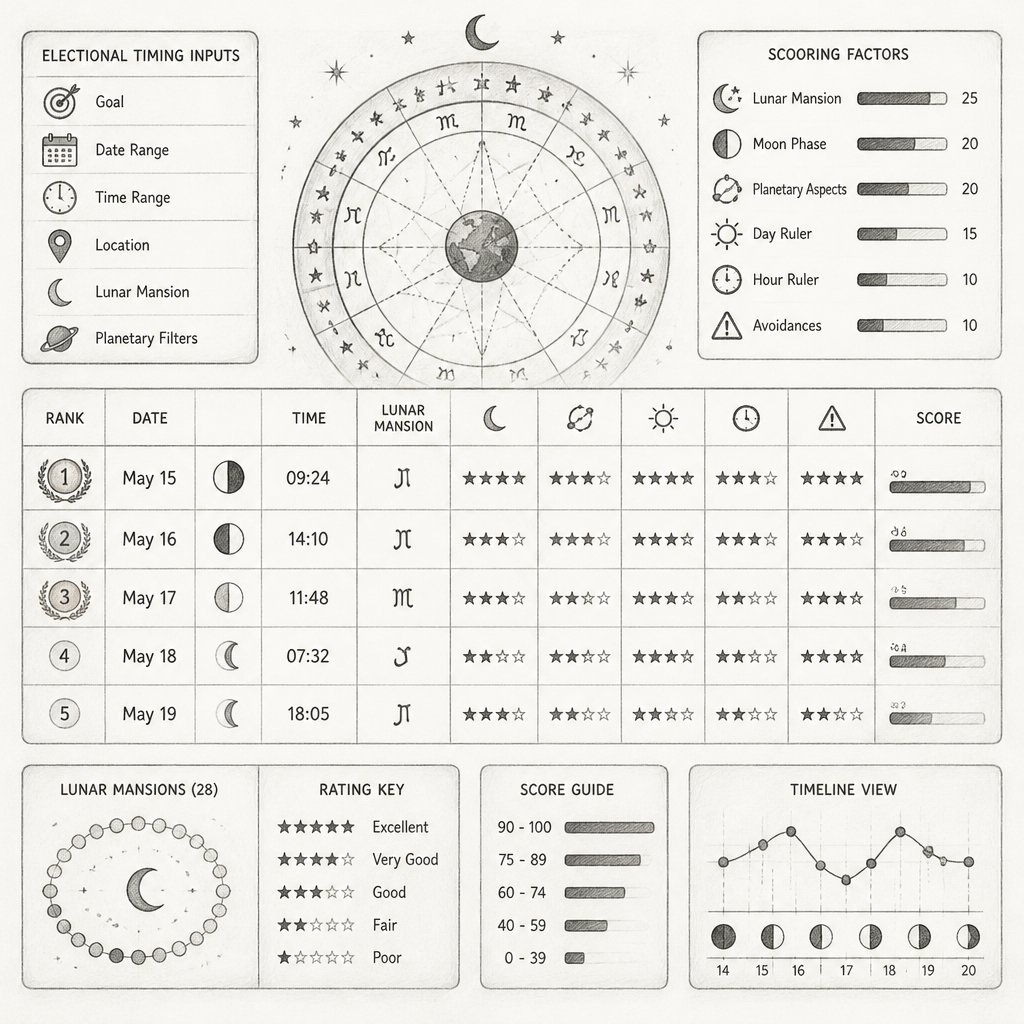
An electional astrology timing calculator identifies favorable moments for specific activities by analyzing planetary positions, lunar phases, and celestial conditions. Rather than predicting events, these calculators help practitioners select optimal timing for planned actions, launching a business, scheduling travel, or starting a project.
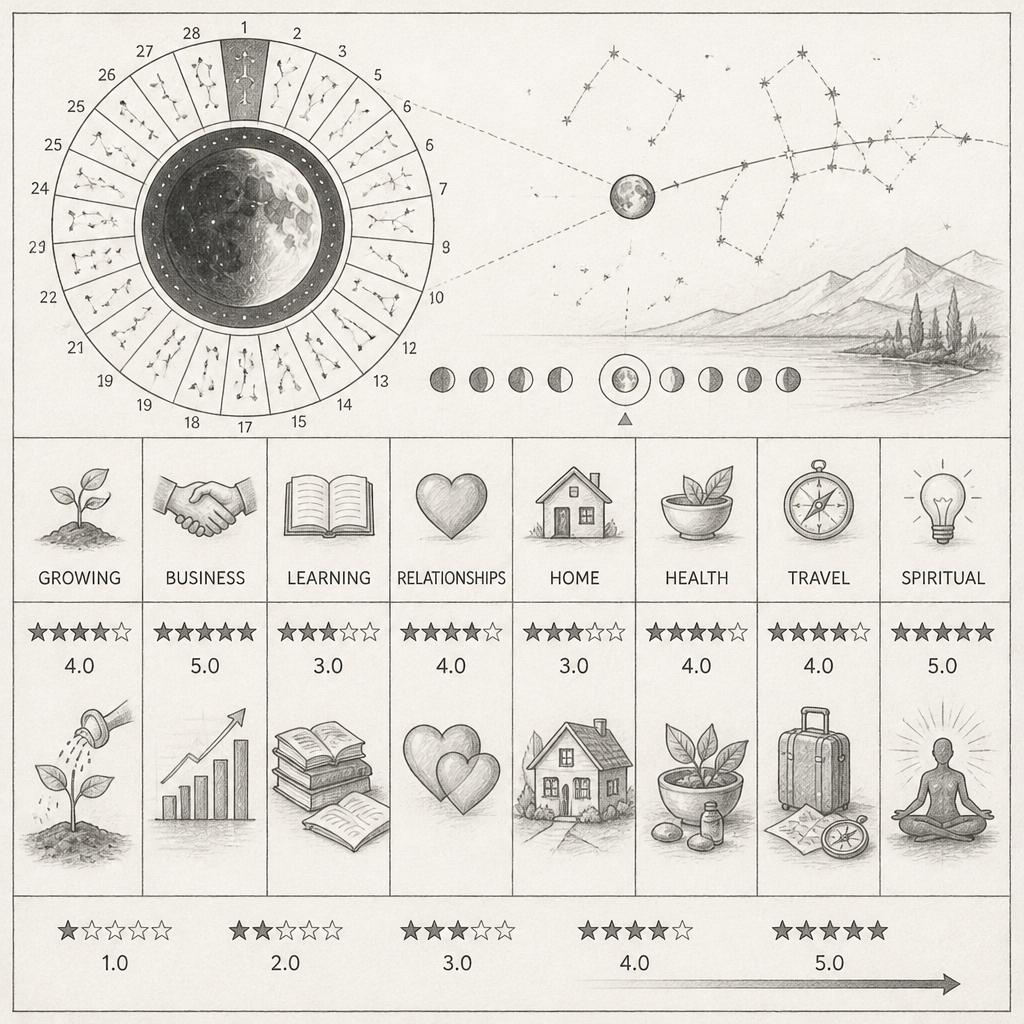
The foundation of electional timing comes from classical Islamic astronomy and texts like the Picatrix, which map the Moon's path through 28 lunar mansions, each carrying distinct qualities that influence the success of activities aligned with its timing. Modern calculators automate this system, translating astronomical data into actionable guidance.
Most tools accept a date range and activity type, calculate planetary positions, and return scored recommendations. The best add precise time-entry, location-based calculations, and clear interpretation of which moments rank highest.
Moon Mansion Calculator: Lunar Mansions and Classical Timing
Moon Mansion Calculator is a free, browser-based platform that maps the Moon's current position across the 28 lunar mansions of traditional Islamic astronomy. It requires no sign-up, making it accessible to beginners and experienced practitioners.
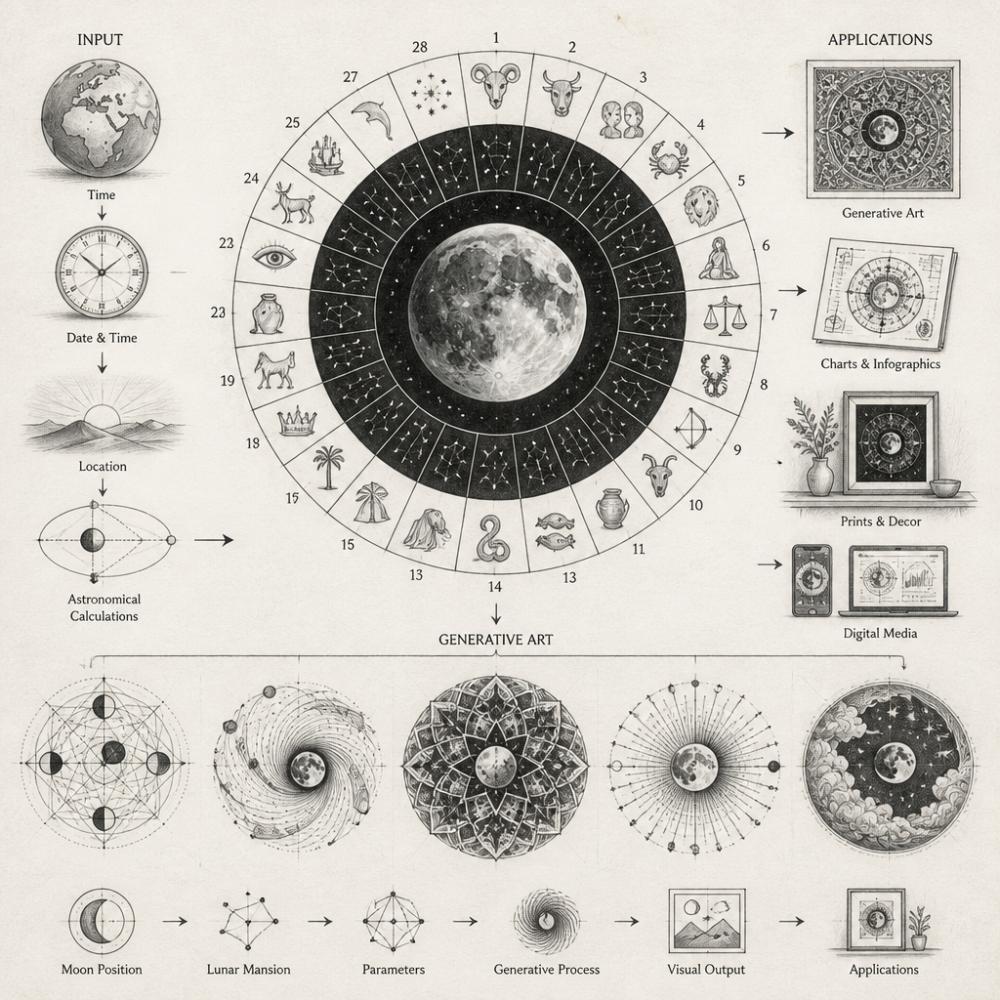
The platform combines precise astronomical algorithms with classical timing guidance drawn from the Picatrix. Each of the 28 lunar mansions is paired with unique generative artwork, and users can calculate their natal lunar mansion, the mansion the Moon occupied at their birth, and track the lunar return.
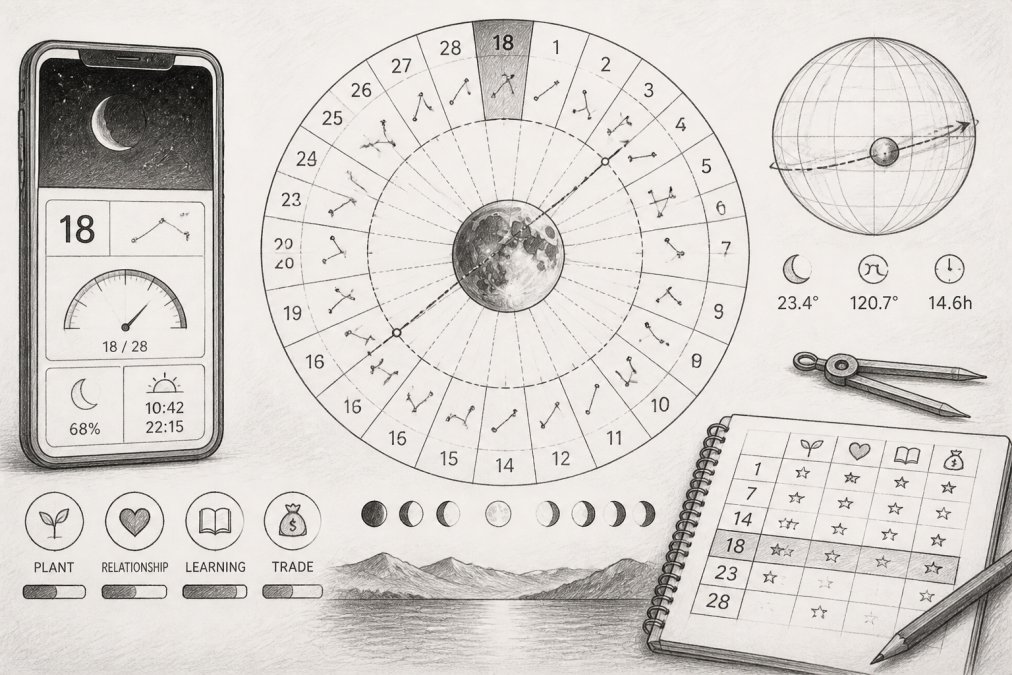
Moon Mansion Calculator provides moonrise and moonset times, current phase and illumination percentage, and the Moon's precise position within its current mansion. Its strength is integrating Islamic astronomical tradition with modern interface design.
Quick Comparison of Free Electional Tools
Most roundups of free timing calculators list birth-chart generators and general apps, which is not useful if you actually need to elect a time.
| Tool | Free Tier | Registration Required | Time Increment | Location Handling | Export Options | Best For |
|---|---|---|---|---|---|---|
| Moon Mansion Calculator | Fully free | No | Mansion-level (lunar day) | City or coordinates, auto time zone | On-screen only | Lunar mansion integration |
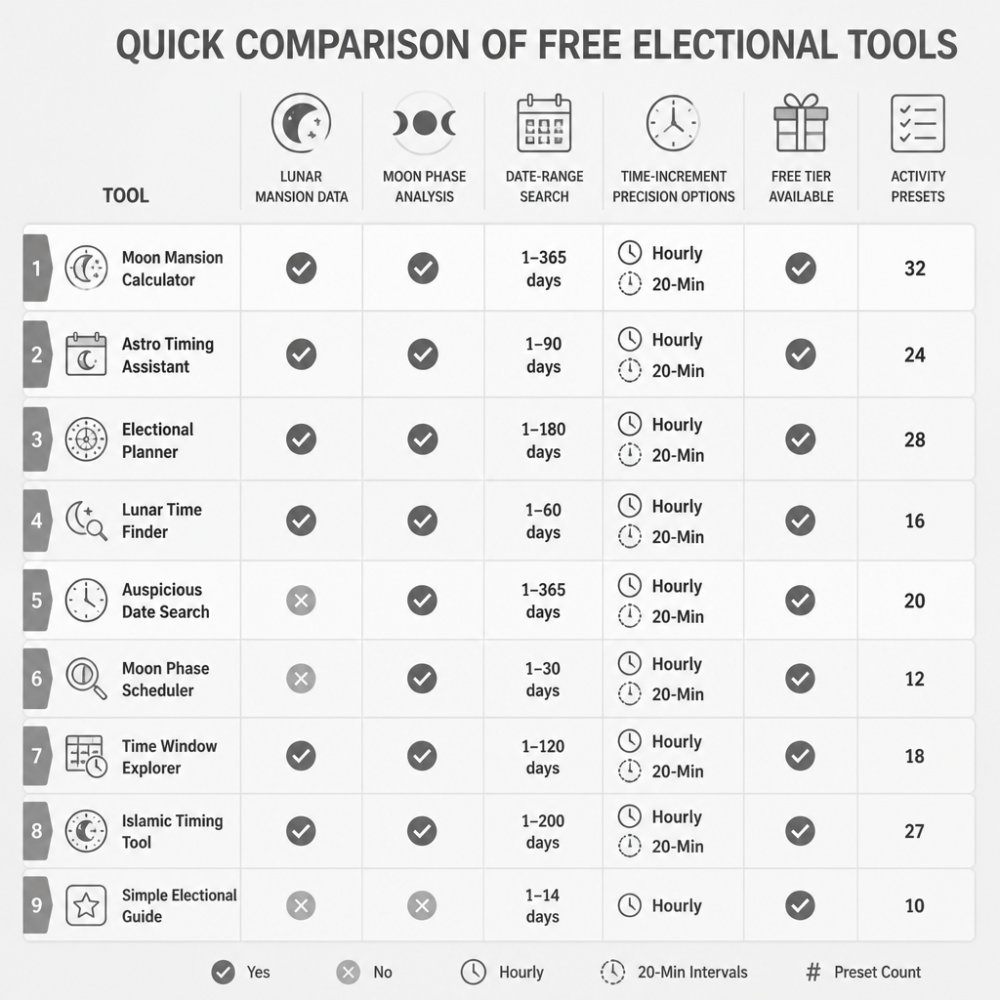
Some tools focus on Moon phases and aspects, while others integrate natal chart data or Islamic mansion systems. A few offer 20-minute increments; others work at daily or hourly resolution. Beginners benefit from simple scoring; practitioners with classical training may prefer tools aligned with Islamic astronomical tradition.
What the Table Does Not Tell You
Three things matter more than any feature checklist, and none of them show up in a comparison grid:
1. Whether the tool is actually electional. A birth-chart calculator tells you where the Moon was on a date. An electional tool tells you whether that date is good for a specific activity. If a tool does not ask what you are planning, it is not electional, no matter how it is marketed.
2. Whether "free" means free. Moon Mansion Calculator returns results without an account.
3. Whether the output is portable. Almost every tool here shows results on-screen only, so saving or sharing a candidate chart means taking a screenshot.
Free Electional Astrology Software Ranked by Use Case
For Beginners: Simple Moon Phase Analysis
Astrology Readings Online and Astrolium both strip electional timing to its essentials, making them ideal entry points. Astrology Readings Online evaluates Moon phases and aspects across a date range, while Astrolium assigns numerical scores (0-100) and letter grades (A-F) across 12 common activities.
The tradeoff is depth. Neither tool explains the reasoning behind its scores or integrates classical mansion systems. They answer "Is next Tuesday better than Wednesday?" quickly, but fall short for anyone wanting to understand why a moment aligns with their intention.
For Event Planning: Date-Range Comparison
Augurine and 12andus both excel at comparing multiple dates within a chosen window. Augurine frames its search around specific event types, weddings, business launches, travel, helping users think about timing in practical terms.
12andus evaluates times at 20-minute intervals rather than daily, which matters when choosing between specific hours on the same day. Both accept location input, so calculations reflect the exact coordinates where the event occurs.
The limitation: neither integrates Islamic mansion systems or explains classical timing principles. They work within a modern framework focused on planetary aspects and lunar phases, so practitioners invested in Picatrix-based timing get useful date-finding but lack mansion-level granularity.
For Precision Timing: Minute-Level Accuracy
The Best Time (from Astro.com) and NatalChart.AI Electional Astrology both support precise time selection. The Best Time uses a question-based framework: you specify your intention and time window, and it identifies optimal moments. NatalChart.AI personalizes recommendations by incorporating your natal chart.
Astrology API serves developers who want to integrate electional timing into custom workflows. It returns scores from 0-100, includes 34 activity presets, and provides a calendar heatmap showing which days rank highest. The free tier allows 50 requests; paid tiers unlock higher usage.
These tools demand more engagement, The Best Time requires a clear intention, NatalChart.AI accurate birth data, Astrology API basic technical comfort. The payoff is timing refined to the minute.
Find Your Natal Moon Mansion →
Using a Moon Phase Calculator to Find Your Natal Mansion
Finding your natal lunar mansion, the mansion the Moon occupied at your birth, requires three inputs: birth date, birth time, and birth location. Moon Mansion Calculator accepts all three and returns your natal mansion instantly.
If you don't have your exact birth time, many practitioners estimate the nearest hour or check their birth certificate. Location matters because the Moon's position varies slightly depending on where on Earth you stood. Enter your city or coordinates, and the calculator adjusts for time zone automatically.
Once you have your natal mansion, you can track when the Moon returns to that position each lunar month. This cycle, roughly 27-28 days, marks a moment of personal significance, many practitioners use it to set intentions or align new beginnings with their natal blueprint.
How to Choose the Right Free Timing Calculator for Your Practice
The best tool depends on your astrological background, use case, and need for precision. But choosing a tool is only half the job, the other half is knowing how to use it. Below is a practical workflow that works with any tool above.
A Practical Electional Workflow
Step 1: Define the event precisely. "Start a business" is too vague. "Sign the operating agreement for a new LLC at a physical office" is specific enough to elect.
Step 2: Set a realistic date range. Most free tools cap the search window; two weeks is usually enough to find a strong candidate. If your event is fixed, you are analyzing rather than electing, use a tool that accepts a single date and time.
Step 3: Screen candidate charts on the Moon first. The Moon is the fastest-moving body and the one most electional systems weight most heavily. Check three things before anything else:
- Lunar phase. Waxing Moon for growth-oriented events (launches, beginnings, contracts). Waning Moon for endings, closures, and release.
- Void-of-course periods. When the Moon has made its last major aspect before leaving a sign, electional practice generally treats the period as unfit for new undertakings. Most free tools do not flag this automatically, you have to check it yourself.
- Mansion placement. If you work with the 28 lunar mansions, confirm which mansion the Moon occupies at your candidate time. Moon Mansion Calculator shows this directly; other tools require you to cross-reference.
Step 4: Evaluate the angles. The Ascendant and Midheaven set the frame of the chart. A candidate time with a rising sign that conflicts with the event is usually worth discarding even if the Moon looks good.
Step 5: Check event-specific priorities. A wedding has different priorities than a contract signing; a launch differs from a surgery. Write down the two or three conditions that matter most before screening, and judge candidates against those.
Step 6: Compare your top two or three candidates side by side. No single chart is perfect. The goal is the least-compromised option within your window, not a flawless one.
Tool Recommendations by Use Case
If you're exploring electional timing for the first time, start with Astrology Readings Online or Astrolium. Both deliver results without requiring classical knowledge or technical setup, answering straightforward questions: Is this date favorable?
If you practice classical electional astrology or work with Islamic mansion systems, Moon Mansion Calculator integrates the Picatrix framework directly. Its focus on the 28 lunar mansions, natal mansion tracking, and classical timing principles aligns with traditional approaches.
If you work with your natal chart and want personalized recommendations, NatalChart.AI incorporates your birth data into timing calculations. The Best Time (Astro.com) offers similar personalization through its question-based approach.
If you're building custom tools or workflows, Astrology API provides programmatic access to electional calculations, including 34 activity presets and a free tier of 50 requests. This path requires technical comfort but offers maximum flexibility.
Consider also whether you prefer visual feedback. Moon Mansion Calculator's generative artwork turns each mansion into a visual anchor; Astrolium's letter grades give immediate, scannable feedback; The Best Time's question-focused interface guides thinking without overwhelming with data.
The "best" electional calculator is the one you'll actually use. If you find yourself reaching for a tool regularly, it's doing its job, whether that's quick Moon phase checks or deep classical mansion analysis. Pair it with the six-step workflow above and you will get more out of a free tool than most people get out of a paid one.
Frequently Asked Questions
What information do I need to use an electional astrology timing calculator?
Most free electional astrology timing calculators require your location (city or coordinates), the date range you want to search, and the type of activity you're planning. Some tools like Moon Mansion Calculator also ask for your birth date and time to calculate your natal lunar mansion. Time zone matters because it affects the Moon's exact position. The more precise your birth time, the more accurate your personal lunar mansion will be.
How does a lunar mansion calculator differ from a standard Moon phase calculator?
A Moon phase calculator shows the Moon's illumination and cycle stage (new, waxing, full, waning). A lunar mansion calculator goes deeper by mapping the Moon's position within one of 28 classical divisions tied to traditional Islamic astronomy and the Picatrix. Moon Mansion Calculator combines both: it displays the current lunar mansion alongside phase data, helping you understand not just whether the Moon is waxing or waning, but which specific mansion governs the timing for your activity.
Are these free electional astrology software tools accurate?
Free tools vary in accuracy. Moon Mansion Calculator uses precise astronomical algorithms running in your browser, grounded in classical sources like the Picatrix. For the highest confidence, choose tools that explain their data sources and calculation approach, and cross-check results across multiple calculators if you're planning something significant.
Can I use a free timing calculator to plan everyday activities, or only major events?
Both. Many users apply electional timing to major events like business launches, weddings, and travel. But you can also use these tools for daily activities: starting a new project, sending important emails, scheduling meetings, or beginning a learning goal. Start small to build confidence, then expand to bigger decisions as you see patterns in what works for you.