 listicle
Generative Art in Astrology: Benefits and Applications
Table of Contents
- How Generative Art Transforms Astrological Visualization
- Symbolic Systems and AI: Bridging Ancient Astronomy with Modern Technology
- Using Moon Phase for Personal Growth and Activity Planning
- Lunar Mansion Visualization Tools and Pattern Recognition
- Personalization and Collaborative Human-Machine Creativity
- Ethical Considerations in AI-Generated Astrological Imagery
- Practical Applications for Artists, Practitioners, and Seekers
- Frequently Asked Questions
Last Updated: October 4, 2026
How Generative Art Transforms Astrological Visualization
Generative art astrology creates dynamic, personalized imagery that responds to individual lunar positions. This approach bridges ancient symbolic systems with contemporary computational methods, creating visual documentation that feels both scientifically grounded and aesthetically meaningful.
Generative art allows practitioners to see their personal lunar mansion data rendered as unique visual representations, bridging abstract mathematical patterns with the intuitive, visual way humans process meaning.
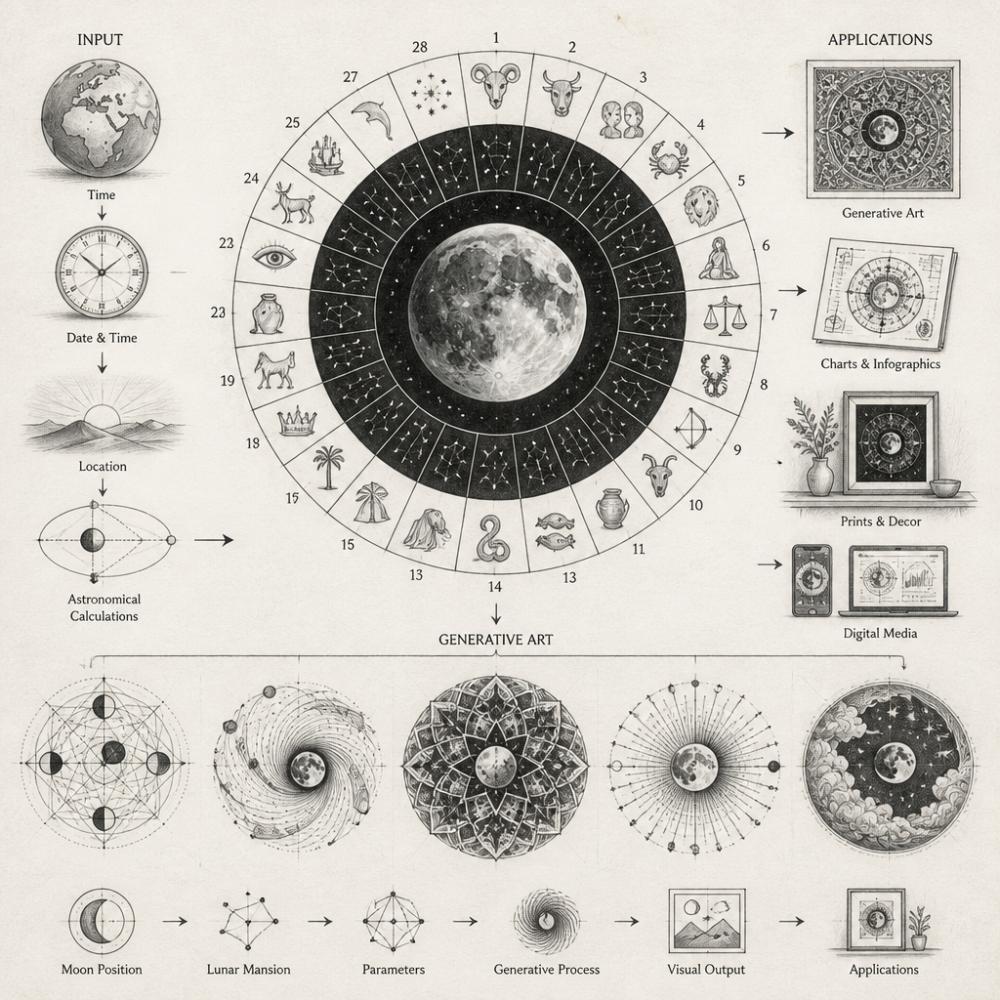
Moon Mansion Calculator exemplifies this integration by pairing precise astronomical algorithms with generative artwork for each of the 28 lunar mansions. The platform calculates your current or natal lunar position using browser-based computations, then presents that data alongside visually distinctive imagery. This combination makes the ancient system of electional timing simultaneously more accessible and more engaging than text-alone alternatives.
A generative image tied to a specific mansion becomes a mnemonic device, meditation focus, and communication tool, making generative art astrology functionally valuable for planning and reflection.
Symbolic Systems and AI: Bridging Ancient Astronomy with Modern Technology
Generative art translates classical Islamic astronomy into contemporary visual culture. The Picatrix, a medieval text foundational to lunar mansion practice, describes each mansion through symbolic associations, colors, animals, and elemental correspondences. An AI system trained to visualize these associations generates imagery that captures the essence of those ancient descriptions in contemporary forms.
The symbolic mapping between astronomical data and visual output requires real computational work. An algorithm must learn relationships between a mansion's celestial position, classical attributes, and aesthetic principles. When done well, generated imagery clarifies symbolic content rather than obscuring it.
Generative systems analyze visual examples, astronomical parameters, and symbolic associations to identify which visual elements correspond to celestial conditions. Over time, users recognize these patterns themselves, noticing that certain visual qualities consistently appear when the Moon occupies particular mansions.
Generative systems approximate personalization by calculating your unique lunar mansion data and generating artwork that reflects your individual position within the 28-mansion system, creating imagery that feels personally relevant rather than generic.
The algorithm handles computational work, calculating precise celestial positions and managing visual generation parameters. The human practitioner brings interpretive skill, deciding what the generated imagery means and how to apply it to timing and activity planning.
Using Moon Phase for Personal Growth and Activity Planning
Different lunar phases support different types of activity: the waxing moon aligns with growth and initiation, the waning moon supports completion and reflection, and new and full moons mark transition points for intention-setting or culmination.
Generative art visualization makes this framework concrete. Practitioners see their current lunar position rendered visually, with imagery communicating the phase's character, bright and expansive during waxing periods, introspective during waning phases.
Using moon phase for personal growth requires tracking patterns over time. Practitioners often notice that projects initiated during waxing moons gain momentum more easily, while administrative work and review feel more natural during waning phases.
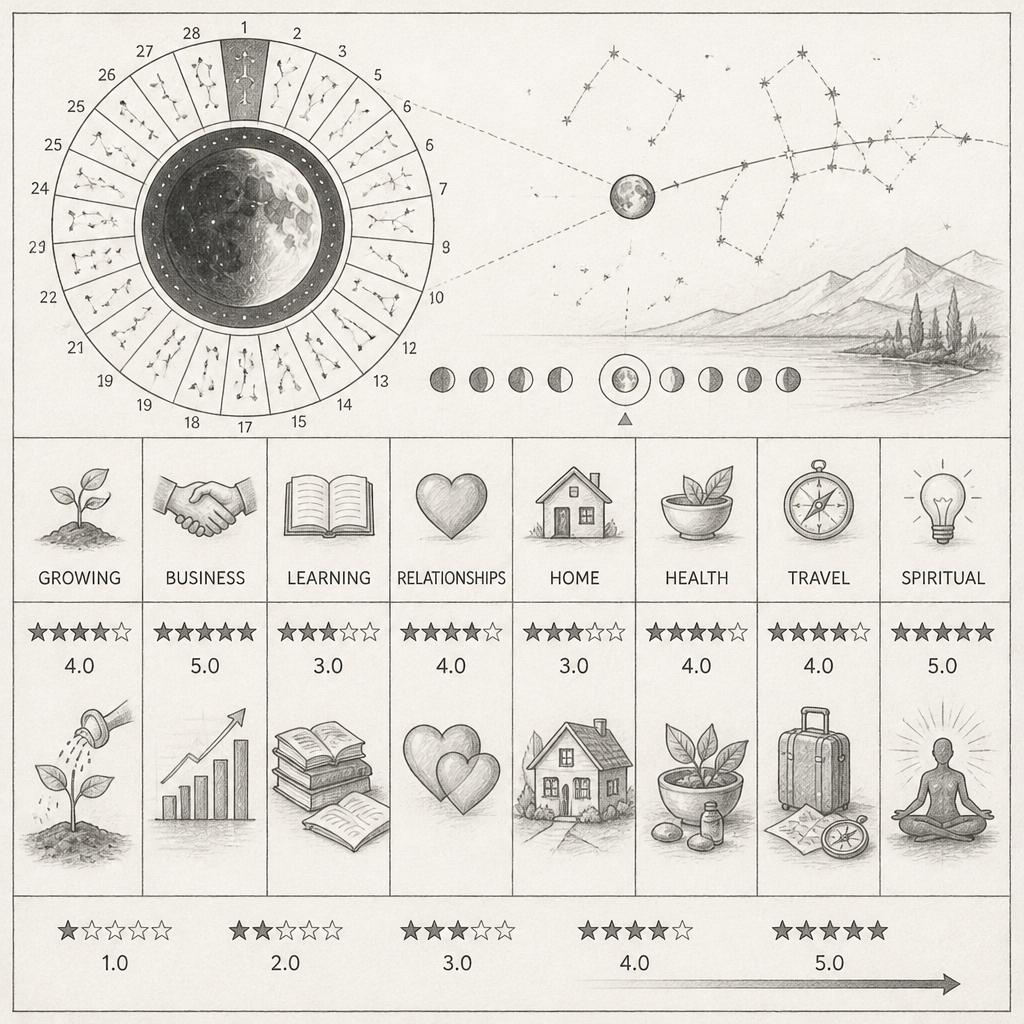
The 28 lunar mansions add granularity to phase-based planning. While the phase indicates growth or completion, the specific mansion indicates which life domains the period supports, journeys, healing, communication, or negotiation. Knowing both gives practitioners precise guidance for activity timing.
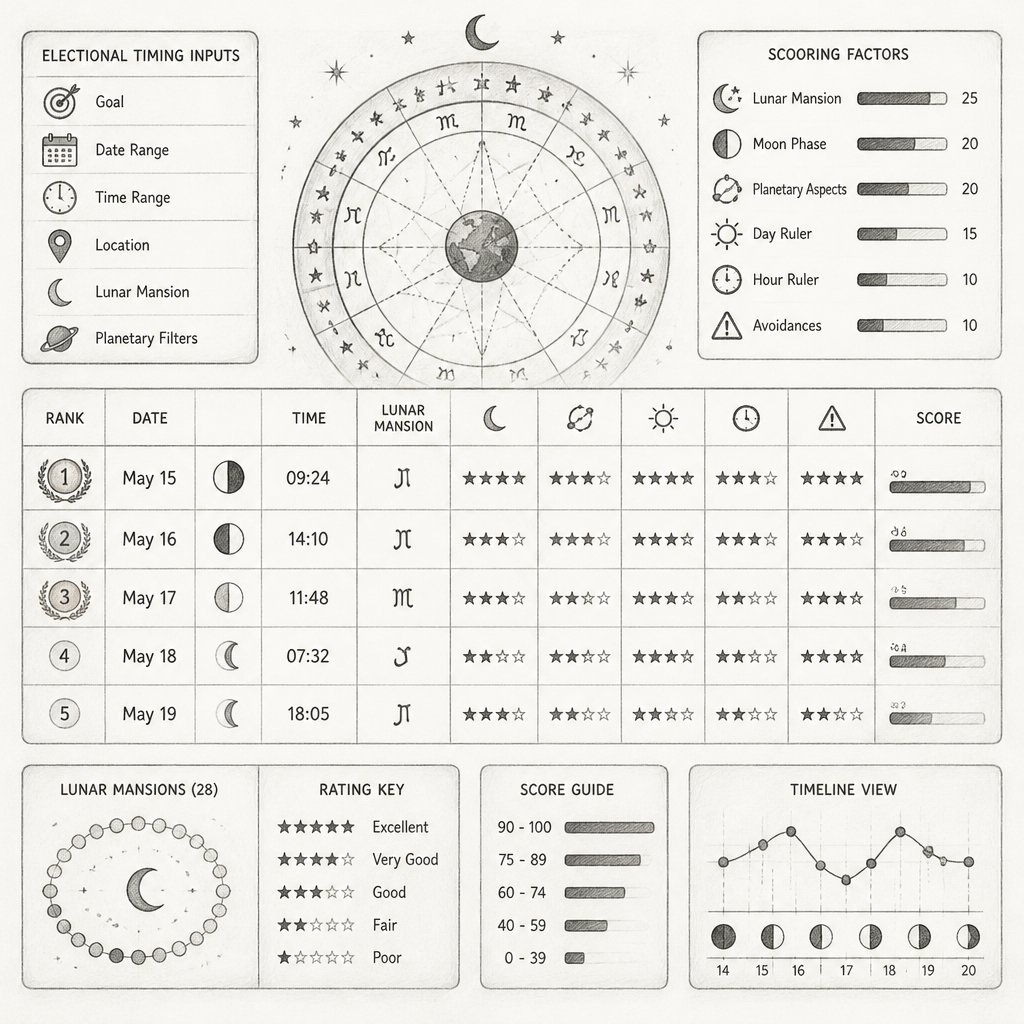
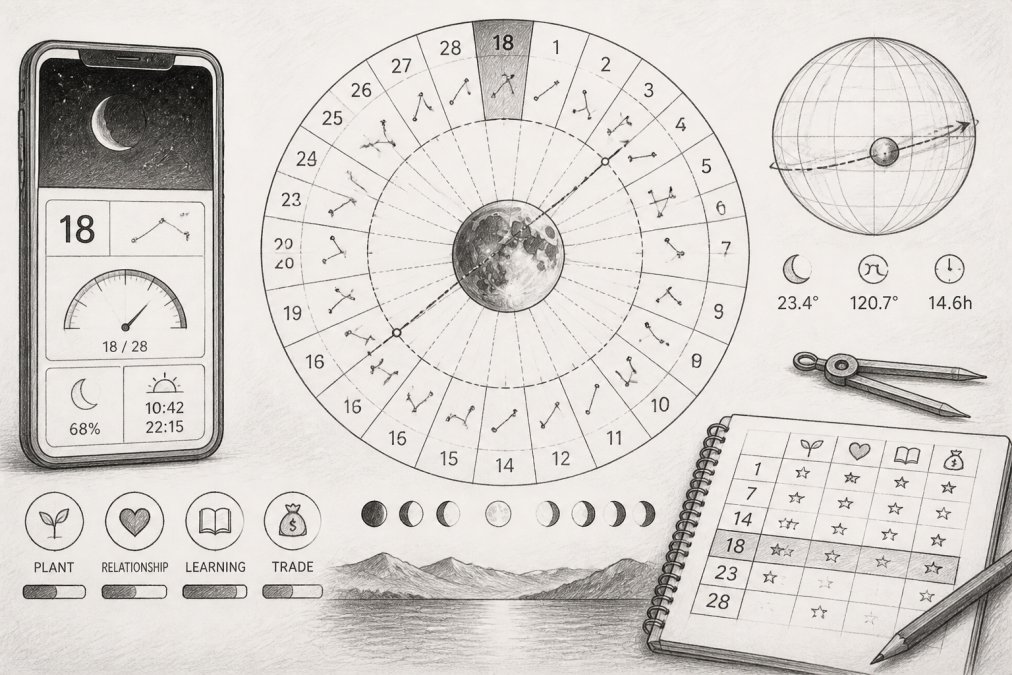
Moon Mansion Calculator's integration of moonrise, moonset, phase, and illumination data enables this multi-layered planning. Practitioners can check their current lunar mansion, see how it's visualized, and cross-reference that with the phase and illumination percentage to make informed decisions about when to schedule important activities. The generative artwork reinforces these patterns visually, making the information more memorable and intuitive.
Lunar Mansion Visualization Tools and Pattern Recognition
Lunar mansion visualization tools transform abstract astronomical data into recognizable visual patterns. Each of the 28 mansions receives distinctive generative artwork, making them easy to distinguish at a glance. Practitioners develop visual literacy, recognizing a mansion's character through imagery.
Practitioners learn to associate specific visual qualities with specific mansions, flowing imagery for travel, soft organic forms for healing. These visual patterns become shortcuts to understanding each mansion's character.
At a deeper level, practitioners notice patterns in how the imagery evolves across the lunar month. As the moon progresses through the 28 mansions, the generated artwork shifts in systematic ways that reflect the underlying astronomical movement. The visual progression becomes a kind of data visualization, the eye perceives patterns in the sequence that might remain invisible in a text-based list of mansion names and attributes.
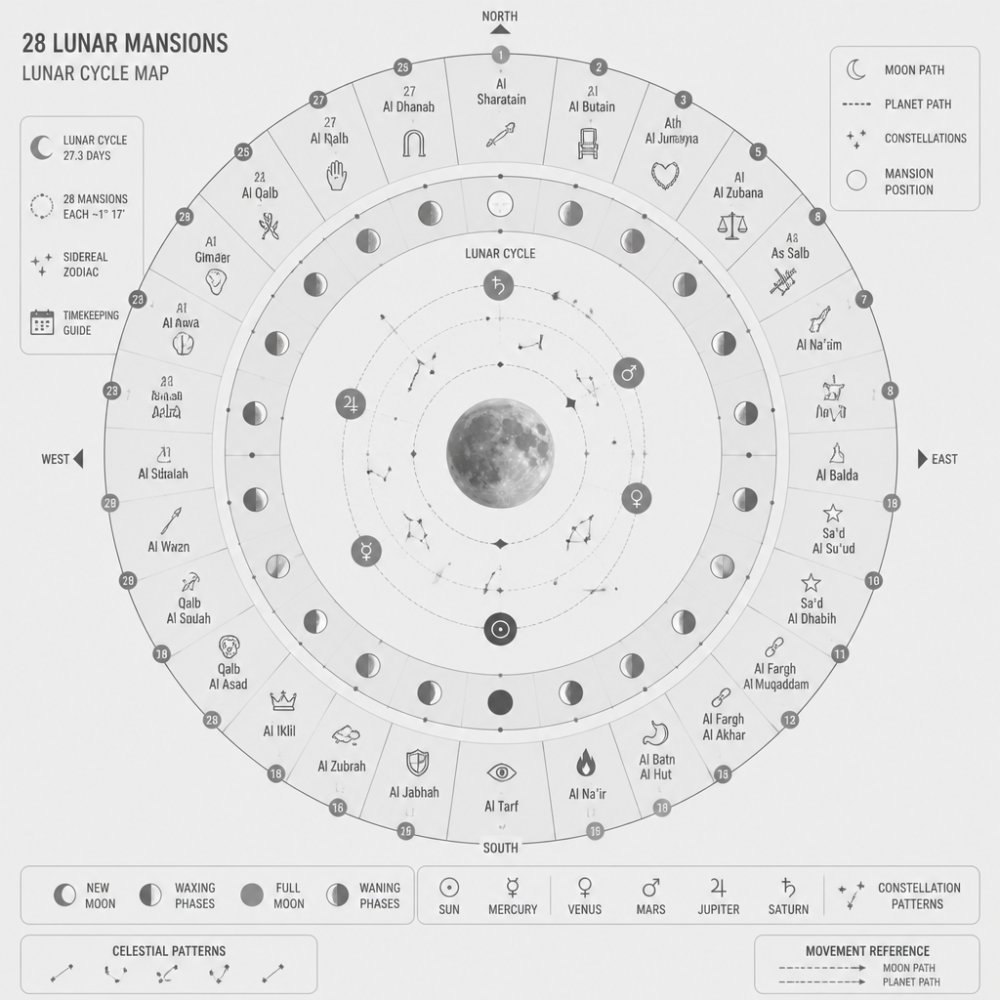
Computational astrology, enabled by browser-based algorithms, makes this level of precision possible. Moon Mansion Calculator's calculations run locally in the browser, ensuring accuracy while maintaining user privacy. The system determines not just which mansion the moon currently occupies, but also the exact degree within that mansion, the phase percentage, and the rise/set times. This data feeds directly into the generative imagery, ensuring each visualization reflects the actual astronomical moment.
The autonomous systems underlying these tools operate with remarkable transparency. Users can verify calculations against astronomical data from NASA's lunar position databases, confirming that the computational astrology producing their generative art rests on verifiable scientific foundations. This transparency builds trust, practitioners know the timing guidance emerges from genuine astronomical calculation, not arbitrary algorithm.
Personalization and Collaborative Human-Machine Creativity
Generative art in astrology achieves its greatest potential when human creativity and algorithmic capability work in genuine collaboration. The algorithm generates a visual foundation based on astronomical data and symbolic associations. The practitioner then interprets that imagery, decides what it means for their situation, and applies it to real decisions.
Find Your Natal Moon Mansion →
This collaboration inverts the traditional hierarchy. Rather than the practitioner consulting a text and generating mental images, the machine generates visual material and the practitioner interprets it. Both roles are essential. The algorithm alone produces aesthetically interesting but meaningless images. The practitioner alone, without visual support, relies on memory and intuition that may be incomplete or inconsistent.
Personalized guidance emerges from this interaction. Two practitioners working with the same lunar mansion receive identical astronomical data but may generate different interpretations based on their unique situations. One might see the imagery as guidance for a business decision; another as inspiration for an artistic project; a third as timing for a personal ritual. The generative art provides the common reference point; personalization happens in the interpretation.
The user experience design of visualization tools shapes how effectively this collaboration functions. Moon Mansion Calculator's interface prioritizes clarity and accessibility. Users see their current mansion, the associated generative artwork, and the relevant astronomical data presented together. This integrated view supports the collaborative process, the data informs the interpretation, the imagery makes the data memorable, and the user's intuition transforms both into actionable guidance.
Artistic innovation in this space doesn't mean abandoning classical sources. The Picatrix remains relevant not because its medieval author possessed supernatural knowledge but because the symbolic associations it describes reflect genuine patterns in human experience and natural cycles. Generative art that honors those classical associations while rendering them in contemporary visual language serves both tradition and innovation simultaneously.
Ethical Considerations in AI-Generated Astrological Imagery
Transparency in AI systems becomes essential when algorithmic creativity intersects with guidance that affects real decisions. Practitioners deserve to understand how the imagery was generated, what data fed the algorithm, and what assumptions shape the output. Moon Mansion Calculator addresses this through open documentation of its calculation methods and clear attribution of its astronomical sources.
The question of autonomous systems making decisions deserves careful consideration. Generative art should support human decision-making, not replace it. A practitioner should never feel obligated to follow guidance simply because an algorithm generated compelling imagery. The imagery serves as one input among many, personal intuition, practical constraints, consultation with others, and direct experience all remain essential.
Ethical guidelines for AI-generated astrological imagery should address several key concerns. First, clarity about what the tool does and does not do. It calculates actual astronomical positions and generates visuals based on those calculations; it does not predict the future or guarantee specific outcomes. Second, user agency, practitioners choose whether and how to apply the timing guidance. Third, data privacy, systems should not require unnecessary personal information or track user behavior.
Synthetic imagery raises questions about authenticity that practitioners should consider. Is an algorithmically generated image a legitimate representation of a lunar mansion's character, or does it lack the intentionality of hand-created art? Different practitioners will answer differently. Some find that the algorithmic approach, precisely because it removes individual artistic bias, creates a purer representation of the mansion's essence. Others prefer human-created artwork that carries an artist's direct intention.
The transparency in computational methods matters enormously here. A generative system that openly explains its training data, its algorithmic processes, and its limitations invites informed skepticism and engagement. Users can evaluate whether the approach aligns with their values and beliefs. They can verify calculations against independent sources. They can choose to use the tool or not based on genuine understanding rather than marketing claims.
Practical Applications for Artists, Practitioners, and Seekers
Astrological artists increasingly use generative imagery as a starting point for their own creative work. A generated image representing a lunar mansion might inspire a painting, sculpture, or digital artwork that develops the themes suggested by the algorithm. The generative art becomes a collaborator in the creative process, it offers ideas the artist then refines through their own skill and vision.
Practitioners of ritual magic and electional timing find concrete value in precise lunar mansion data paired with visual representations. Rather than consulting multiple sources and cross-referencing mansion names and attributes, they access integrated information.
For seekers exploring astrology without deep background knowledge, visual documentation makes the system accessible. The 28 lunar mansions can feel overwhelming, too many to memorize, too obscure to research individually. Generative artwork paired with each mansion creates visual anchors that make the system feel learnable and navigable.
Personal growth applications center on tracking lunar returns and observing patterns over time. Moon Mansion Calculator enables practitioners to identify their natal mansion, the mansion the moon occupied at their birth. Watching for the moon's return to that mansion each month creates a natural rhythm for reflection and intention-setting.
Activity planning becomes more intentional when practitioners understand the lunar mansion system. Rather than scheduling important activities by convenience alone, they consider timing. A business launch might be scheduled for a mansion traditionally associated with commerce and communication. A healing retreat might align with a mansion connected to restoration. A journey might begin when the moon occupies the mansion of travel.
The fine art print market for lunar mansion imagery has emerged as practitioners seek to display their natal mansion artwork or create collections representing all 28 mansions. Moon Mansion Calculator offers fine art prints of lunar mansion generative artwork, allowing practitioners to integrate these visuals into their physical spaces as both aesthetic and functional elements.
Generative art in astrology represents genuine innovation in how practitioners engage with ancient systems. The technology removes barriers to access, making precise calculations and beautiful visualizations available without specialized knowledge or expensive tools.
Frequently Asked Questions
How does generative art improve the visualization of lunar cycles?
Generative art creates dynamic, personalized visual representations of lunar phases and celestial patterns, making abstract astronomical data immediately recognizable. Each lunar mansion can be paired with unique imagery that reflects its symbolic properties, helping practitioners internalize complex timing systems. This visual documentation transforms numbers and calculations into intuitive, memorable forms that support both learning and daily practice planning.
Can I use generative art tools to create custom lunar mansion visualizations?
Yes. You can create prompts incorporating astronomical data, symbolic associations, and personal aesthetics. Many practitioners combine these tools with tools like Moon Mansion Calculator to blend algorithmic precision with artistic innovation, producing personalized visual guides for electional timing and activity planning.
Is the generative artwork in lunar mansion tools just decorative, or does it serve a functional purpose?
The generative artwork serves multiple functions beyond aesthetics. It encodes symbolic meaning, visual cues that reinforce the interpretive framework of each mansion, making pattern recognition faster and more intuitive. This visual documentation also aids memory retention and emotional engagement with the lunar cycle. For practitioners using tools like Moon Mansion Calculator, the unique generative imagery for each of the 28 mansions creates a visual anchor that supports both learning and practical decision-making around timing and activity selection.
How can non-astrologers benefit from generative art applied to lunar systems?
Non-astrologers can use generative astrological art for personal growth and creative inspiration without needing deep technical knowledge. Visual representations of lunar phases and celestial patterns support goal-setting, reflection, and activity timing based on natural cycles. The aesthetic appeal and symbolic richness of generative imagery make lunar systems accessible to anyone interested in aligning their activities with natural rhythms, regardless of their background in traditional astronomical study.