 how-to
7 Steps to Perform a Full Moon Release Ritual
Last Updated: October 25, 2026
Quick Summary
A full moon release ritual is a personal practice for intentionally letting go of emotions, beliefs, habits, or experiences that no longer serve you, using the full moon's symbolic energy as a time of culmination. The seven-step process combines setting intention, creating sacred space, grounding yourself, meditation, journaling, symbolically releasing the written intention, and closing the ritual.
- The full moon phase lasts roughly three days: the night before the peak, the peak night itself, and the night after.
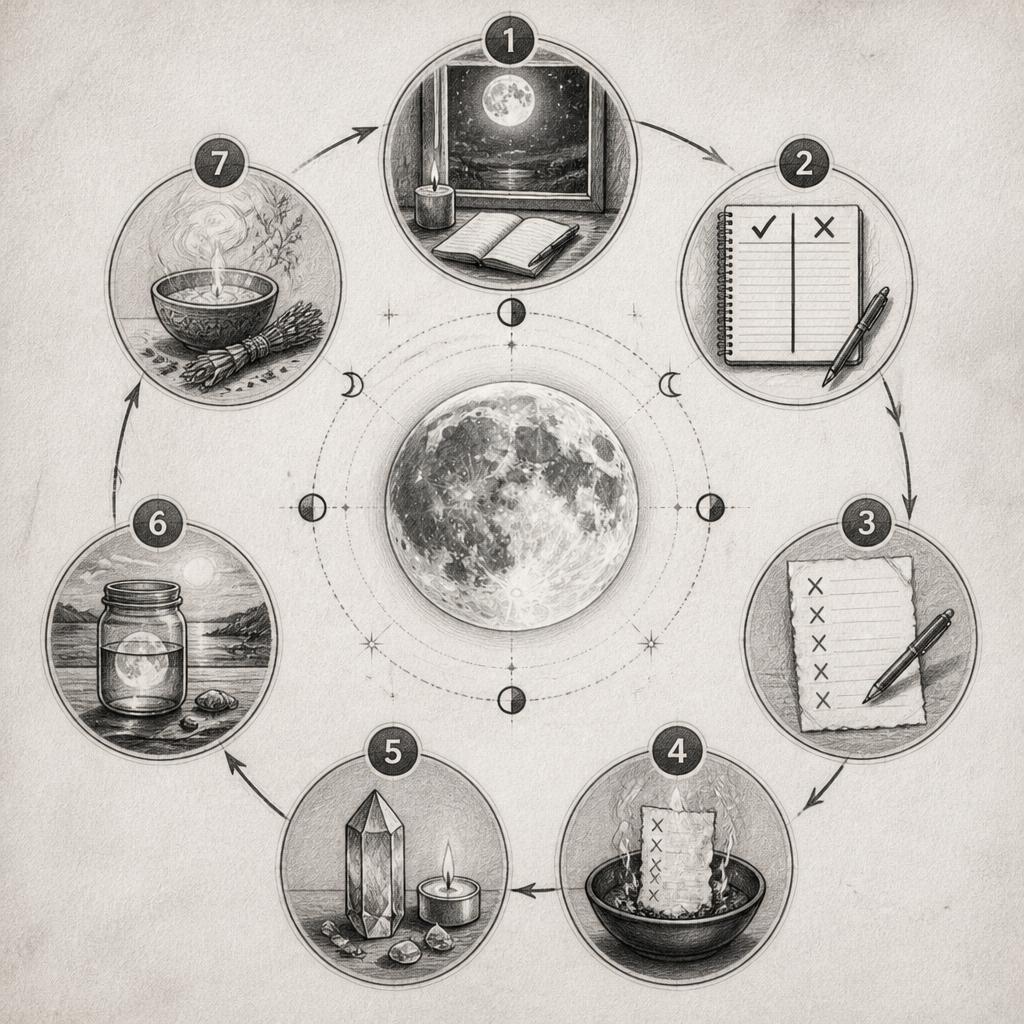
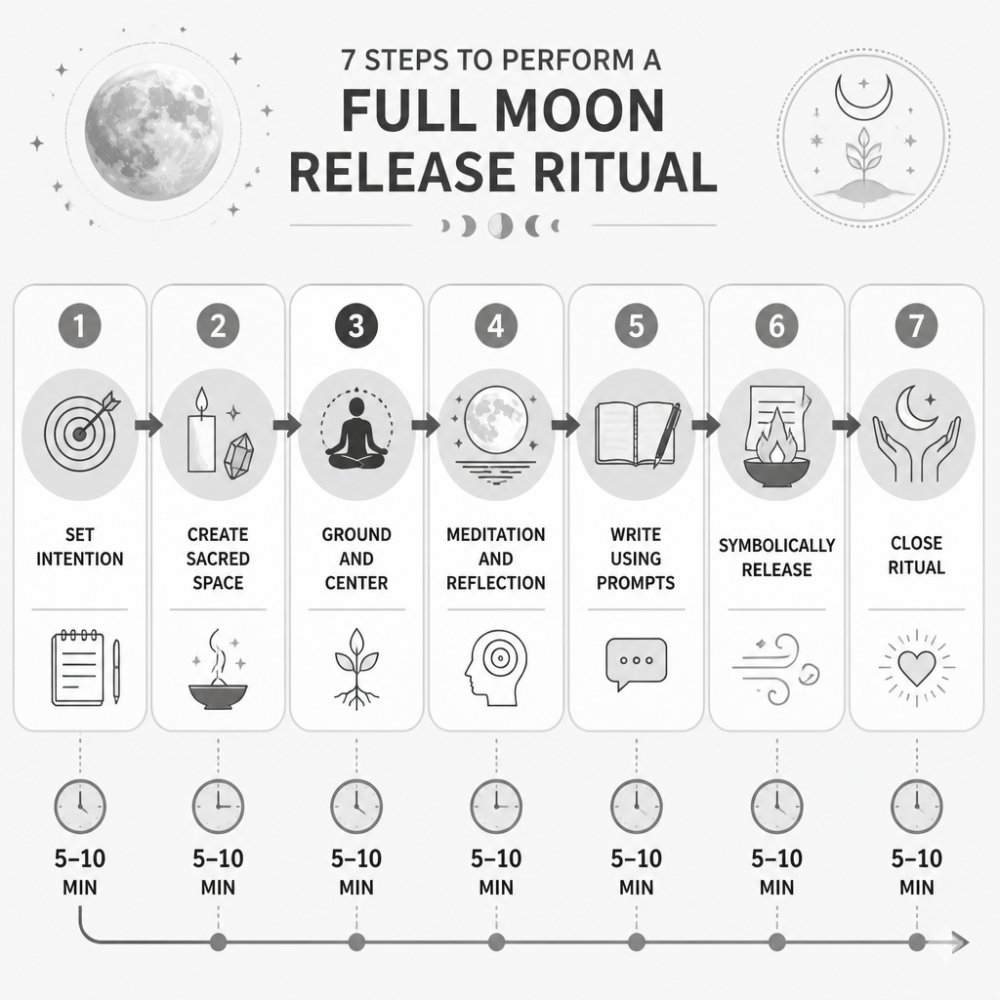
- The complete ritual takes 35-45 minutes and includes seven steps: intention, sacred space, grounding, meditation, writing, symbolic release, and closing.
- Symbolic release methods include tearing, burning, burying, water release, composting, or shredding the paper you've written on.
- The ritual can be adapted for shared housing, mobility limitations, apartments without fire access, or compressed to 20-25 minutes if time is limited.
- Strong emotions like sadness, anger, grief, or relief may surface during the ritual, and this is normal and healthy.
Table of Contents
- Understanding Full Moon Release Rituals
- Full Moon Ritual Timing and Preparation
- Step-by-Step Full Moon Release Ritual Steps
- Full Moon Release Ceremony Script
- Disposal Methods and Fire Safety Alternatives
- Adapting Your Ritual for Different Settings and Abilities
- Emotional Aftercare and When to Seek Additional Support
- Plan Your Next Full Moon Release with Moon Mansion Calculator
- Frequently Asked Questions
Understanding Full Moon Release Rituals
A full moon release ritual is a personal practice for intentionally letting go of emotions, beliefs, habits, or experiences that no longer serve you, using the full moon's symbolic energy as a time of culmination.
The practice combines a clear intention to release, a calm space for reflection, writing down what needs to go, and symbolically disposing of that written intention.
This guide walks through the seven core steps of a full moon release ritual, offers practical alternatives for different living situations, and addresses the emotional work that follows.
Full Moon Ritual Timing and Preparation
The full moon phase lasts roughly three days: the night before the peak, the peak night itself, and the night after. Most practitioners find this window equally effective for release work.
Preparation begins a day or two before the ritual:
- Deciding what specifically needs releasing
- Gathering materials (pen, paper, candle if using one, water, or other symbolic items)
- Choosing a quiet space where interruptions are unlikely
The Moon Mansion Calculator provides precise lunar timing data, including moonrise and moonset times for any location.
Mental preparation matters as much as logistics. Reflecting the day before, journaling or thinking through what needs releasing, primes the mind and often surfaces clarity that makes the ritual more powerful.
Learn how to perform lunar mansion rituals aligned with celestial timing for deeper practice(page:1)
Step-by-Step Full Moon Release Ritual Steps
Step 1: Set Your Intention for Release
Before beginning, clarify exactly what you're releasing, be specific. Instead of "I release negativity," try "I release my fear of failure that keeps me from trying new things."
Writing the intention down strengthens it and anchors the entire practice; speaking it aloud once or twice cements it into awareness.
Step 2: Create Your Sacred Space
A sacred space needs no special tools or religious elements, just a comfortable, quiet area where the ritual can unfold without interruption:
- A corner of a bedroom with a cushion or chair
- A spot in a garden or outdoor area
- A bathroom with the door closed and lights dimmed
The space should feel intentional: some light a candle (with fire safety in mind), others use soft lighting, quiet music, or silence. Clearing clutter signals to the mind that something meaningful is about to happen.
Step 3: Ground and Center Yourself
Grounding brings awareness into the body and the present moment, preventing the mind from wandering and anchoring the ritual in felt experience. A basic technique:
- Sit or stand comfortably
- Feel both feet on the ground (or the seat supporting the body)
- Take three slow, deep breaths, feeling the air move in and out
This sensory awareness pulls attention from thoughts into direct experience in two to three minutes. Some people instead hold a stone, splash cool water on their face, or press their hands into the earth, the method varies, but the purpose is the same.
Step 4: Meditation and Reflection
With the body grounded, quiet the mind through meditation or reflection. This requires no years of practice, even five minutes of sitting quietly with eyes closed counts.
A simple approach:
- Sit comfortably with eyes closed
- Focus on the breath, counting each exhale from one to ten, then starting over
- When the mind wanders (it will), gently return focus to the breath
Alternatively, sit quietly and mentally review what you're releasing: where it came from, how it's affected your life, why it's time to let it go. This often surfaces sadness, anger, or relief, all appropriate, since the ritual creates space for these feelings to emerge and be acknowledged.
Step 5: Use Full Moon Journaling Prompts to Write
Writing is the core of the ritual: putting pen to paper externalizes what's been internal, making it concrete and visible. This is where the full moon release ritual becomes tangible.
Use these prompts as starting points:
- What am I releasing tonight?
- Where did this belief/fear/habit come from?
- How has it served me in the past? How does it limit me now?
Write freely without editing, grammar and handwriting don't matter. Most people write for ten to fifteen minutes. The writing often reveals connections and emotions you didn't consciously recognize, bringing what was operating below awareness into the light.
Step 6: Symbolically Release What You've Written
This step marks the transition from internal processing to external release, creating a psychological milestone.
Common methods include:
- Tearing the paper into pieces
- Burning the paper (with fire safety precautions)
- Burying the paper in soil
The method matters less than the intention: the physical act of releasing the paper signals to the mind that what you're releasing is no longer being held.
Step 7: Close Your Ritual
Closing creates completion and returns awareness to ordinary time. Without it, the ritual can feel unfinished.
A simple closing:
- Stand and take three deep breaths
- Acknowledge what was released: "I have let go of [intention]. It is no longer part of me."
- Express gratitude: "I am grateful for what this taught me. I welcome new energy and possibility."
Some close by washing their hands, drinking water, or eating something, a grounding action signaling that ordinary time has resumed. The closing takes two to three minutes and marks a clear boundary between ritual space and regular life.
The seven-step full moon release ritual follows a clear progression from preparation through completion.
| Step | What to Do | Duration |
|---|---|---|
| 1: Set Intention | Clarify what you're releasing and write it down | 2-3 minutes |
| 2: Create Sacred Space | Establish a quiet, comfortable area free from interruption | 5 minutes |
| 3: Ground and Center | Use sensory awareness or breath to anchor into the present | 2-3 minutes |
| 4: Meditation and Reflection | Sit quietly or mentally review what you're releasing | 5-10 minutes |
| 5: Write Using Prompts | Externalize your release through free writing | 10-15 minutes |
| 6: Symbolically Release | Tear, burn, bury, or dissolve the paper | 2 minutes |
| 7: Close Your Ritual | Acknowledge the release and return to ordinary time | 2-3 minutes |
Full Moon Release Ceremony Script
For those who prefer structure, here's a complete script that moves through all seven steps:
Opening (2 minutes)
"I create this sacred space for release and renewal.
Grounding (3 minutes)
"I feel my feet on the ground.
[Take five slow breaths]
Intention (1 minute)
"Tonight, I release [specific intention].
Find Your Natal Moon Mansion →
Reflection (5-10 minutes)
[Sit quietly with eyes closed, reflecting on what's being released]
Writing (10-15 minutes)
[Write freely using the prompts provided earlier]
Release (2 minutes)
"I release this. It is no longer mine to carry.
Closing (2 minutes)
"I have released what needed to go.
[Take three final deep breaths and return to normal activity]
This script takes approximately 35-45 minutes total.
Disposal Methods and Fire Safety Alternatives
Burning paper is a common choice for symbolic release, but it isn't safe or possible for everyone.
Safe burning method (if choosing fire):
- Use a fireproof container (metal bowl, ceramic dish, or designated fire-safe vessel)
- Place the container on a heat-safe surface away from flammable materials
- Light the paper in the container and stay present until it's fully burned
Non-fire alternatives:
- Tear and bury: Shred the paper and bury it in soil, a plant pot, or garden. This returns the intention to the earth.
- Water release: Place the paper in a bowl of water and watch it dissolve. Some people float it in a stream or river if safely accessible.
- Composting: Add the paper to a compost bin. Over weeks, it breaks down naturally.
Each method works equally well, the intentional letting go matters, not the mechanism. Choosing a method that feels safe and accessible ensures the ritual actually happens.
Adapting Your Ritual for Different Settings and Abilities
The seven-step ritual works in many contexts, but real life requires flexibility:
In shared housing:
- Use a bedroom, bathroom, or outdoor space where privacy is possible
- Reduce time if needed, even a ten-minute version works
- Use silent reflection instead of speaking intentions aloud
For people with mobility limitations:
- Sit the entire ritual; no standing required
- Use a voice recorder instead of handwriting if writing is difficult
- Have someone trusted help gather materials or read prompts aloud
For those in apartments or spaces where burning isn't possible:
- Use water, burying, or shredding methods (listed above)
- These are equally effective and often feel more contained
For people with limited time:
- Compress the ritual to 20-25 minutes: shorter grounding, briefer reflection, condensed writing
- The seven steps remain; they just take less time
- Even a abbreviated version creates psychological closure
For skeptics or those new to ritual:
- Focus on the writing and release as practical processing tools
- Skip the spiritual framing and treat it as structured reflection time
- The psychological benefits, clarity, closure, intentional letting go, work regardless of belief
The core of the ritual is the intention, the reflection, and the symbolic release. Everything else is scaffolding you can adjust to your circumstances.
Emotional Aftercare and When to Seek Additional Support
A full moon release ritual can surface strong emotions, sadness, anger, grief, or relief may emerge during writing or release.
After the ritual:
- Allow time to rest rather than jumping into activity
- Drink water and eat something nourishing
- Journal about the experience if it feels right
Some feel lighter immediately; others feel tired or emotional.
When to seek additional support:
A full moon release ritual is a tool for personal reflection and symbolic release, not a substitute for professional mental health care. Seek support if you're experiencing:
- Persistent depression or anxiety
- Thoughts of self-harm
- Trauma that feels overwhelming
These situations call for a therapist, counselor, or mental health professional. A ritual can complement that work but cannot replace it.
Explore how moon phases support personal growth and emotional integration after the release ritual(page:3)
Plan Your Next Full Moon Release with Moon Mansion Calculator
A full moon release ritual creates closure and marks a transition.
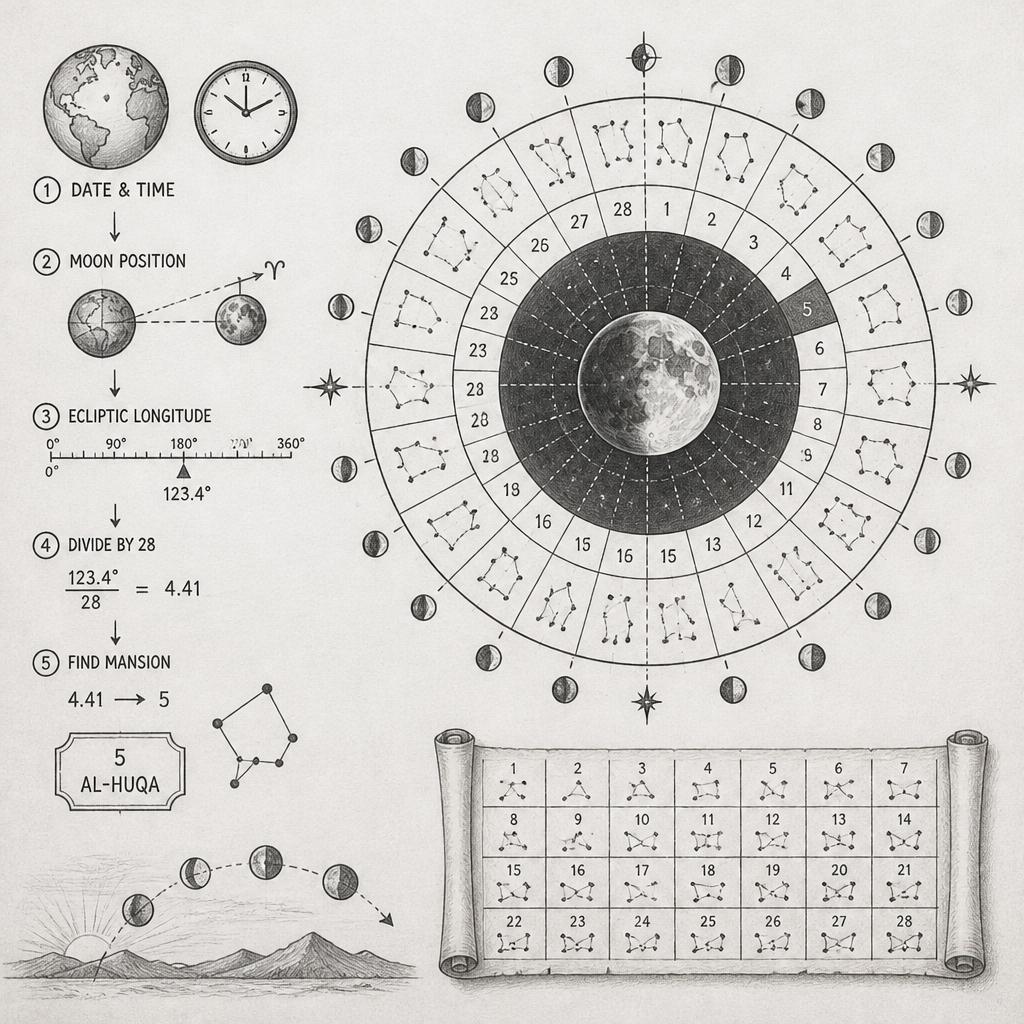
The Moon Mansion Calculator tracks the moon's position across the 28 lunar mansions derived from classical Islamic astronomy.
After a release ritual, plan what comes next.
Discover how to use Picatrix methods to time ritual preparation and execution with celestial cycles(page:2)
What matters most: A full moon release ritual works because it creates structure, intention, and symbolic closure around something that needs to be released.
Frequently Asked Questions
What is the best time to perform a full moon release ritual?
The full moon phase, when the moon is completely illuminated, is the ideal time for release work, typically occurring once per lunar cycle. You can perform your ritual on the night of the full moon or within 24-48 hours afterward when the energy is strongest. Using Moon Mansion Calculator, you can check the exact timing of the full moon and identify which lunar mansion the moon currently occupies, helping you align your ritual with classical timing guidance for deeper personal work.
What should I write down during a full moon release ritual?
Write down the specific emotions, fears, beliefs, habits, or attachments you want to release. Be concrete: instead of 'stress,' write 'my fear of failure at work' or 'my habit of overthinking decisions.' Full moon journaling prompts can guide you through identifying what to release by life area, relationships, career, health, or personal growth. The act of writing clarifies what you're letting go of and signals your intention to your mind.
Can I perform a full moon release ritual indoors?
Yes, you can absolutely perform a full moon release ritual indoors. Create a calm, quiet space in your home, a bedroom, living room, or dedicated altar area works well. You don't need to be outside or see the moon directly; the moon's energy is present whether or not it's visible to you. Indoor rituals are especially practical for those with mobility limitations, safety concerns, or living situations that make outdoor practice difficult. Focus on grounding yourself, setting your intention, and completing the symbolic release step.
How long should a full moon release ritual take?
A complete full moon release ritual typically takes 20-45 minutes, depending on how deeply you want to engage. Preparation and space-setting take 5-10 minutes, grounding and meditation another 10-15 minutes, journaling 10-20 minutes, and symbolic release and closing 5-10 minutes. You can adjust the length based on your schedule and energy; even a shorter 15-minute ritual focused on writing and release is meaningful. The depth of your intention matters more than the duration.