 how-to
How to Use Picatrix for Rituals: A 2026 Step-by-Step Guide
Table of Contents
- What You'll Need Before You Start Picatrix Rituals
- Ritual Preparation Steps: Cleansing, Altar Setup, and Sacred Space
- How to Use Picatrix for Rituals: A Step-by-Step Walkthrough
- Lunar Mansion Meanings and Their Role in Ritual Timing
- Using a Birth Moon Phase Calculator to Personalize Picatrix Rituals
- Modern Safety, Grounding, and Digital vs. Physical Tools
- Common Mistakes to Avoid in Picatrix Rituals
- Conclusion
- Frequently Asked Questions
Last Updated: September 14, 2026
What You'll Need Before You Start Picatrix Rituals
Learning how to use Picatrix for rituals starts with understanding what the text actually is. The Picatrix, known in its original Arabic as Ghāyat al-Ḥakīm, is a medieval grimoire of astrological magic compiled in the 10th and 11th centuries. This guide from Mansions of the Moon walks through the practical sequence: preparation, timing, suffumigation, and record-keeping.
The manuscript organizes its workings around lunar mansions, planetary hours, and correspondences between earthly materials and celestial forces. Before any working begins, gather the following:
- A clean, quiet space you can leave undisturbed for the duration
- Incense or resin appropriate to the planetary spirit you intend to invoke
- A journal for recording the date, mansion, and outcome
- A method for calculating the current mansion and planetary hour
- A clear statement of intent, written before the ritual begins
Most practitioners treat the Picatrix as a technical manual rather than a devotional text. That distinction matters. The grimoire assumes the operator is precise, sober, and deliberate.
Encyclopaedia Britannica entry on the Picatrix
Ritual Preparation Steps: Cleansing, Altar Setup, and Sacred Space
Preparation separates a working that produces results from one that produces nothing but a mess. The Picatrix tradition treats ritual purity as a practical requirement, not a symbolic gesture.
Cleansing the Ritual Space
Physical cleaning comes first, then the symbolic act. Many practitioners wash the floor, open a window, and burn a purifying resin before laying out any tools. The goal is a space free of distraction and residual activity from other purposes.
A common mistake is skipping this step because it feels unimportant. In practice, the cleansing ritual signals to the operator that the working has begun. That psychological shift is part of the mechanism.
Building the Altar and Setting Correspondences
The altar in Picatrix practice is a working surface, not a shrine. Arrange items according to the planetary correspondence of the mansion you've chosen. A Venus working calls for green cloth, copper, and sweet resins. A Saturn working calls for darker materials and heavier incense.
Keep the setup consistent between workings of the same type. Repetition builds familiarity, and familiarity reduces error.
How to Use Picatrix for Rituals: A Step-by-Step Walkthrough
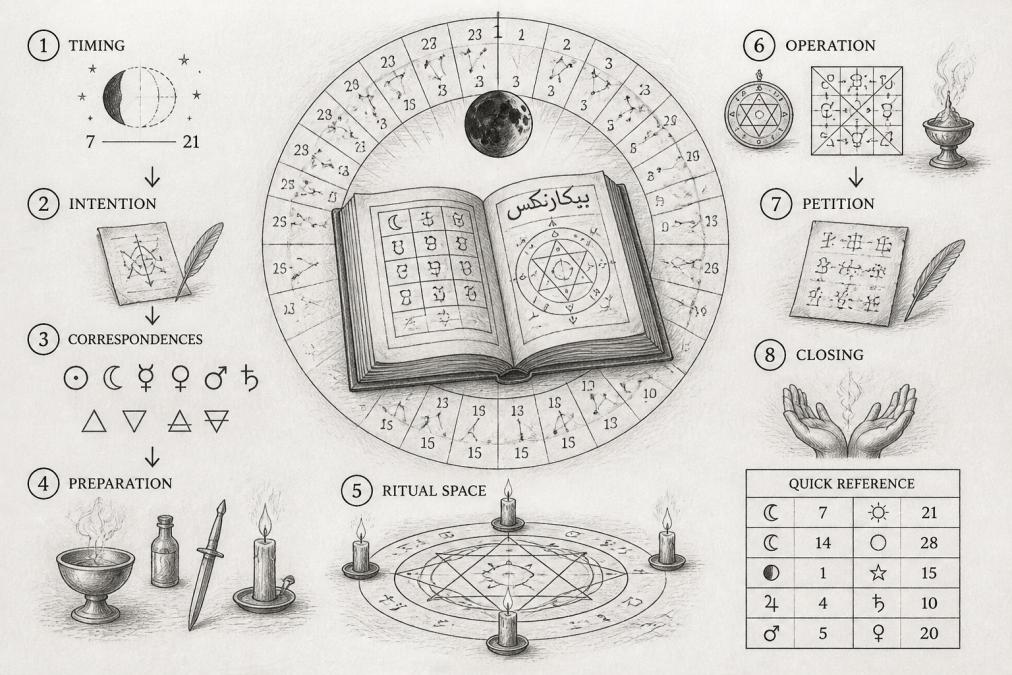
The sequence below reflects the standard order of operations described across the Picatrix's four books. Each stage depends on the one before it.
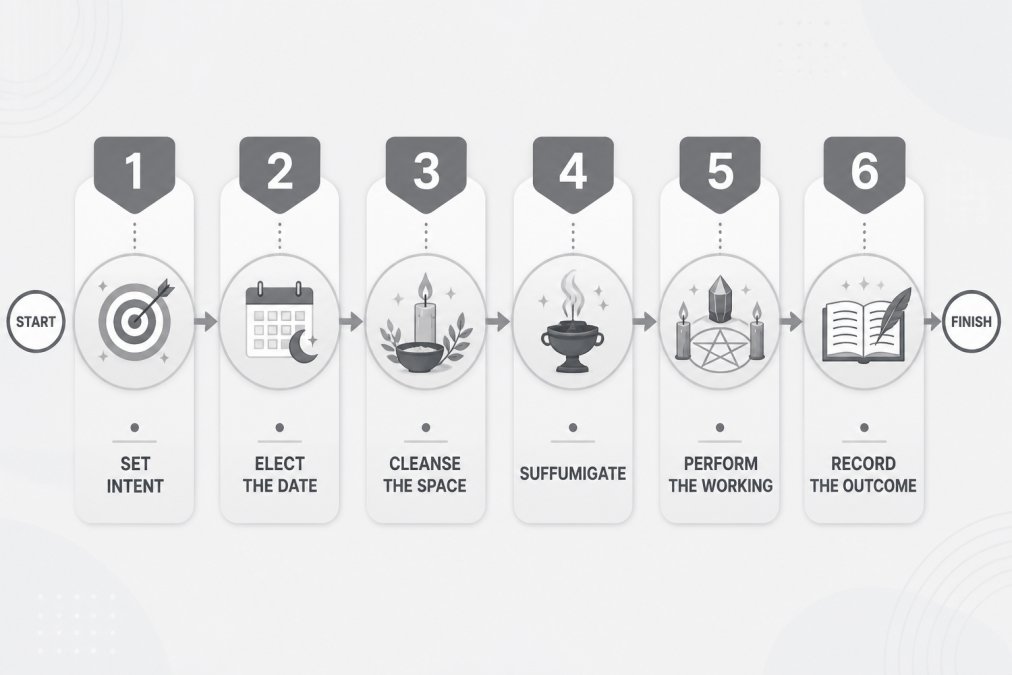
Step 1: Choose Your Mansion and Elect the Date
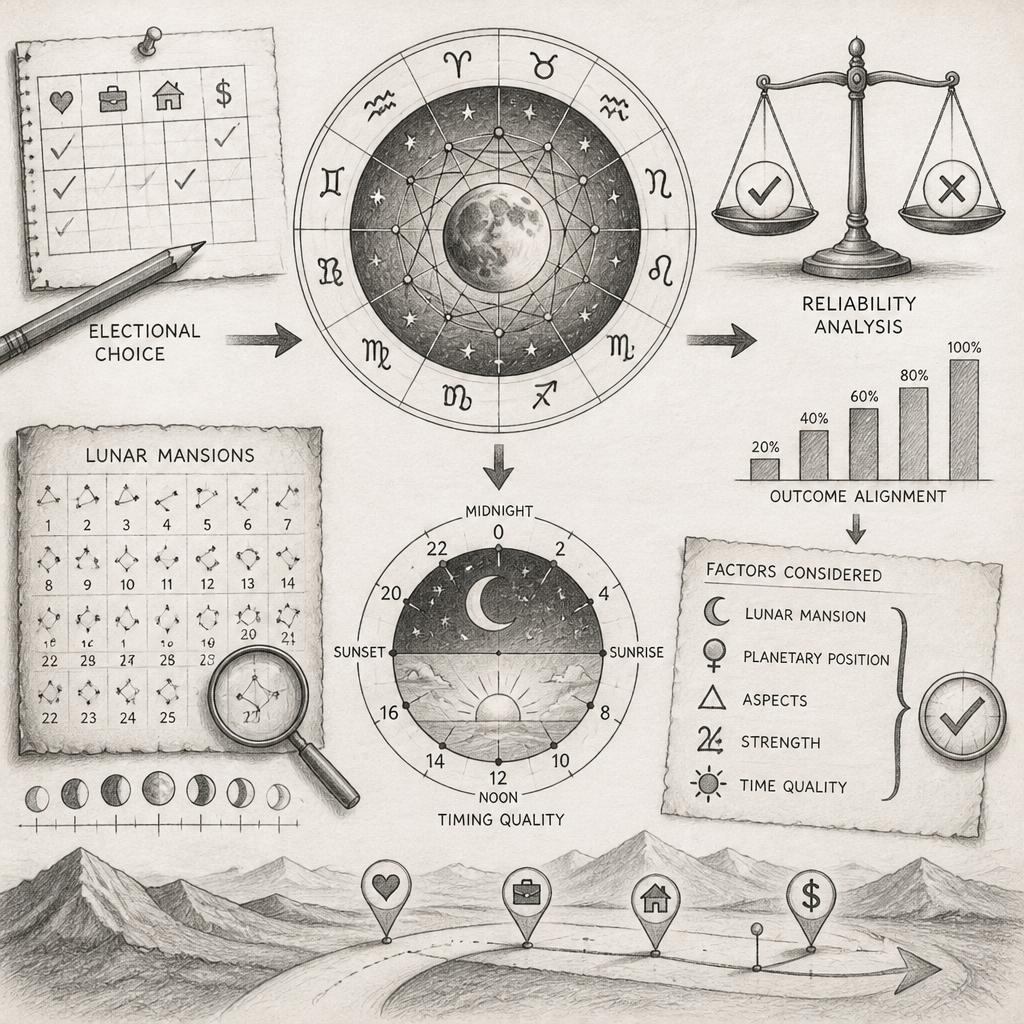
The lunar mansion determines the character of the working. Each of the 28 mansions carries traditional guidance for specific activities: journeys, negotiations, beginnings, or binding. Select the mansion that matches your intent, then find the date when the Moon occupies it.
Planetary hours refine the timing further. A working for increase might use a Jupiter hour within a mansion suited to expansion. The election is the single most important decision in the process.
Step 2: Prepare Suffumigations, Images, and Sigils
Suffumigation is the burning of specific incense to align the ritual space with the planetary spirit. The Picatrix lists particular resins for each planet. Magical images, meanwhile, are drawn or engraved figures tied to the mansion's traditional purpose.
Sigils work similarly. Draw them during the elected hour, not before. The act of creation is part of the ritual.
Step 3: Perform the Conjuration and Record the Working
The conjuration is spoken aloud, clearly, and without hesitation. State the intent, name the planetary spirit or influence, and close the working formally.
Then write everything down: date, time, mansion, planetary hour, materials used, and any result over the following weeks. Without records, patterns stay invisible.
Lunar Mansion Meanings and Their Role in Ritual Timing
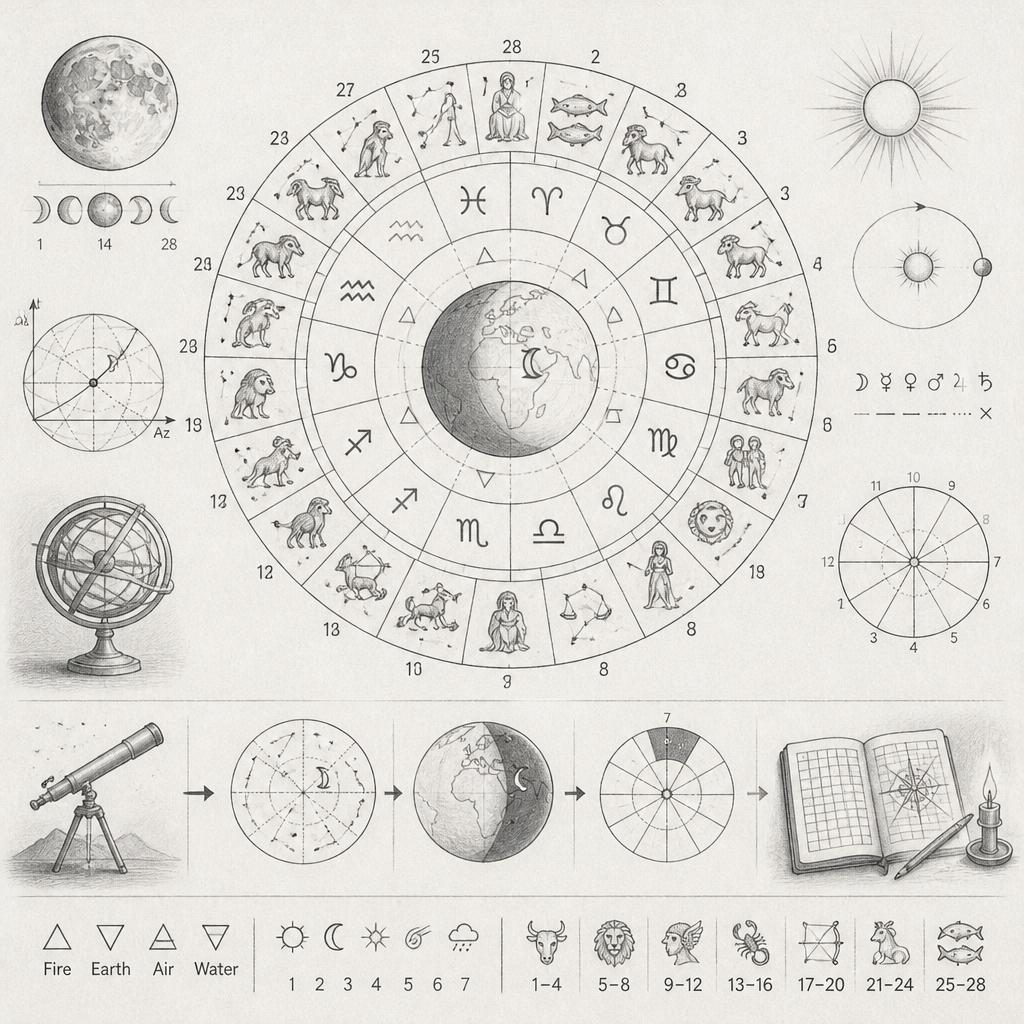
Lunar mansion meanings form the backbone of Picatrix timing. Each of the 28 mansions carries a distinct character, and the traditional guidance attached to each one shapes what a working is suited to. Matching intent to mansion is not optional in this system; it is the system.
How the 28 Mansions Divide the Lunar Month
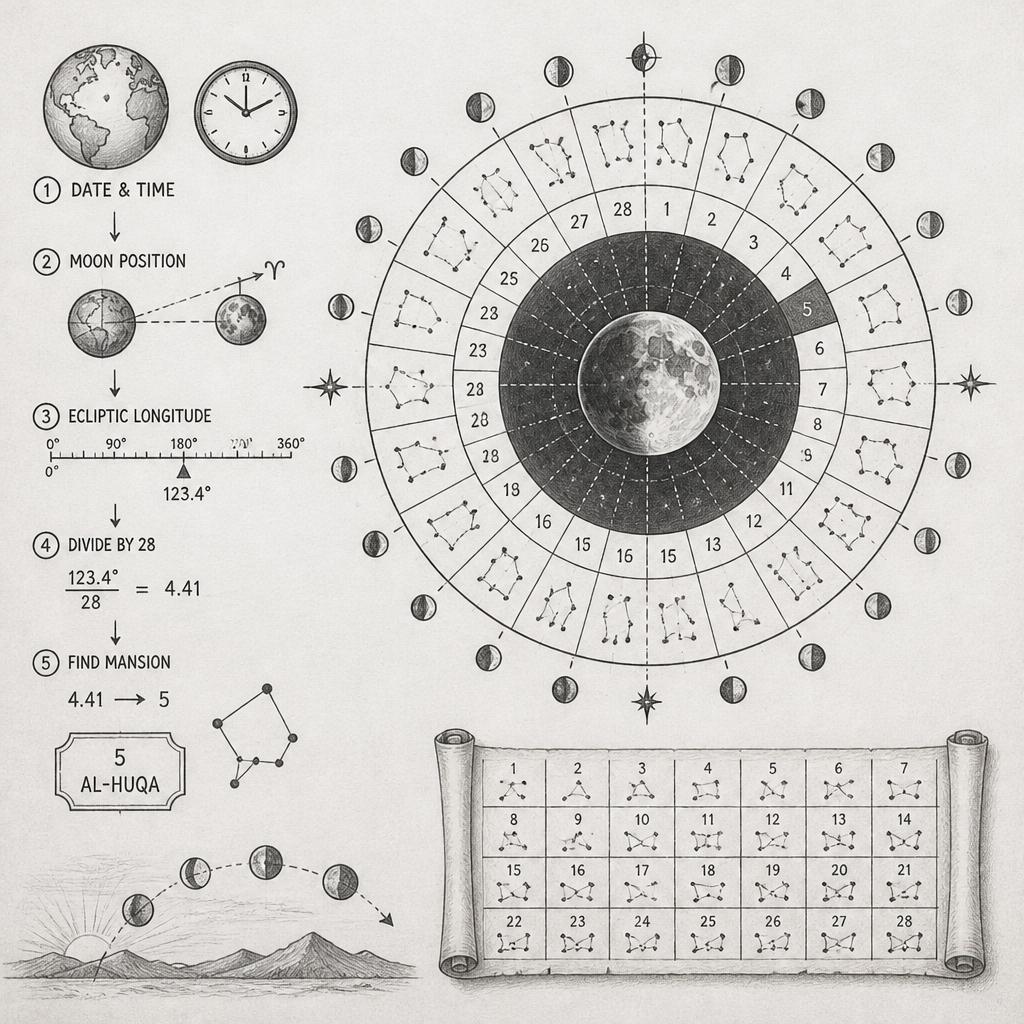
The Moon travels through all 28 mansions in roughly 27.3 days, which works out to about 23 hours and 20 minutes per mansion (What is the <A HREF =...). That short window is why election matters so much: a mansion suited to binding may be available for less than a day before the Moon moves on. If your intent is specific, you are usually waiting for the right mansion rather than forcing a working into the nearest free evening.
A practical way to read the sequence is by function. The early mansions lean toward beginnings, travel, and increase. The middle mansions cluster around partnership, negotiation, and exchange. The later mansions govern separation, concealment, and matters that need to stay quiet. This is a working map, not a rigid rulebook, and the traditional guidance attached to each mansion is what you actually consult before electing a date.
A Sampled Walk Through the Mansion Names
Using the standard names, here is how a handful of mansions read in practice:
- Al-Nathrah, openings, journeys, and first steps. A common choice for launching something you want to grow.
- Al-Zubrah, matters of love, attraction, and reconciliation. Suited to workings where the goal is drawing something toward you.
- Al-Sarfah, reversals and turning conditions around. Used when you want a situation to change direction rather than intensify.
- Al-Jabhah, favor, advancement, and requests made to people with power over an outcome.
- Al-Sa'd al-Su'ud, one of the most favorable mansions in the sequence, traditionally tied to success and protection.
These are entry points, not the full list. The point is that each mansion has a character you can match to a stated intent before you ever light a candle.
Pairing the Mansion With the Planetary Hour
The mansion sets the day; the planetary hour refines the moment. A working for increase might use a Jupiter hour inside a mansion suited to expansion. A working for protection might use a Mars hour inside a mansion tied to defense. The two layers stack, and the election is the single most important decision in the process.
A common pattern among practitioners is to shortlist two or three mansions that fit the intent, then wait for the planetary hour that best matches the working's tone within whichever of those mansions arrives first. This keeps you from stalling indefinitely waiting for a perfect alignment that may be weeks out.
Why Beginners Should Observe Before They Elect
Practitioners new to the tradition often start by tracking the current mansion for a month without performing any ritual. That observation period builds intuition for how the mansions feel in daily life before any working depends on them. When you do elect your first date, you are choosing from experience rather than from a table you have never tested. This grounded approach ensures that the lunar energies you harness are aligned with the deeper process of manifesting life changes.
Using a Birth Moon Phase Calculator to Personalize Picatrix Rituals
A birth moon phase calculator adds a personal layer to an otherwise general system. By identifying the mansion the Moon occupied at your birth, you establish a reference point that recurs roughly every 27 days.
Tracking the Moon's return to your natal mansion gives you a predictable window for personal workings. Many people plan significant decisions, negotiations, or creative projects around that return. The NASA moon phase data provides the underlying astronomical figures that any accurate calculator depends on.
Mansions of the Moon offers a free browser-based tool that maps the Moon's current position across all 28 mansions, with moonrise, moonset, phase, and illumination data included. No sign-up is required, and each mansion is paired with its own generative artwork.
Modern Safety, Grounding, and Digital vs. Physical Tools
Most guides stop at theory. This section covers the part that actually determines whether a practice survives contact with a modern apartment, a busy schedule, and a body that has limits.
Grounding Before and After the Working
Ritual practice benefits from the same grounding habits that apply to any intense mental exercise. Set a time limit before you begin. Eat beforehand. Avoid working when exhausted, angry, or unwell. These are not superstitions; they are the conditions under which a composed operator can hold a clear intent for the length of a working.
The step most people skip is the one after the ritual. A short closing routine, putting tools away, opening a window, writing one paragraph about what happened, and doing something ordinary like making tea, signals to your nervous system that the working is over. Without that closure, practitioners commonly report carrying a low-grade restlessness for the rest of the day. The fix is not more ritual; it is a deliberate return to ordinary activity.
Sourcing and Substituting Traditional Materials
Many ingredients named in the text are now rare, expensive, or ethically fraught. Rather than abandon a working, most practitioners substitute by function rather than by name. The question to ask is what the material is doing in the ritual, purifying, drawing, sealing, or banishing, and then choose a modern equivalent that performs the same role.
A few practical substitutions that hold up:
- Rare resins, a common approach is to match the resin's traditional role (purifying, sweetening, or grounding) with a widely available incense that carries the same character.
- Animal-derived materials, these are frequently replaced with plant or mineral equivalents. The substitution is noted in your record so you can compare results later.
- Engraved metal plates, food-grade or craft metal sheet works for sigils and images where the traditional metal is unavailable or cost-prohibitive.
- Hand-drawn images, archival paper and pigment pens are a reasonable stand-in for parchment and ink, and they hold up better over repeated use.
Whatever you substitute, write it down. A substitution you cannot trace is a variable you cannot evaluate.
Digital vs. Physical Tools: Where Each Belongs
The digital versus physical question divides practitioners, but the split is usually drawn in the wrong place. Physical tools, handwritten sigils, burned resin, cloth, and metal, engage the senses in ways a screen cannot, and that sensory engagement is part of how the working registers in memory. Digital tools offer accuracy in calculation that manual methods struggle to match, especially across a 28-mansion cycle and shifting planetary hours.
The practical answer is to split the work by function, not by preference. Use software for election, timing, and record-keeping. Use physical materials for the ritual itself. Mansions of the Moon's Sacred Calendar handles the timing calculations, leaving the operator free to focus on the working.
Adapting the Setup to a Small Space
A full altar is not required. A cleared shelf, a folding tray, or a single dedicated surface works, provided it is used only for this purpose and put away afterward. The constraint is consistency, not square footage. If your space is shared, a portable kit, cloth, a small censer, a journal, and your tools, lets you set up and break down without leaving ritual objects on display.
Common Mistakes to Avoid in Picatrix Rituals
Skipping the election tops the list. Performing a working on a random evening because the mood struck ignores the entire premise of the system.
A second frequent error is inconsistent record-keeping. Without written records, there is no way to distinguish a working that succeeded from one that coincided with unrelated events.
A third mistake is treating the grimoire as a script to be recited rather than a framework to be understood. The Picatrix rewards operators who grasp why a correspondence exists, not just which incense to burn.
Conclusion
The Picatrix asks for precision, patience, and honest record-keeping. Most people who abandon the practice do so because they skipped the election, rushed the preparation, or never wrote anything down.
Mansions of the Moon makes the timing half of that work straightforward. The platform calculates the current lunar mansion, tracks the Moon's return to your natal mansion, and pairs each of the 28 mansions with traditional timing guidance drawn from classical sources. The Natal Deep Report adds a personalized layer for practitioners who want to plan around their own cycle.
Get started with Mansions of the Moon and build a ritual practice grounded in accurate election rather than guesswork.
Frequently Asked Questions
What kind of magic is in the Picatrix?
The Picatrix is a medieval grimoire that describes talismanic magic, planetary invocations, and suffumigations tied to astrological timing. It organizes workings around the 28 lunar mansions, planetary hours, and correspondences between stones, incenses, and intentions. Practitioners use it for electional timing, ritual intent, and the consecration of magical images rather than for divination alone.
Are there specific ritual preparation steps required before using the Picatrix?
Yes. Traditional ritual preparation steps include cleansing the ritual space, bathing or fasting beforehand, setting up an altar with the correct planetary correspondences, and selecting a date through astrological election. Skipping these steps weakens the working because the Picatrix treats ritual purity and timing as inseparable from the result.
How do lunar mansion meanings influence Picatrix ritual timing?
Each of the 28 lunar mansions carries a specific intent, from safe travel to love or protection. Lunar mansion meanings determine which workings are appropriate on a given night, and the Picatrix assigns suffumigations, images, and invocations to each one. Matching your ritual intent to the correct mansion is the single most important timing decision.
How can I use a birth moon phase calculator for Picatrix rituals?
A birth moon phase calculator shows which mansion the Moon occupied at your birth, giving you a personal anchor for ritual planning. Many practitioners schedule workings when the Moon returns to that mansion or to a mansion whose meaning aligns with the goal. Pairing that data with the current lunar cycle makes electional timing far more precise.