 how-to
Plan Daily Activities Using Moon Cycles: A How-To Guide
Table of Contents
- Understanding the 28 Lunar Mansions and Moon Phases
- Lunar Cycle Productivity Tips for Daily Scheduling
- Using Moon Mansions for Daily Scheduling
- Step-by-Step: Planning Your Week by Moon Position
- Integrating Lunar Timing with Digital Tools
- Common Mistakes When Planning by Moon Cycles
- Frequently Asked Questions
Last Updated: September 19, 2026
Understanding the 28 Lunar Mansions and Moon Phases
The lunar cycle shapes how energy flows through each day. Understanding the 28 lunar mansions and the eight primary moon phases gives practitioners a framework for planning daily activities with intention and precision.
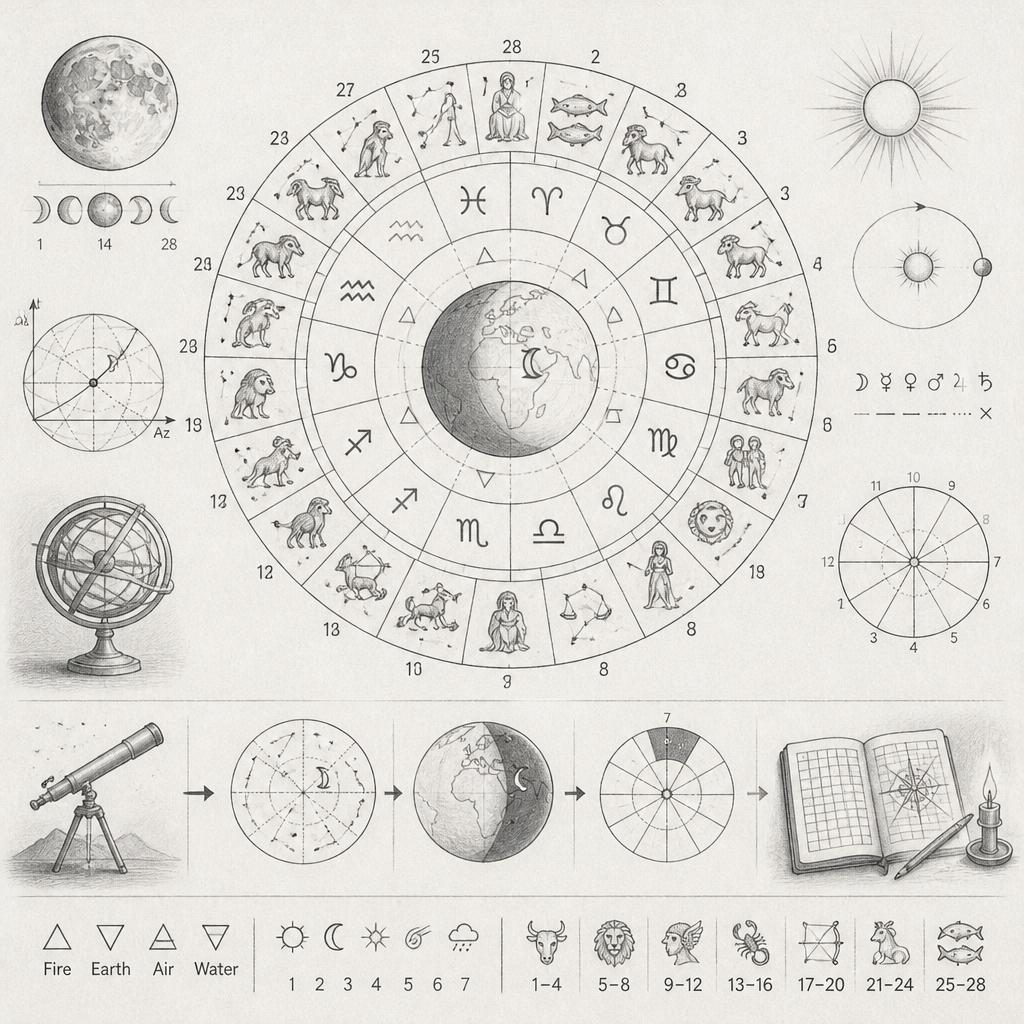
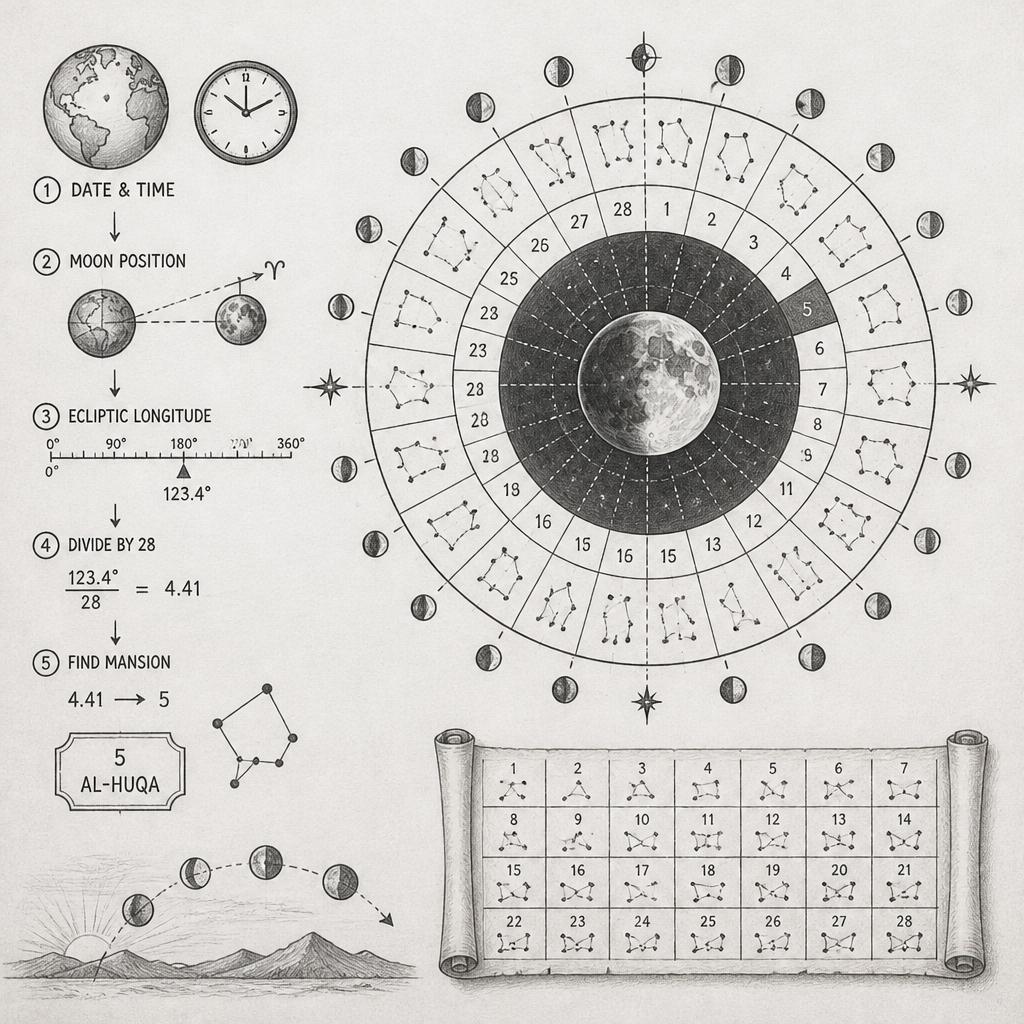
The 28 lunar mansions divide the Moon's path into 28 stations, each spanning roughly 12.86 degrees. Each mansion carries distinct energetic qualities that influence the types of activities best suited to that period.
What Are the 28 Lunar Mansions?
The 28 lunar mansions divide the Moon's monthly journey into 28 distinct stations, each lasting approximately one day. Each mansion has a traditional name and associated qualities that practitioners use to select optimal timing for specific activities. Understanding which mansion the Moon currently occupies allows for more intentional activity planning.
The Eight Primary Moon Phases
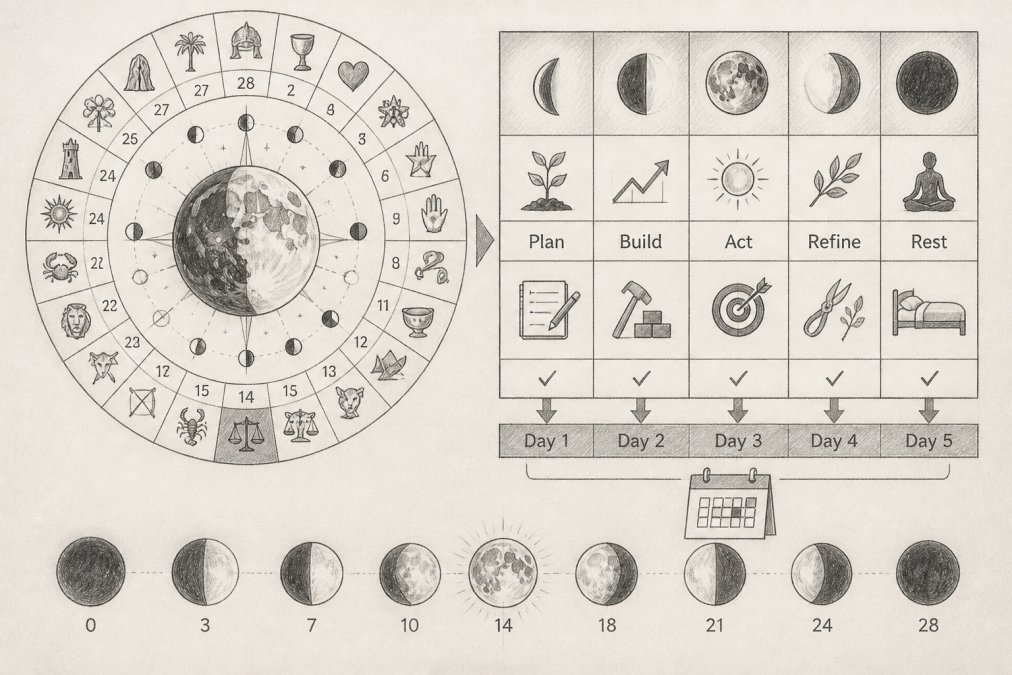
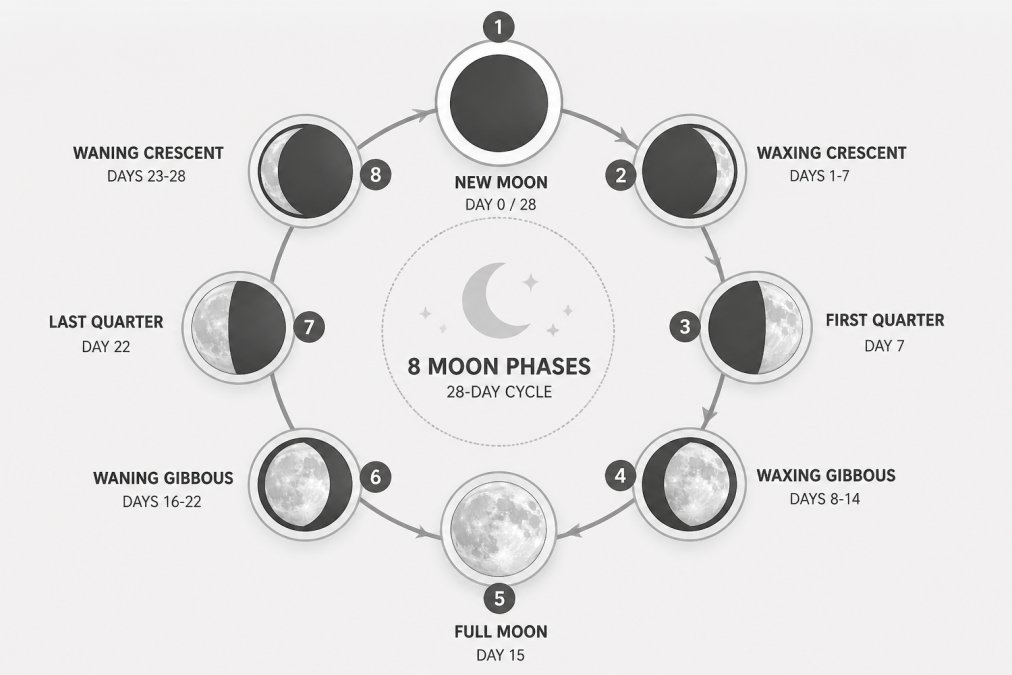
Beyond the 28 mansions, the eight primary moon phases provide a broader framework for planning daily activities using moon cycles. These phases are:
- New Moon: A time for setting intentions and beginning projects
- Waxing Crescent: Early momentum building (days 1-7)
- First Quarter Moon: Peak action and decision-making energy
- Waxing Gibbous: Refinement and adjustment phase
- Full Moon: Culmination, reflection, and visibility
- Waning Gibbous: Harvest and sharing phase
- Last Quarter Moon: Release and clearing energy
- Waning Crescent: Rest and integration (days 23-28)
Lunar Cycle Productivity Tips for Daily Scheduling
Aligning work projects with lunar energy requires understanding how different phases support different types of tasks. Approach it as a rhythm-based productivity system.
Understanding Lunar Energy as Task-Energy Alignment
The core principle is matching task type to phase energy state.
Practical Task Categorization Framework
To implement this system without rigid adherence, categorize your recurring tasks into four buckets:
- Initiation tasks (best during waxing phases): New client onboarding, project kickoffs, strategy sessions, hiring interviews, contract negotiations
- Execution tasks (waxing gibbous, best during mid-cycle): Implementation work, content creation, coding sprints, design iterations
- Completion tasks (full moon and early waning): Deliverables, presentations, final reviews, client handoffs, public announcements
- Integration tasks (waning crescent): Retrospectives, documentation, team debriefs, planning for next cycle, rest days
Real-World Application: The Weekly Lunar Audit
Conduct a weekly audit: Check the current lunar phase, note which tasks are deadline-driven versus flexible, and reschedule flexible tasks to align with phase energy. If a critical launch falls during a waning phase, front-load execution during the preceding waxing phase.
The Energy Sustainability Angle
Lunar-aligned scheduling can help distribute high-intensity work across the month rather than clustering it.
Using Moon Mansions for Daily Scheduling
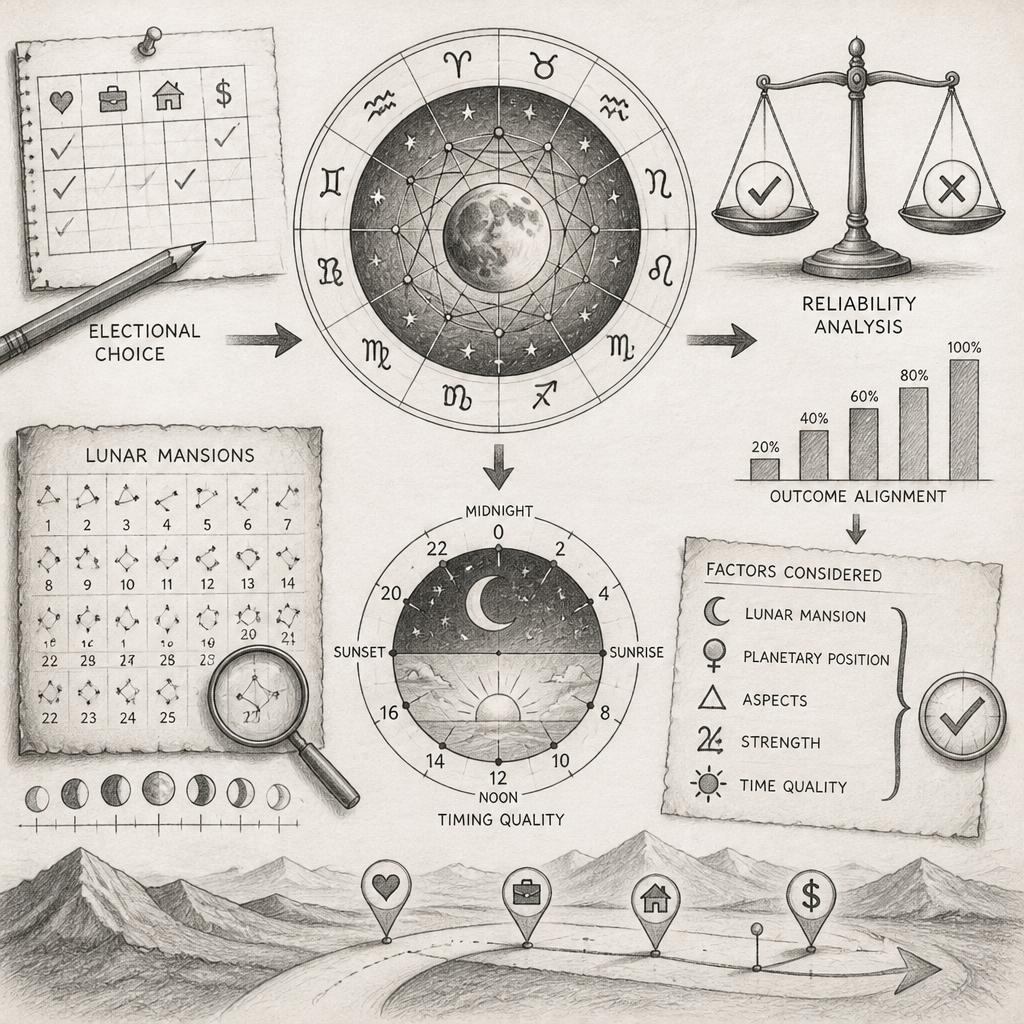
The 28 lunar mansions offer more granular timing guidance than the eight primary phases alone. Each mansion carries specific qualities that make certain activities more favorable than others.
Identifying Your Current Lunar Mansion
The Moon moves through one mansion approximately every day, completing the full cycle in 28 days. Use Mansions of the Moon's calculator to identify the current mansion instantly, along with its traditional name and associated qualities.
Matching Activities to Mansion Energy
Match your daily activities to each mansion's energetic qualities. For example, if the current mansion supports financial matters, handle budgeting or contract negotiations. If it supports healing, prioritize self-care.
Step-by-Step: Planning Your Week by Moon Position
Planning a full week using lunar timing requires identifying the current mansion and phase, then working backward and forward to map the week ahead.
Step 1: Track Your Current Lunar Mansion
Use Mansions of the Moon to check the current mansion and its traditional qualities. This gives you a one-day window for activities aligned with that mansion.
Step 2: Align Work Projects with Lunar Energy
Map major projects and deadlines for the coming week. Schedule launches during new moon or waxing phases, decision-making during first quarter or waxing gibbous, completion during full moon or waning phases, and reflection during last quarter or waning crescent. This creates a framework that reduces friction without requiring rigid adherence.
Step 3: Schedule Reflection and Release Activities
Build reflection and release into your schedule during waning phases. Assess progress during waning gibbous, let go of ineffective approaches during last quarter, and prioritize rest during waning crescent.
Step 4: Log and Adjust Your Routine
After 2-4 weeks, track which mansions and phases supported your most productive days. This builds personal understanding and creates a reference guide for future planning.
Integrating Lunar Timing with Digital Tools
Most professionals already use digital productivity systems, calendar apps, task managers, project platforms. Rather than replacing these tools, lunar timing works best as a metadata layer that informs scheduling decisions within your existing stack.
Calendar Integration: Making Lunar Phase Visible
Create recurring all-day events for each lunar phase in your primary calendar (Google Calendar, Outlook, Apple Calendar) using distinct colors. These provide constant visual reference without cluttering your schedule.
Task Manager Integration: Tagging and Filtering
Use custom tags in task managers to flag tasks by optimal lunar phase: lunar:initiation, lunar:execution, lunar:completion, lunar:integration, and lunar:flexible. Filter your task list by phase during waxing and waning windows to surface work that flows best during each period.
Project Management Platform Integration
Add a custom "Optimal Lunar Phase" field to tasks in Asana or Monday.com. Create timeline views that color-code tasks by phase, and set up automation to notify assignees when due dates misalign with optimal phases.
Notion Templates for Lunar Planning
If you use Notion for planning, create a dedicated database for lunar cycle tracking:
Lunar Cycle Tracker Database:
- Properties: Date, Lunar Phase, Mansion Name, Illumination %, Key Energy, Recommended Tasks, Completed Tasks, Notes
- Relations: Link to your Tasks database so you can see which tasks were completed during each phase
- Rollups: Calculate completion rate by phase (e.g., "85% of initiation tasks completed during waxing phases")
Syncing Lunar Data Across Tools
The Mansions of the Moon calculator provides real-time lunar position data. To keep this synchronized across your tools:
- Check the calculator weekly (or daily if you're detail-oriented) and update your calendar's lunar phase events
- Use a tool like Zapier or IFTTT (if available for your specific platforms) to automate updates, for example, creating a daily reminder with the current lunar mansion and phase
- Set a recurring calendar reminder every Sunday to review the coming week's lunar phases and adjust task tags or project assignments accordingly
Avoiding Tool Overload
The most common mistake is creating a separate lunar planning system on top of your existing tools. This creates duplicate work and abandonment. Instead:
- Start with one integration point (calendar color-coding is easiest)
- Add task tags only if your task manager is already your source of truth
- Automate where possible to reduce manual updates
- Review quarterly whether the integration is actually improving your output, and simplify if it's not
The best tool integration is the one you'll actually use. If you check your calendar daily but rarely open your task manager, start with calendar integration. If you live in your task manager, start there. Build outward from your existing habit. ::: Aligning these logistical rhythms with your lunar observations creates the necessary foundation to start a spiritual practice.
Common Mistakes When Planning by Moon Cycles
Several patterns emerge when practitioners begin planning daily activities moon cycles. Recognizing these patterns helps avoid unnecessary frustration.
Frequently Asked Questions
How do moon cycles influence daily planning?
Moon cycles affect energy patterns and productivity rhythms. Each of the 28 lunar mansions carries distinct qualities that make certain activities more aligned and effective. New moons support intention-setting and beginnings, while full moons enhance reflection and completion. By tracking which mansion the moon occupies, you can schedule demanding work during high-energy periods and reserve gentler activities for waning phases. This alignment can help with tasks that match lunar energy.
What are the best activities to perform during different lunar phases?
During the New Moon, focus on goal-setting, planning, and initiating projects. The Waxing Crescent phase supports habit formation and building momentum. The First Quarter Moon is ideal for taking decisive action and overcoming obstacles. The Waxing Gibbous phase works well for refinement and skill-building. The Full Moon enhances clarity, completion, and journaling. The Waning Gibbous phase suits teaching and sharing knowledge. The Last Quarter Moon is perfect for release, letting go, and clearing. The Waning Crescent phase supports rest, meditation, and self-care. Each phase has a natural rhythm that supports specific types of work.
How can I track the moon's position for my daily schedule?
Use a lunar calculator to identify which of the 28 mansions the moon currently occupies. Check the moon phase, illumination percentage, and moonrise/moonset times. Record this information in your digital planner or journal at the start of each week. Many practitioners create a simple spreadsheet or use habit-tracking apps to log lunar data alongside their scheduled activities. Over time, you'll notice patterns in your own productivity and energy that correspond to specific mansions and phases, allowing you to plan with greater precision.
Can I use lunar cycle planning if I'm new to this practice?
Yes. You don't need advanced knowledge of Islamic astronomy or classical texts to benefit from lunar cycle planning. Start by tracking the eight primary moon phases and notice how your energy and focus shift. Gradually introduce lunar mansion timing as you become comfortable. The key is observing your own response to lunar rhythms rather than memorizing complex theory. Many practitioners find that simple tracking, noting which phase you're in and how you feel, can provide practical value without requiring historical or technical background.