 blog
Ancient Astrology Tools for Modern Life
Table of Contents
- Ancient Astrology Tools for Modern Life
- Understanding Lunar Mansions and Classical Timing Systems
- Using a Lunar Mansion Calculator for Daily Planning
- Practical Applications: Electional Timing for Everyday Decisions
- Tracking Moon Phase Cycles for Self-Understanding
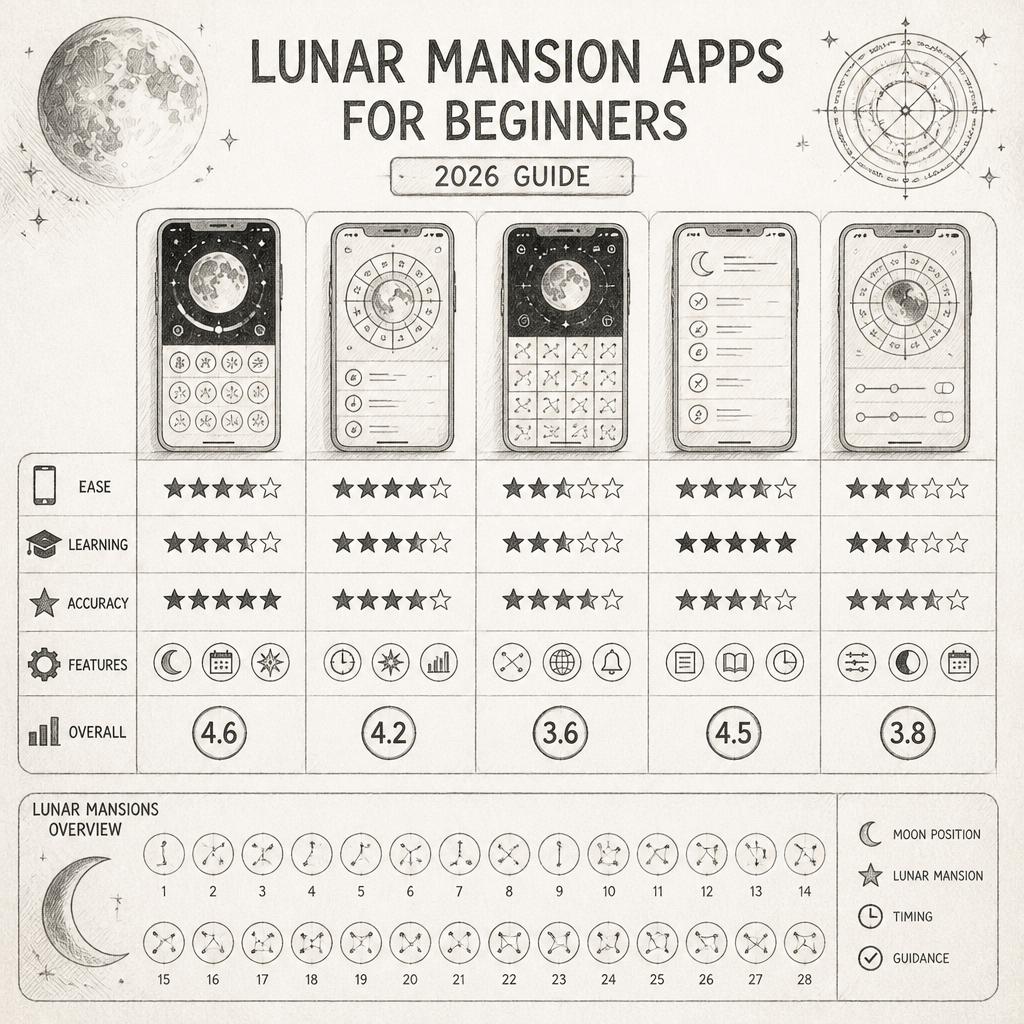
- Astrology Apps and Digital Tools for Modern Practice
- Evidence, Limitations, and Ethical Practice
- Frequently Asked Questions
Last Updated: October 7, 2026
Ancient Astrology Tools for Modern Life
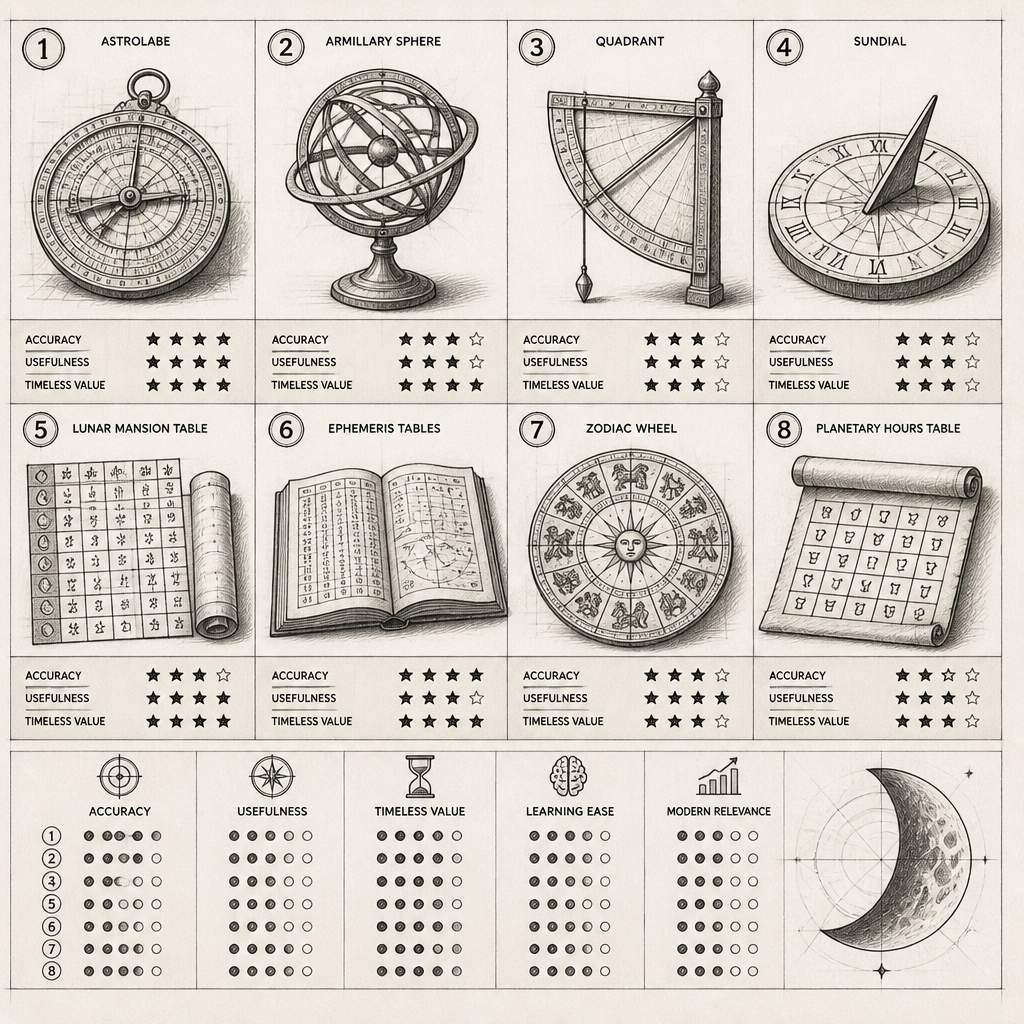
Ancient astrology tools offer a practical framework for understanding timing and decision-making in daily life. These classical systems, rooted in Islamic astronomy and sources like the Picatrix, provide methods for planning activities aligned with lunar cycles. Rather than predicting fixed outcomes, they function as timing guides that help individuals coordinate important decisions with celestial rhythms.
The 28 lunar mansions represent one of the most sophisticated timing systems developed in classical astronomy. Each mansion corresponds to a specific arc of the Moon's path through the sky, creating a detailed map of lunar influence across the month. This ancient framework has guided ritual practitioners, travelers, and decision-makers for centuries. Today, these same tools help individuals plan beginnings, journeys, and strategic decisions with precision.
Understanding Lunar Mansions and Classical Timing Systems
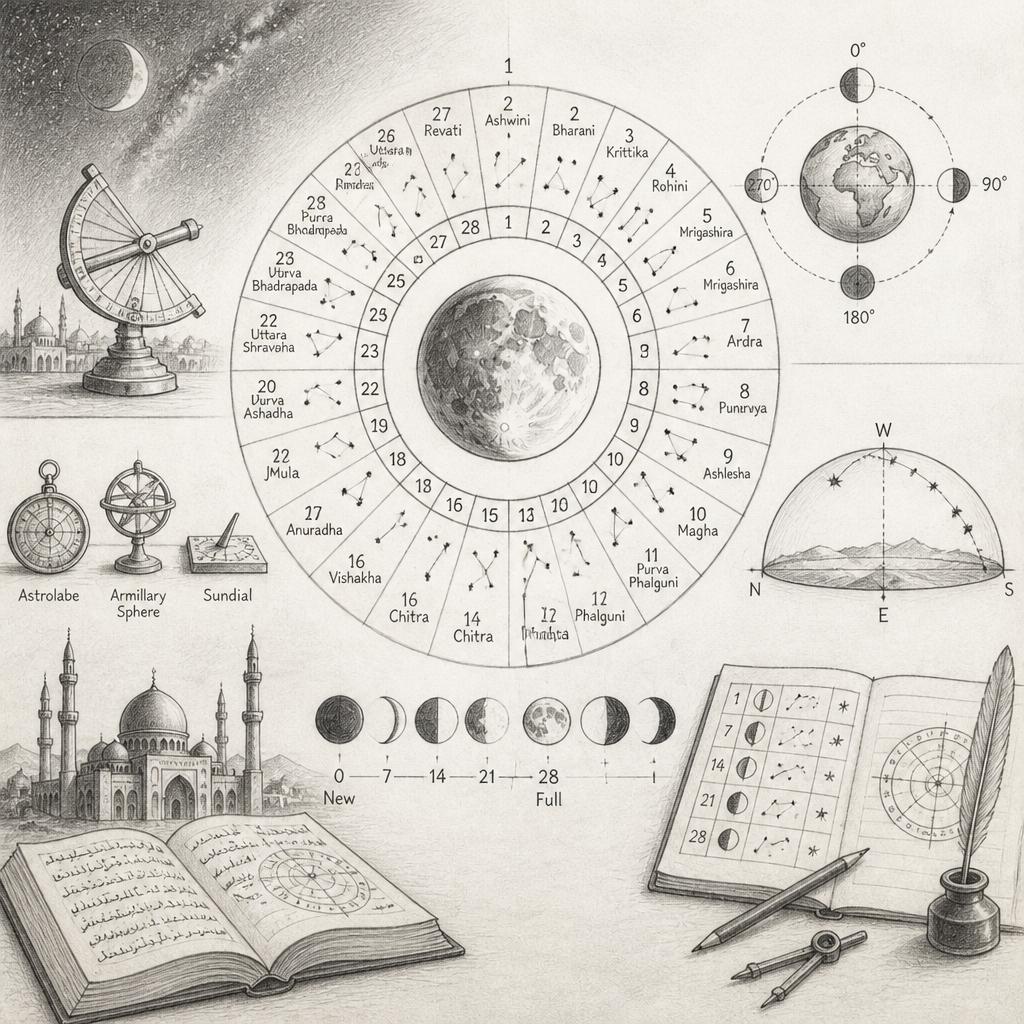
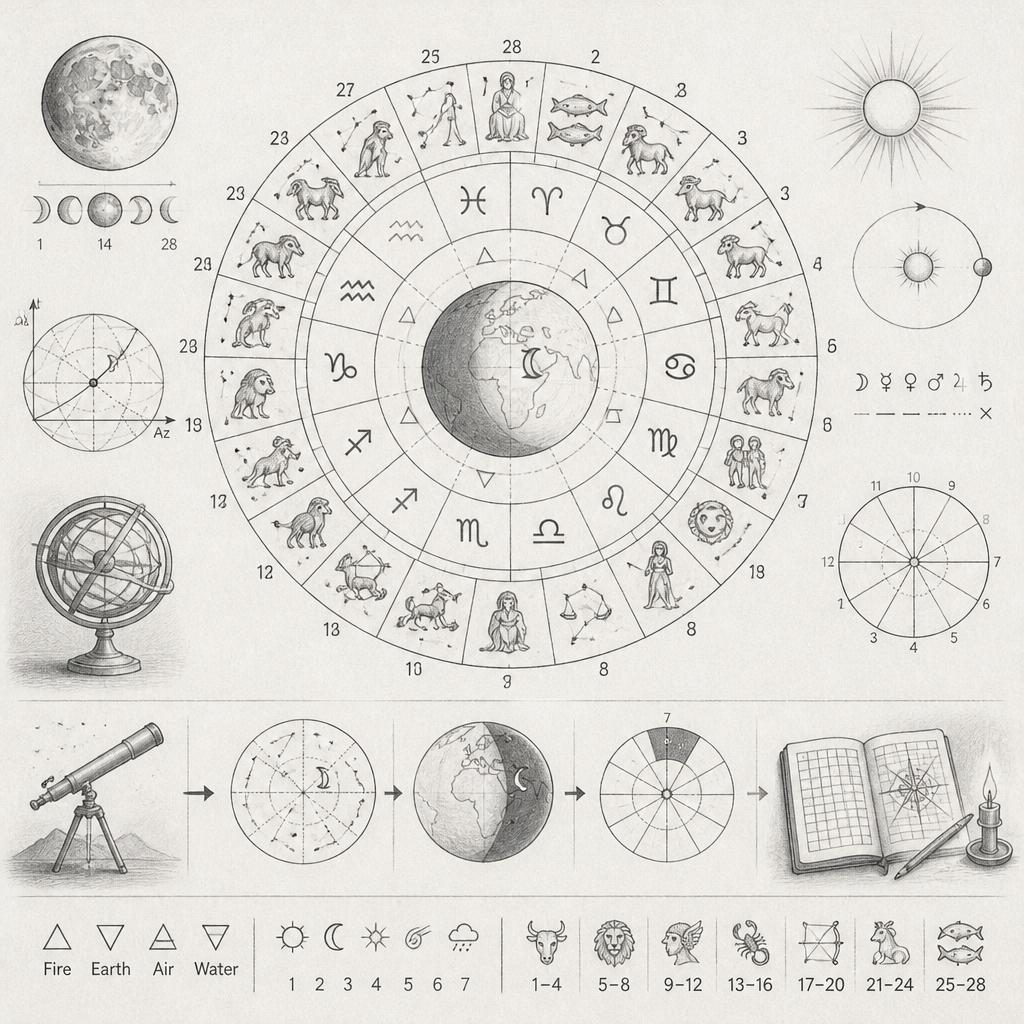
The 28 lunar mansions divide the Moon's monthly cycle into distinct periods, each with traditional associations and timing guidance. This system emerged from Islamic astronomy during the medieval period and was documented extensively in classical texts like the Picatrix. Each mansion spans approximately 12-13 degrees of the zodiac, creating a complete map of the lunar month.
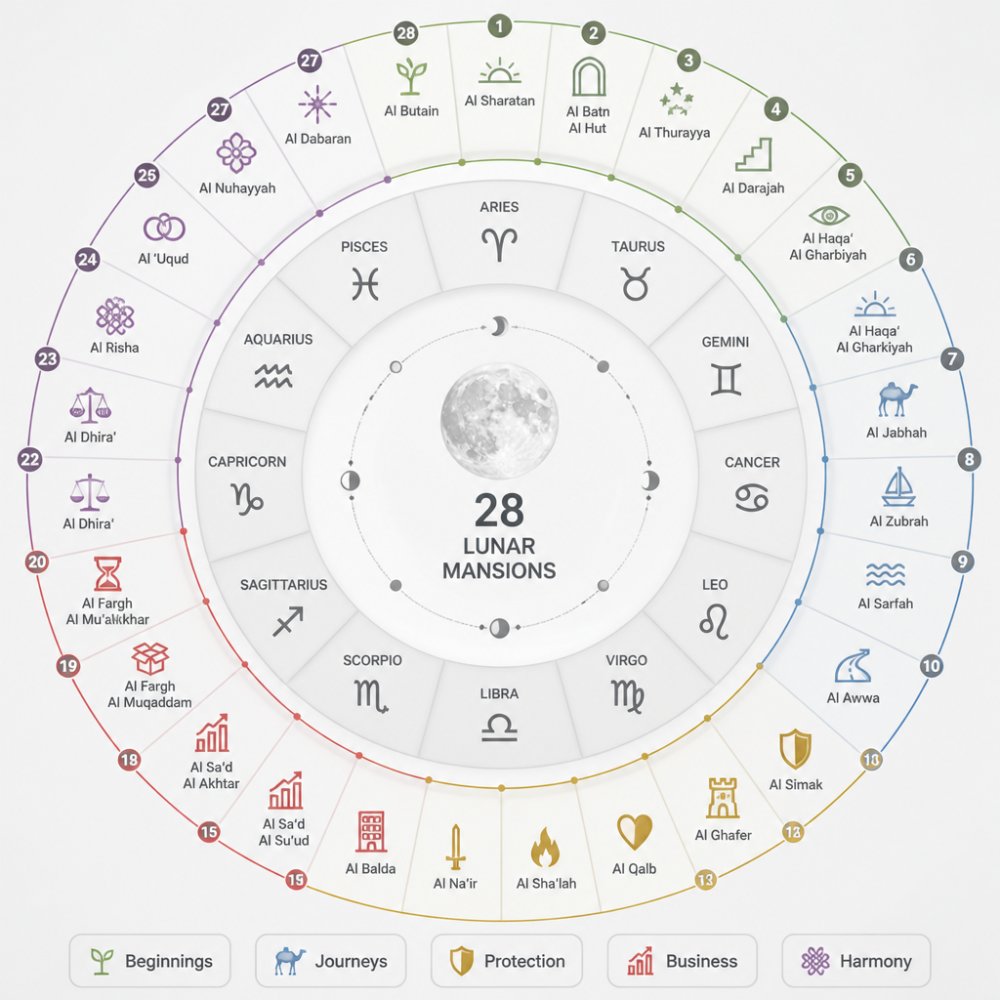
The 28 Lunar Mansions Explained
The 28 lunar mansions function as a calendar of timing opportunities throughout the month. Each mansion carries specific associations: some favor beginnings and new ventures, others support travel and movement, while still others align with protection, healing, or relationship work. The first mansion, Al-Sheratan, traditionally governs new beginnings and journeys.
Classical sources describe each mansion's qualities in detail. The Picatrix, a foundational text on celestial timing, outlines how practitioners can coordinate activities with each mansion's influence. Rather than viewing these as deterministic forces, they function as timing recommendations.
Understanding the mansions requires learning their traditional names and associations. Moon Mansion Calculator displays all 28 mansions with their classical designations, making this knowledge immediately accessible. Users can see which mansion the Moon currently occupies and what activities that mansion traditionally supports.
How Ptolemy and Classical Sources Inform Modern Practice
Ptolemy's work on celestial influence shaped how classical astrologers understood lunar timing. His systematic approach to mapping celestial positions provided the mathematical foundation for the lunar mansion system. Modern calculations build directly on these classical methods, ensuring accuracy across centuries.
The Picatrix synthesized centuries of astrological knowledge into practical guidance for timing decisions. This medieval text documented which mansions support specific activities and why. Classical scholars noted that certain mansions favor communication and negotiation, while others support solitary work or physical labor. These distinctions remain relevant today.
Contemporary practitioners reference classical sources not as deterministic prophecy, but as timing wisdom. The logic is straightforward: if a particular mansion traditionally supports journeys, scheduling travel during that mansion's influence aligns with established patterns. This approach treats ancient knowledge as a planning tool rather than a guarantee.
Using a Lunar Mansion Calculator for Daily Planning
A lunar mansion calculator removes the mathematical complexity from classical timing work. Instead of manually calculating the Moon's position, the tool provides instant information about current and natal mansions. This accessibility transforms ancient knowledge into a practical daily resource.
How the Calculator Works
Moon Mansion Calculator operates entirely in the browser, performing precise astronomical calculations without requiring sign-ups or data collection. Users enter a date and time to discover which mansion the Moon occupied at that moment. The tool displays moonrise, moonset, phase data, and illumination percentage alongside mansion information.
The calculator's core function answers a simple question: which mansion does the Moon currently occupy? This information drives all downstream planning decisions.
The interface shows each mansion's classical name and traditional associations. Users can track the Moon's movement through the 28-mansion cycle across any date range. This makes it possible to plan ahead, identifying upcoming mansions that support specific activities.
Finding Your Natal Mansion
The natal mansion represents the Moon's position at a person's birth time. This serves as a personal reference point throughout life. Tracking the Moon's return to the natal mansion each month provides a cyclical anchor for self-reflection and planning.
To find a natal mansion, users enter their birth date and time into Moon Mansion Calculator. The tool instantly reveals which mansion the Moon occupied at birth. This mansion carries special significance in classical practice: some traditions suggest the natal mansion represents core personality patterns or life themes.
Many practitioners track the lunar return cycle, noting when the Moon returns to the natal mansion each month. This monthly return marks a natural checkpoint for reflection and planning. Some use the return as a moment to assess progress on goals set during the previous lunar cycle.
Practical Applications: Electional Timing for Everyday Decisions
Electional timing means choosing auspicious moments for important activities. Rather than waiting for perfect conditions, practitioners identify which mansions support their intended activity and plan accordingly. This approach transforms abstract celestial knowledge into concrete scheduling guidance.
Planning Beginnings and Important Journeys
Certain mansions traditionally favor starting new projects or ventures. Al-Sheratan, the first mansion, explicitly governs beginnings. Other mansions like Al-Debaran support travel and movement. By identifying when the Moon will occupy these mansions, practitioners can time major decisions strategically.
A person planning a job transition might check Moon Mansion Calculator to identify upcoming mansions that support new beginnings. Scheduling the resignation letter or first day of the new role during one of these mansions aligns the action with established timing patterns. This doesn't guarantee success, but it coordinates the decision with celestial rhythms that classical sources associate with that activity.
Journey planning follows similar logic. If someone plans a significant trip, checking which mansion the Moon will occupy during travel dates offers timing guidance. Mansions associated with safe travel and protection provide traditional support for journeys.
Decision-Making and Strategic Timing
Beyond major life events, the mansions offer guidance for routine decisions. A business owner might consult the current mansion before scheduling important meetings. A writer might check the mansions when planning a book launch. These applications treat the system as a timing tool for strategic decisions.
The practice requires minimal time investment. Checking Moon Mansion Calculator takes seconds. The information then informs the timing of existing plans rather than creating new obligations. Someone already planning a meeting simply adjusts the time to align with a favorable mansion if possible.
This approach emphasizes agency and choice. The mansions don't dictate what must happen; they suggest optimal timing for planned activities. A person with a fixed meeting time isn't obligated to reschedule based on the mansions.
Find Your Natal Moon Mansion →
Tracking Moon Phase Cycles for Self-Understanding
Moon phases offer a different timing framework from the mansions. While mansions map the Moon's position in the zodiac, phases track the Moon's illumination cycle. Together, these systems provide complementary timing information.
Using Moon Phases as a Planning Framework
The lunar cycle progresses through distinct phases: new moon, waxing crescent, first quarter, waxing gibbous, full moon, waning gibbous, last quarter, and waning crescent. Each phase carries traditional associations. New moons align with beginnings and intention-setting.
Many practitioners structure their month around these phases. They set intentions during the new moon, build momentum during the waxing phases, reach peak energy at the full moon, and release or complete during the waning phases.
Moon Mansion Calculator displays current phase data alongside mansion information. Users can see both the mansion and phase at any given moment, understanding the complete timing picture.
Tracking personal energy against moon phases often reveals patterns. Some people report higher energy during waxing phases and more introspective moods during waning phases. While individual experience varies, the framework provides a structure for self-observation and planning.
Astrology Apps and Digital Tools for Modern Practice
Digital tools have transformed how practitioners access classical knowledge. Calculators, apps, and online platforms eliminate the need for manual astronomical calculations. This democratization makes ancient systems available to anyone with internet access.
What to Look for in an Astrology Calculator
An effective calculator combines accuracy with accessibility. The underlying astronomical calculations must be precise, reflecting actual celestial positions. The interface should clearly display essential information: current mansion, phase, moonrise and moonset times, and illumination percentage.
Usability matters significantly. A tool requiring complex inputs or producing unclear outputs frustrates users. The best calculators present information intuitively, making it immediately clear which mansion the Moon currently occupies and what that means for planning.
Some calculators offer additional features like natal mansion calculations, historical lookups, or personalized insights. These enhance the tool's utility without overwhelming basic functionality. Moon Mansion Calculator emphasizes simplicity while providing comprehensive data, allowing users to focus on practical application rather than wrestling with interface complexity.
Browser-Based Tools and Accessibility
Browser-based tools offer significant advantages over downloadable apps. They work across devices without installation. They update automatically, ensuring users always access current information. They require no account creation or data submission, protecting user privacy.
Moon Mansion Calculator operates entirely in the browser, performing all calculations locally without sending data to external servers. This approach combines accessibility with privacy protection. Users can check mansions repeatedly without concerns about tracking or data collection.
Accessibility extends beyond technical implementation. The tool presents information clearly, using straightforward language and visual design. Each mansion displays its classical name alongside its traditional associations. Users don't need advanced knowledge to understand what they're looking at or how to apply the information. Integrating these celestial insights into a physical practice often involves using mudras for mindfulness to ground the abstract planetary energies within the body.
Evidence, Limitations, and Ethical Practice
Ancient astrology tools offer a framework for timing decisions based on classical knowledge and centuries of practice.
These systems work through symbolic association and pattern recognition rather than deterministic causation.
The scientific basis for lunar influence on human activity remains contested.
Ethical practice means avoiding deterministic claims. The mansions don't predetermine outcomes or lock people into fixed paths. They offer timing guidance for people with agency and choice.
Transparency about sources matters. The classical texts documenting the mansions reflect medieval understanding and should be engaged respectfully. Modern practitioners can benefit from this knowledge while acknowledging its historical context.
Ancient astrology tools remain relevant because they address a genuine need: how to coordinate human action with natural cycles. The 28 lunar mansions provide a sophisticated framework for this coordination.
Frequently Asked Questions
How can ancient astrology tools be used in everyday life?
Ancient astrology tools like lunar mansions help you time activities according to classical timing principles. Use a lunar mansion calculator to identify favorable periods for starting projects, planning journeys, or making important decisions. For example, certain mansions align with protection or new beginnings, while others support completion or rest. By checking the Moon's current position before scheduling an activity, you apply centuries-old wisdom to modern planning without requiring extensive study.
What are lunar mansions, and how are they used?
Lunar mansions are 28 divisions of the Moon's monthly path across the sky, rooted in classical Islamic astronomy and sources like the Picatrix. Each mansion carries traditional associations with specific purposes: some favor starting ventures, others support journeys or protection. Practitioners use lunar mansion timing for electional astrology, selecting auspicious moments to begin activities. A lunar mansion calculator maps the Moon's current position, making it simple to identify which mansion is active and whether it suits your planned activity.
How does a lunar mansion calculator work?
A lunar mansion calculator uses precise astronomical algorithms to determine the Moon's exact position in the lunar cycle and assigns it to one of the 28 mansions. The tool runs calculations in your browser without requiring sign-up, showing moonrise, moonset, phase, and illumination data alongside mansion information. You can also calculate your natal mansion, the mansion the Moon occupied at your birth, and track when the Moon returns to that position for personal insights and timing guidance.
What should I look for in an astrology app or calculator?
Choose an astrology calculator that offers accurate astronomical data, clear presentation, and practical guidance. Look for tools that show current lunar mansion position, moonrise and moonset times, and phase information. Prefer calculators that integrate classical sources like the Picatrix for timing recommendations. Check whether the tool requires sign-up (many free calculators don't), and verify that calculations align with recognized astronomical standards. Accessibility and visual clarity matter too, you'll use it frequently, so the interface should be intuitive.