 blog
Lunar Mansion Apps for Beginners: 2026 Guide
Table of Contents
- Why Lunar Mansion Apps Matter for Beginners
- Understanding Lunar Mansions: What You Need to Know
- How to Find the Moon's Lunar Mansion Today
- Using a Lunar Mansion Calculator for Daily Planning
- Building Your Lunar Mansion Calendar
- Getting Started: A Beginner's Workflow
- Frequently Asked Questions
Last Updated: October 20, 2026
Why Lunar Mansion Apps Matter for Beginners
Tracking the Moon's position through the 28 lunar mansions offers a practical way to align daily activities with celestial cycles. For those new to lunar mansion apps beginners, the challenge isn't understanding the concept, it's finding a tool that explains it clearly without requiring years of study in Islamic astronomy.
During this time, certain activities align better with the lunar energy of that mansion. A beginner might use an app to check which mansion the Moon occupies today, then plan accordingly. Moon Mansion Calculator makes this accessible by combining precise astronomical calculations with classical timing guidance from sources like the Picatrix, all paired with unique visual artwork for each mansion.
The right app removes guesswork. Instead of wondering whether today is a good day to start a project or perform a ritual, beginners can check their tool and see exactly where the Moon sits in its cycle. This transforms lunar mansion work from abstract theory into actionable daily guidance.
Understanding Lunar Mansions: What You Need to Know
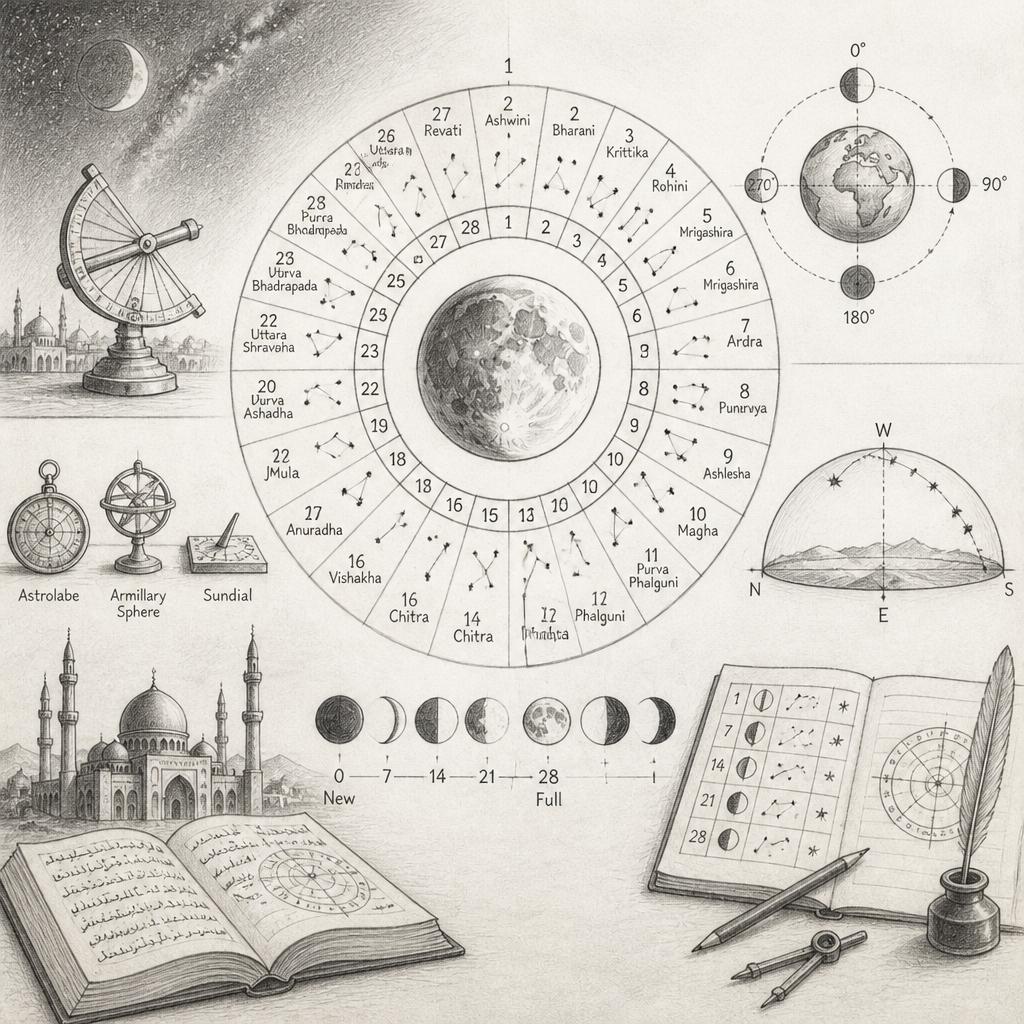
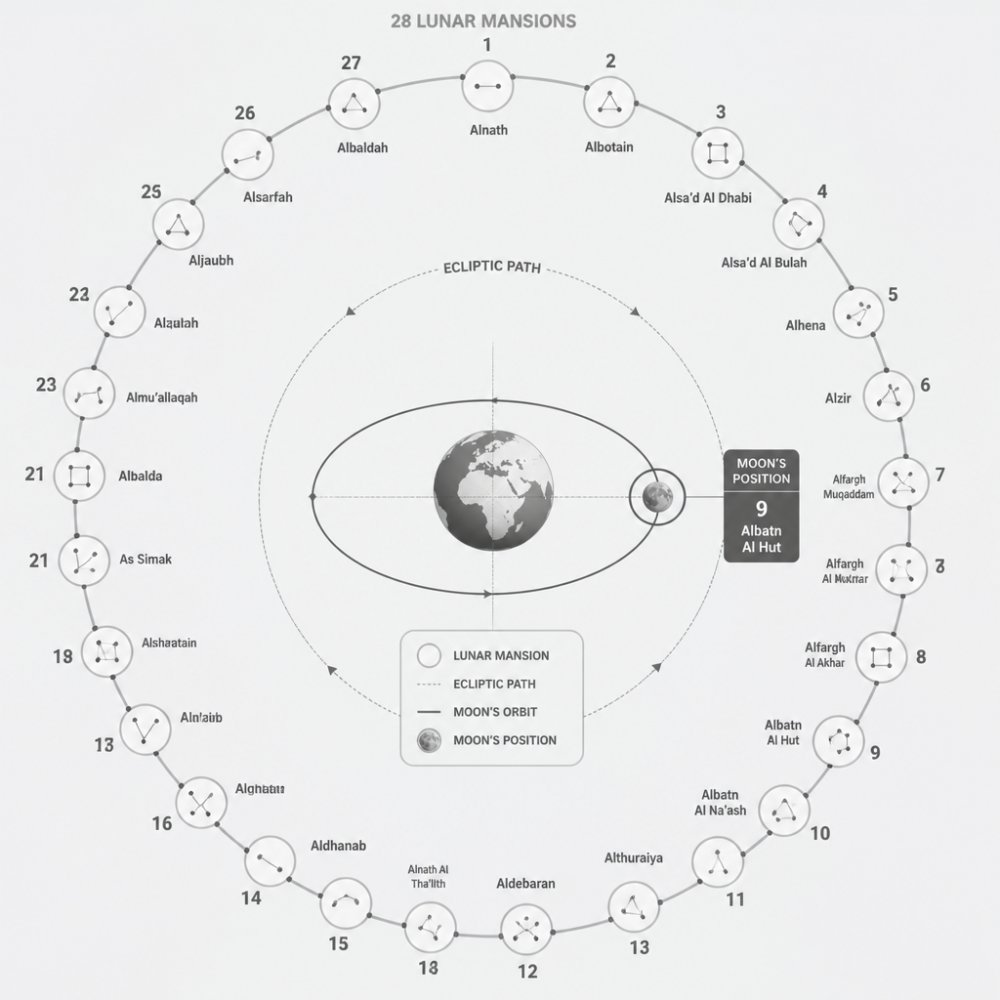
Lunar mansions are divisions of the Moon's monthly path across the sky. Each mansion represents roughly 13 degrees of the ecliptic, the plane along which the Moon orbits Earth. Across one full month, the Moon passes through all 28 mansions in sequence.
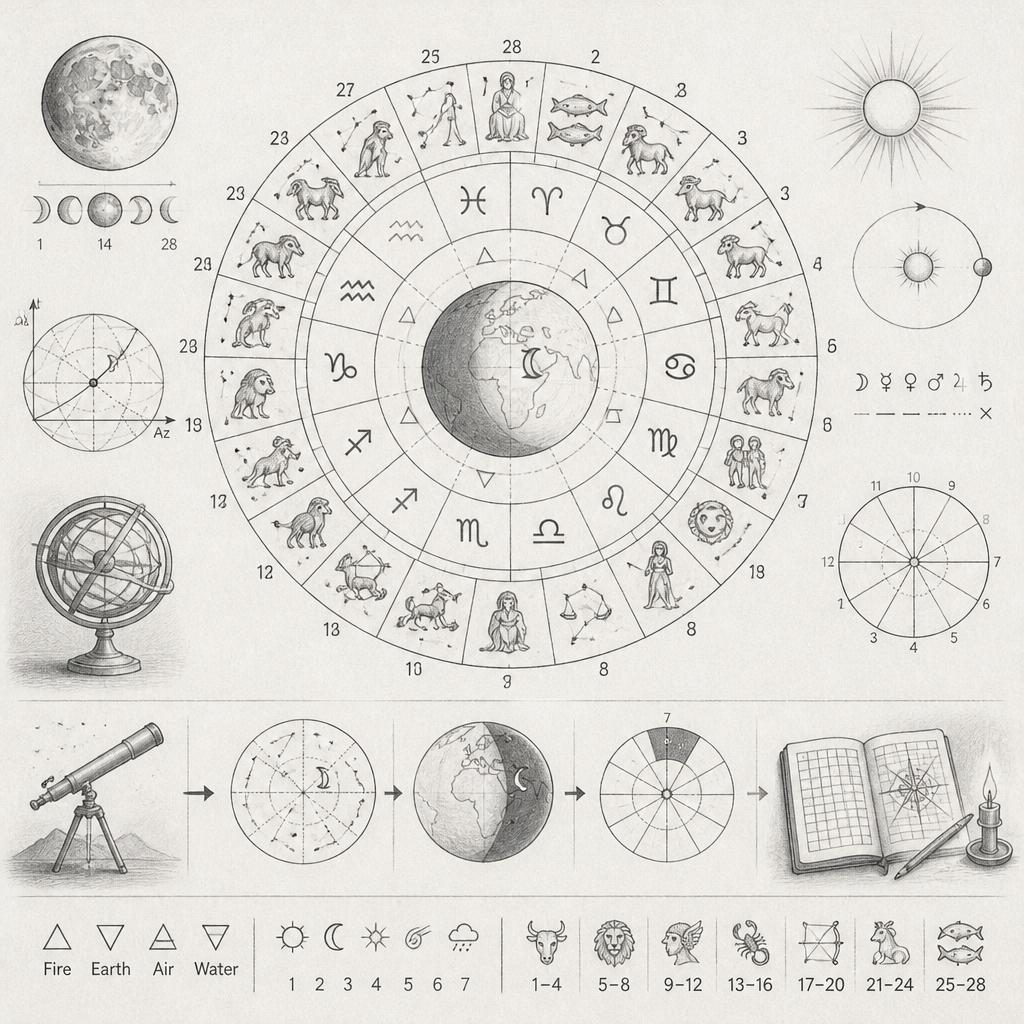
This system comes from medieval Islamic astronomy and classical texts like the Picatrix. Practitioners use mansion meanings to time activities, rituals, and important decisions. The system is separate from the 12-sign zodiac wheel and works on a finer 28-part division of the same ecliptic.
Why Mansion Systems Differ Between Apps
Before you pick an app, know that "lunar mansion" is not one fixed list. Different traditions and different apps divide the ecliptic differently, and those choices change what you see on screen:
- Mansion count. Most systems use 28 mansions.
- Starting point. Systems differ on where mansion one begins, often tied to a specific star or a fixed degree of the ecliptic. Two apps can place the Moon in different mansions on the same date simply because their mansion one starts in a different spot.
- Boundaries. Some systems divide the ecliptic into equal segments; others anchor mansion boundaries to actual stars, which produces unequal spans.
- Names and spellings. The same mansion may appear as Alnath, Al Nath, or An-Nath depending on transliteration. The names used in Moon Mansion Calculator follow the classical Islamic tradition, including Alnath, Albotain, and Aldebaran.
None of these choices is "wrong." They are different conventions. The practical takeaway for a beginner: pick one app, learn its mansion list, and stay consistent. Switching apps mid-practice is the fastest way to confuse yourself, because the same date can legitimately show different mansion numbers across tools.
The 28 Mansions and Their Meanings
Each mansion carries its own character and associations. A beginner learns these meanings gradually by checking the app regularly and noticing patterns.
The artwork paired with each mansion in Moon Mansion Calculator serves a real purpose. Visual associations help beginners remember mansion qualities and internalize the system.
How Lunar Mansions Differ from Moon Phases
Moon phases track the Moon's illumination: new, waxing, full, waning. These phases repeat every 29.5 days and relate to light and shadow.
Lunar mansions track the Moon's position along the ecliptic. They divide the sky into 28 sections. A full mansion cycle also takes roughly one month.
Beginners often confuse these. A simple way to distinguish: phases answer "How bright is the Moon?" Mansions answer "Where exactly is the Moon in its orbit, and what does that location mean?"
Both matter. Many practitioners use both systems together.
How to Find the Moon's Lunar Mansion Today
Finding the Moon's current mansion requires three pieces of information: the Moon's longitude, the date and time, and an accurate calculation method. Most lunar mansion apps handle this automatically, but the quality of that automation varies, and beginners should know what is happening behind the screen.
What a Good Calculation Actually Does
A precise mansion reading depends on several inputs that apps handle differently:
- Ephemeris source. The app needs the Moon's geocentric longitude for the exact moment you check. Some apps use high-precision ephemeris data; others use simplified formulas.
- Time zone and location handling. The Moon crosses a mansion boundary at a specific instant.
- Boundary precision. Near a boundary, a small calculation error flips the result.
- Update frequency. Real-time tools recalculate as the Moon moves.
A common pattern among beginners is trusting the first app they try and then being confused when a second app disagrees. The disagreement is usually a methodology difference, not a bug.
A Beginner's Checklist Before Trusting a Result
Run through these questions when you open any lunar mansion app:
- Does it show the date and time the reading is calculated for, in your local time zone?
- Does it display the Moon's longitude or the mansion boundary time, so you can verify the position?
- Does it tell you which mansion system it uses (28 vs. 27 mansions, equal vs. star-anchored boundaries)?
- Does it update in real time or only once per day?
- Does it work offline for the core calendar, or does it require a connection every time?
Checking Today's Mansion in Moon Mansion Calculator
Moon Mansion Calculator performs its calculations in the browser. No sign-up is required. Enter today's date, and the tool shows:
- Which mansion the Moon occupies
- How many days until the Moon moves to the next mansion
- Moonrise and moonset times
- Moon phase and illumination percentage
This real-time data lets beginners check the mansion whenever they need guidance. The precision matters.
If you check the mansion late in the day and the Moon is close to a boundary, confirm the entry time for the next mansion before planning an activity. A reading that is correct at noon can be outdated by evening. ::: Aligning your daily rituals with these shifting lunar transitions often creates a deeper resonance when paired with thoughtful astrology inspired gifts that honor the celestial cycles.
Using a Lunar Mansion Calculator for Daily Planning
Once beginners understand which mansion the Moon occupies, the next step is applying that knowledge to daily life.
Find Your Natal Moon Mansion →
Start with one activity type. Many lunar mansion apps beginners use to track when they begin creative projects, start conversations, or perform personal rituals. Check the app each morning, note the mansion, and observe whether the timing feels aligned.
Over weeks, patterns emerge. A beginner might notice that projects started during certain mansions progress smoothly, while those started during others face obstacles. This feedback loop builds confidence in the system.
Moon Mansion Calculator provides traditional timing guidance for rituals, journeys, and beginnings. The app shows not just the mansion but also its classical associations, what practitioners have used this mansion for across centuries.
Some beginners use the calculator to plan weekly. Others check daily. The frequency depends on how much lunar alignment matters for the activities in question.
Building Your Lunar Mansion Calendar
A lunar mansion calendar tracks the Moon's position across all 28 mansions over several months. This view shows patterns that daily checking might miss.
Creating a calendar is straightforward:
- Note today's mansion and date
- Calculate when the Moon returns to that mansion (roughly 28 days later)
- Mark major life events against the mansion calendar
- Over time, compare outcomes to mansion timing
Many practitioners use a simple spreadsheet or digital calendar. Others use apps that generate calendars automatically.
Moon Mansion Calculator's Sacred Calendar feature helps with this. The tool can generate electional dates for planned activities.
Beginners benefit from seeing the full month at a glance. A calendar reveals whether important upcoming events align with mansions. This awareness supports better planning.
Getting Started: A Beginner's Workflow
New practitioners often wonder where to begin. A simple three-step workflow removes confusion:
Step 1: Learn the current mansion. Open Moon Mansion Calculator and check today's mansion. Read its description. Notice how the energy feels in your daily life. Repeat this for several days to build familiarity.
Step 2: Plan one activity type. Choose something you do regularly, writing, exercise, conversations, or creative work. Before doing it, check the mansion. Over two weeks, note whether timing affected outcomes.
Step 3: Expand gradually. Once one activity feels aligned, add a second. Keep expanding until lunar mansion awareness becomes part of your natural planning process.
This progression prevents overwhelm.
Moon Mansion Calculator supports this workflow by keeping the interface simple. New users see exactly what they need, the current mansion, its meaning, and basic astronomical data.
Starting with lunar mansion apps opens a practical pathway into classical timing systems. Moon Mansion Calculator provides the core tools beginners need: precise calculations, clear mansion meanings, and beautiful visual references. The platform requires no sign-up and costs nothing, making it an accessible entry point for anyone curious about aligning activities with the Moon's 28-mansion cycle. Explore your natal mansion and track the Moon's current position to begin integrating this ancient system into your daily practice.
Frequently Asked Questions
What is the difference between a lunar mansion app and a regular Moon phase tracker?
Moon phase trackers show whether the Moon is waxing, waning, full, or new. Lunar mansion apps go deeper: they identify which of the 28 specific mansions the Moon occupies at any given moment. Each mansion carries distinct timing guidance for different activities. A lunar mansion app gives you precise electional timing for rituals, journeys, and personal projects based on classical Islamic astronomy, while a phase tracker only tells you the lunar cycle stage.
How accurate are lunar mansion calculations, and what makes them reliable?
Reliable lunar mansion apps use precise astronomical algorithms that calculate the Moon's exact position along the ecliptic longitude. Tools integrate classical sources like the Picatrix, which has been used for centuries for timing guidance. Look for apps that run calculations in the browser using verified astronomical data. Accuracy depends on the underlying algorithm.
Can I use a lunar mansion calculator without studying Islamic astronomy first?
Yes. You do not need to understand the historical or mathematical details to use lunar mansions effectively. Begin by finding your natal mansion (the mansion where the Moon was when you were born), then track when the Moon returns to that mansion each month. Each mansion has traditional meanings and guidance associated with it. A good beginner app explains what each mansion represents and suggests practical activities suited to its energy, so you can plan your day or week without deep technical knowledge.
How would I actually use lunar mansion timing in my daily life?
Start small. If you are planning a new project, journey, or ritual, check which mansion the Moon occupies that day and consult the mansion's traditional associations. You can use a lunar mansion calculator to identify upcoming days aligned with your intention, then schedule accordingly. Over time, tracking the Moon's return to your natal mansion each month gives you a personal rhythm for deeper work and self-reflection tied to your birth chart.