 ultimate-guide
Beginner Guide to Lunar Mansion Rituals
Table of Contents
- What Are the 28 Lunar Mansions?
- Understanding Lunar Mansion Meanings
- How to Find Your Current Lunar Mansion
- Lunar Mansion Ritual Steps for Beginners
- Creating a Lunar Mansion Talisman
- Common Mistakes and Troubleshooting Failed Rituals
- Integrating Lunar Mansion Practice Into Daily Life
- Frequently Asked Questions
Last Updated: September 27, 2026
What Are the 28 Lunar Mansions?
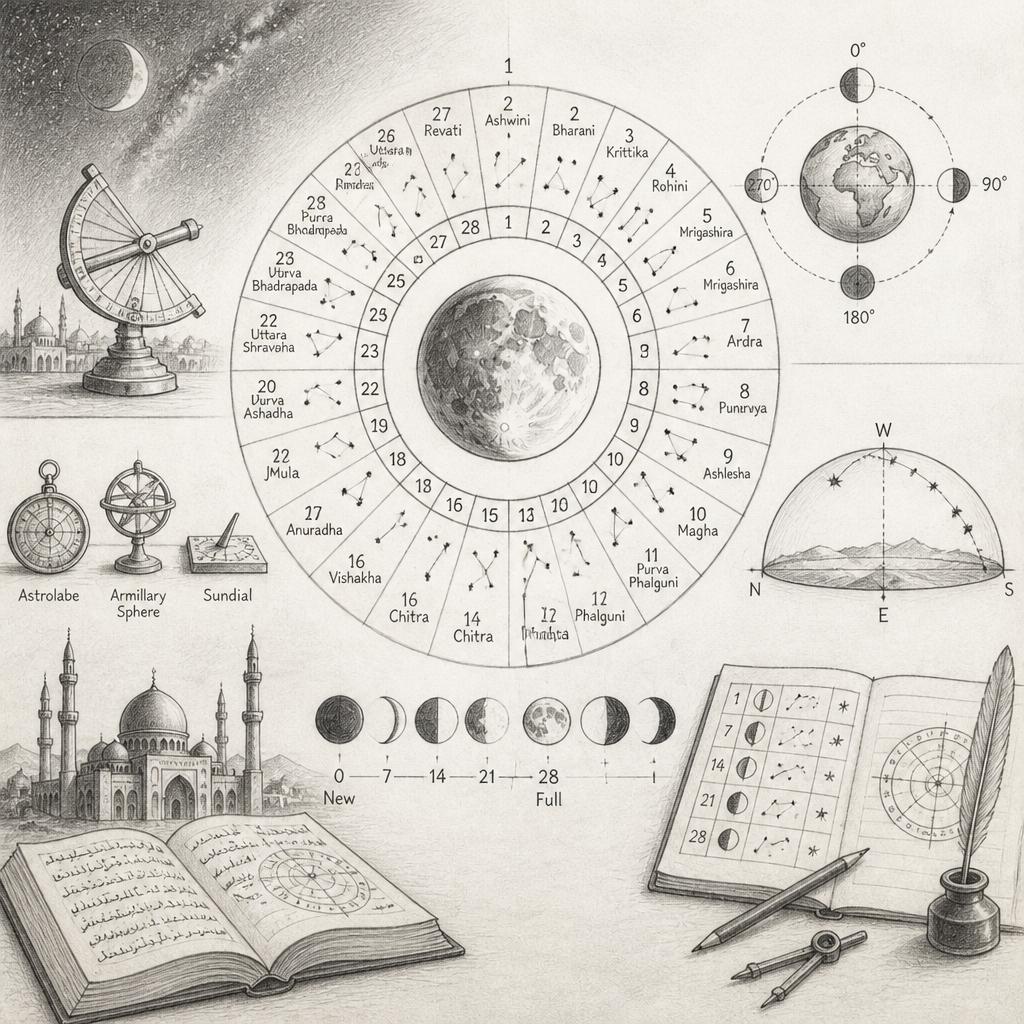
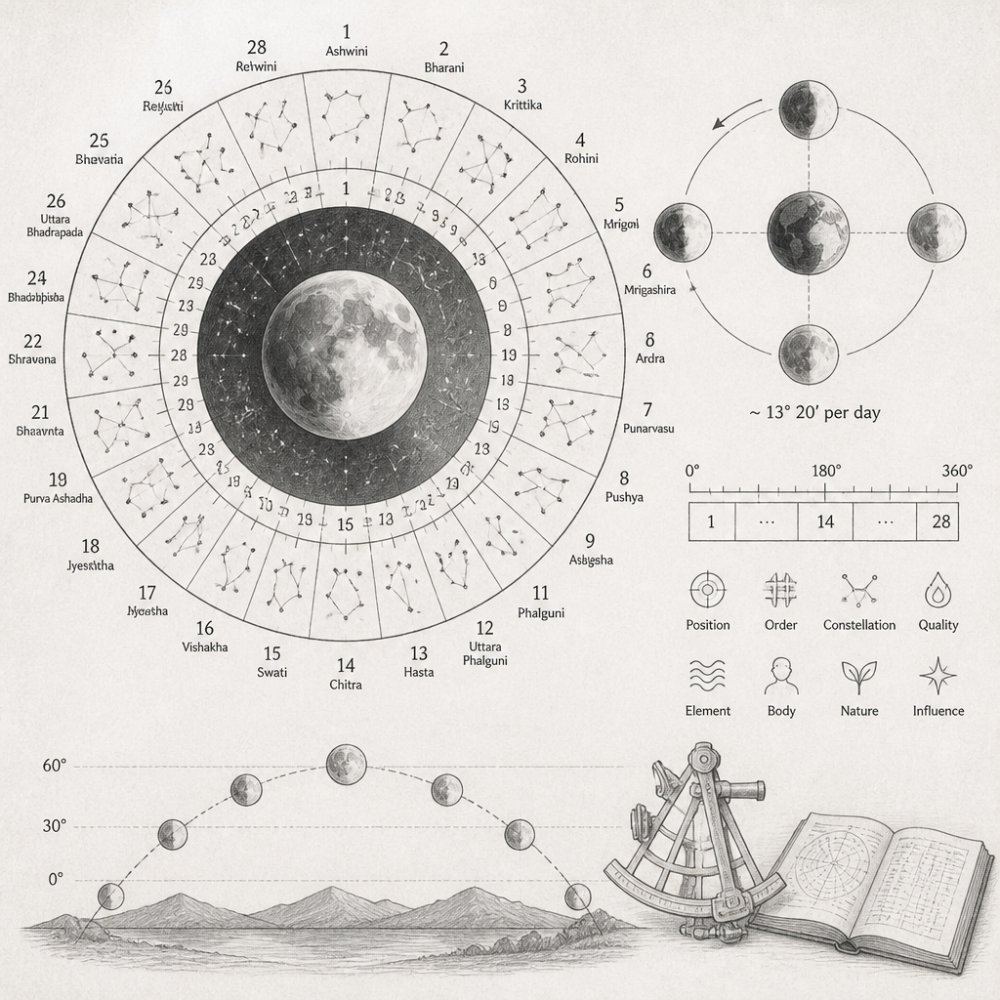
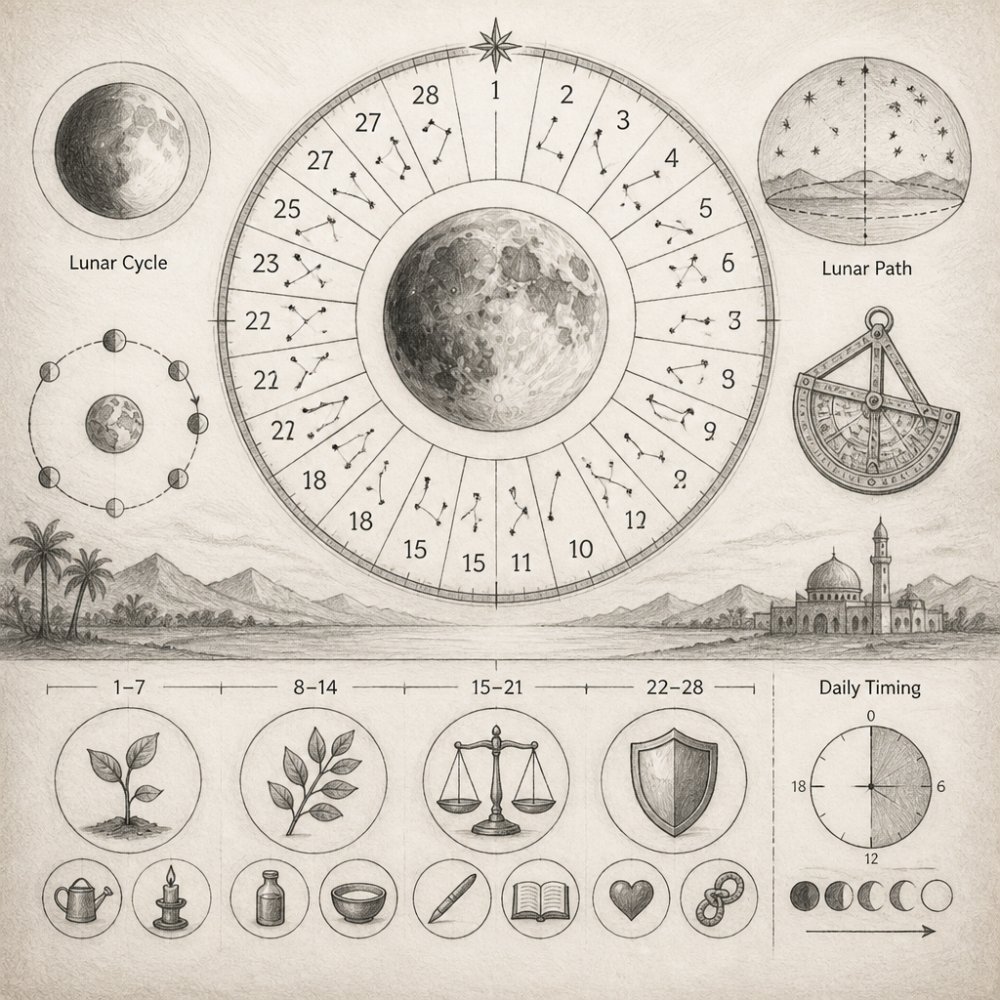
The 28 lunar mansions are a classical system of celestial timing derived from Islamic astronomy that maps the Moon's monthly journey into 28 distinct phases. Each mansion spans approximately 12 degrees and 51 minutes of arc, corresponding to the Moon's average daily movement.
Historical Origins in Islamic Astronomy
The lunar mansions originate in medieval Islamic astronomy, where scholars preserved and expanded upon Hellenistic and Persian astronomical knowledge. Research documenting the historical framework of Lunar Mansion, Solar Palace, and Golden Star systems shows how these celestial mapping tools emerged from rigorous mathematical observation rather than mythological invention.
The Lunar Synodic Cycle and Mansion Movement
The lunar synodic cycle spans approximately 29.53 days, during which the Moon transits through all 28 mansions. The Moon's average motion of 12 degrees, 51 minutes, and 26 seconds per day determines each mansion's timing and forms the mathematical backbone of lunar mansion practice.
Understanding Lunar Mansion Meanings
Each mansion carries specific astrological correspondences that define its energetic quality and practical applications, derived from medieval Islamic astronomy and classical texts. Learning these correspondences is essential for selecting the right mansion for your intended ritual work.
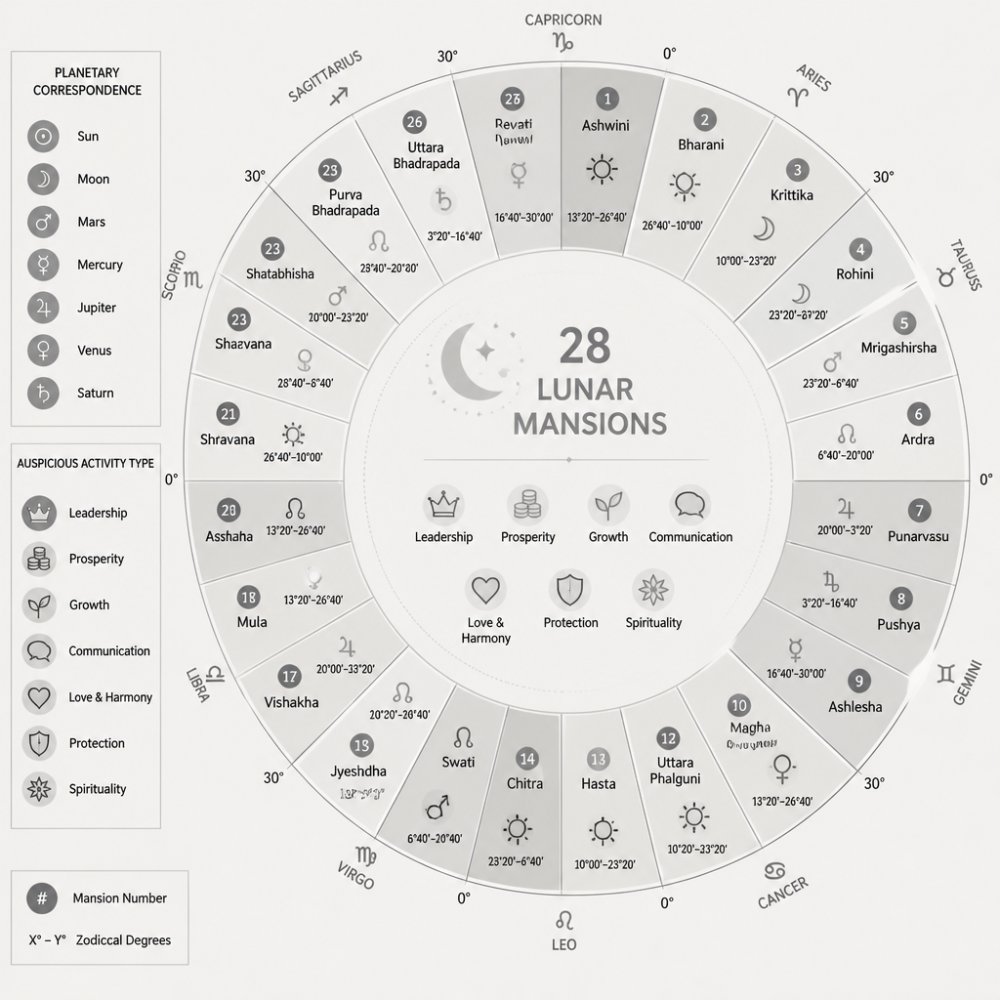
Each Mansion's Astrological Correspondence
Each mansion holds traditional names and meanings. The first mansion supports new beginnings and swift action. The seventh mansion supports travel and communication. The 14th mansion is tied to love and attraction. These correspondences provide the framework for matching your ritual intent to supportive lunar timing.
Auspicious and Inauspicious Activities by Mansion
Certain mansions favor specific types of activity while others work against them. Medieval Astrology Guide documentation on talismanic election and mansion-based timing outlines which mansions support protection work, which favor financial endeavors, and which are best avoided for major commitments. This knowledge allows practitioners to distinguish between optimal timing and periods when effort meets resistance.
How to Find Your Current Lunar Mansion
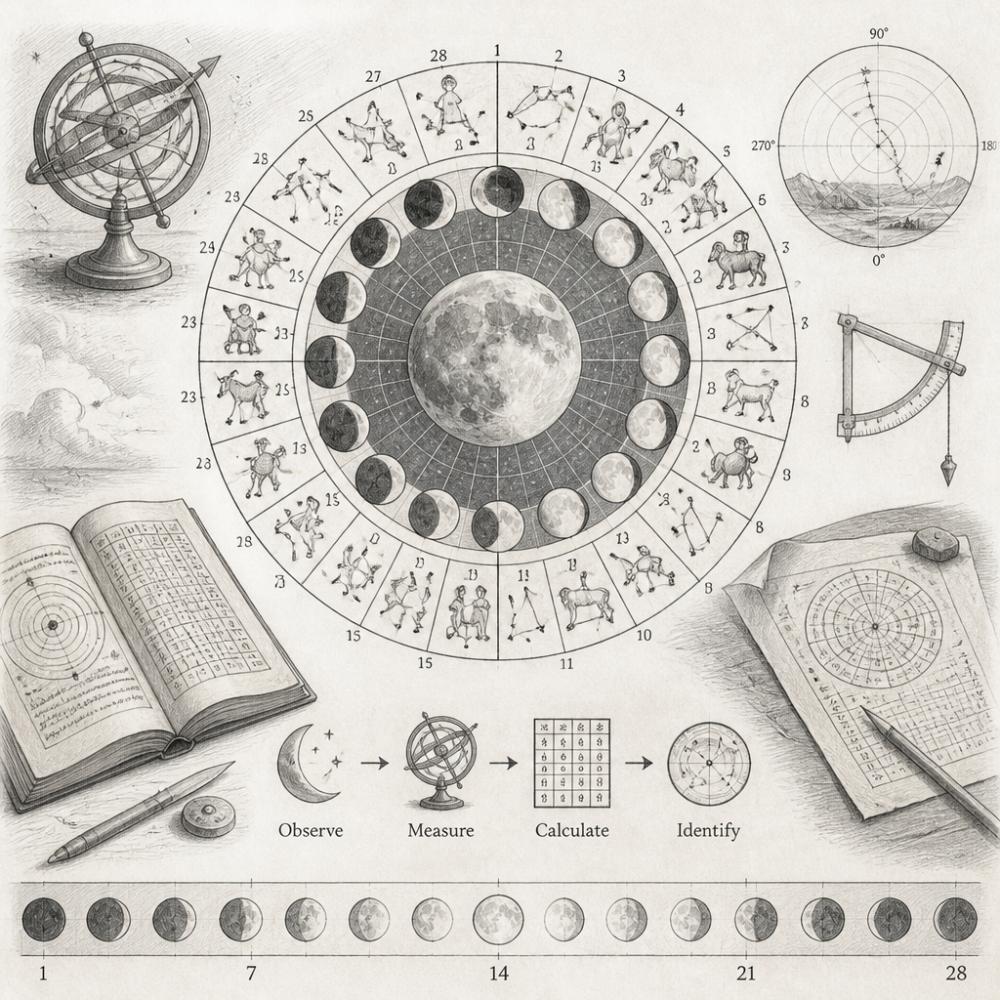
Calculating your current lunar mansion historically required ephemerides and mathematical skill. Today, the Moon Mansion Calculator provides this calculation instantly through a browser-based tool combining precise astronomical algorithms with classical timing guidance.
Using the Moon Mansion Calculator
The Moon Mansion Calculator maps the Moon's current position across the 28 mansions without requiring sign-up. Enter today's date to see which mansion the Moon currently occupies, along with moonrise, moonset, and illumination data. Each mansion pairs with unique generative artwork, making the system visually accessible while maintaining astronomical accuracy.
Lunar Mansion Ritual Steps for Beginners
Performing a lunar mansion ritual involves five core steps that ensure your work aligns with celestial timing and intentional clarity.
Step 1: Identify Your Ritual Intent
Define exactly what your ritual aims to accomplish: protection, initiating a project, emotional work, or creating a talisman. Vague intention produces vague results. Your intent should be specific and clearly connected to a particular outcome.
Step 2: Select the Right Mansion Timing
Consult the lunar mansion meanings to identify which mansion supports your work. Use the Moon Mansion Calculator to determine when the Moon next enters that mansion. Some practitioners work with multiple mansions, performing a protection ritual during a mansion tied to boundaries, then reinforcing it during a mansion associated with strength.
Step 3: Prepare Your Sacred Space
Create a clean, dedicated area for your ritual work, a corner of your home, an altar, or a cleared table. Designate this space as separate from daily activity, a place where ritual work occurs.
Step 4: Gather and Consecrate Your Tools
Lunar mansion rituals typically involve physical tools: candles, incense, images, talismanic materials, or herbs. Worts & Cunning Apothecary documentation on lunar mansion integration and ritual material sourcing provides guidance on ethically sourced materials aligned with specific mansions and planetary correspondences.
Step 5: Perform Your Invocation
An invocation calls upon the energies associated with the mansion, planetary spirit, or fixed star. This may take the form of a spoken prayer, chanted hymn, or silent meditation. Classical sources like the Picatrix include specific invocations, though many practitioners compose their own.
Creating a Lunar Mansion Talisman
A talisman is a physical object inscribed, created, or consecrated during an auspicious mansion to carry that energy into daily life, allowing you to benefit from lunar mansion work long after the mansion has passed.
Selecting a Talismanic Image
A talismanic image is a symbol, sigil, or drawing representing your intention and the mansion's correspondence. Classical sources provide specific images for each mansion, geometric patterns, planetary seals, or symbolic representations. Many practitioners draw their own sigils, combining planetary symbols with personal imagery.
Find Your Natal Moon Mansion →
Timing Your Talisman Creation
Create your talisman while the Moon occupies the mansion corresponding to your intent. Write or draw the image on paper, parchment, cloth, metal, wood, or stone. Consecrate the finished talisman using the invocation method, then carry it, wear it, or place it on your altar.
Common Mistakes and Troubleshooting Failed Rituals
Even experienced practitioners encounter rituals that produce unclear results or fail to manifest expected outcomes. Understanding common pitfalls allows you to diagnose problems and adjust your approach.
Timing Errors and How to Avoid Them
The most frequent error is performing a ritual during the wrong mansion. Always verify the Moon's current position using the Moon Mansion Calculator before beginning work. A ritual performed one day too early or too late may lack the necessary celestial support.
Lack of Meditative Focus and Intention Clarity
Rituals performed while distracted or with fuzzy intention rarely produce results. Successful ritual requires sustained meditative focus, your mind directed entirely toward your intention for the duration of the work.
Skipping Ritual Purification Steps
Skipping cleansing, consecration, or invocation steps typically results in weak outcomes. These steps are the structure that channels celestial energy into material results.
Integrating Lunar Mansion Practice Into Daily Life
Lunar mansion timing is not limited to formal rituals. The system offers practical frameworks for daily planning, personal development, and long-term goal alignment.
Planning Activities Using Astrological Timing
Use the Moon Mansion Calculator to check which mansion the Moon currently occupies before scheduling significant activities. Beginning a job search during a mansion associated with new beginnings can be more aligned than starting during a mansion tied to completion or challenge.
Building a Personal Lunar Shadow Work Practice
Many practitioners integrate lunar mansion cycles into personal development work. Worts & Cunning Apothecary integration of lunar mansion cycles into shadow work and tarot reflection describes a 28-day cycle where practitioners work with one mansion each day, using tarot, journaling, or meditation to explore the mansion's qualities and their personal relationship to that energy.
Frequently Asked Questions
What are the 28 lunar mansions?
The 28 lunar mansions are divisions of the Moon's monthly journey through the zodiac, each spanning approximately 12° 51' and 26" of arc. Derived from medieval Islamic astronomy and classical sources like the Picatrix, each mansion carries specific astrological correspondences, planetary hours, and guidance for auspicious timing. The Moon moves through one mansion roughly every day during its synodic cycle, creating a celestial framework for electional timing and ritual planning.
How do I use the moon mansion calculator to find my natal mansion?
The Moon Mansion Calculator maps the Moon's current position across all 28 mansions using precise astronomical algorithms. Enter your birth date and time to discover your natal mansion, the mansion where the Moon was positioned when you were born. This personal mansion carries lifelong significance and can be tracked throughout your life as the Moon returns to it monthly. The calculator provides moonrise, moonset, phase, and illumination data alongside traditional timing guidance.
What types of activities are best suited for lunar mansion rituals?
Different lunar mansions govern different activities based on their astrological correspondence and planetary influence. Some mansions favor beginnings, journeys, and manifestation work; others support healing, introspection, and completion. Before planning a ritual, identify your intent, whether it's starting a project, deepening relationships, or personal shadow work, then select a mansion with favorable correspondence. The Picatrix and classical sources provide specific guidance on which mansions align with which activities.
Do I need special tools to perform lunar mansion rituals?
Basic ritual practice requires only meditative focus and intention. However, many practitioners enhance their work with planetary incense corresponding to the mansion's ruling planet, a talismanic image or sigil, candles, and a consecrated space. Ethically sourced materials support the spiritual hygiene of your practice. Begin simply with what you have; tools amplify intention rather than create it.
How do lunar mansions differ from other moon cycles?
The lunar synodic cycle (new moon to new moon) spans 29.5 days and tracks moon phases. The 28 lunar mansions divide this same cycle into 28 distinct positions, each with unique astrological meaning and electional timing guidance. While moon phases describe the Moon's illumination relative to the Sun, mansions describe the Moon's zodiacal position and its correspondence to fixed stars, planetary hours, and classical electional astrology principles from the Picatrix.
What should I avoid during lunar mansion rituals?
Avoid performing rituals without first clarifying your ritual intent and selecting an appropriately timed mansion. Do not skip ritual purification or the consecration of your sacred space, these steps establish the spiritual hygiene necessary for effective work. Avoid distractions that break meditative focus; the quality of your attention directly affects the ritual's potency. Additionally, never force a ritual into a poorly aligned mansion timing simply for convenience; astrological timing is central to the practice.
Can I combine lunar mansion rituals with other spiritual practices?
Yes. Many practitioners integrate lunar mansion timing with shadow work journaling and personal development practices. The 28-day lunar mansion cycle aligns naturally with month-long healing or manifestation projects. Some traditions conduct shadow work cycles timed to specific mansions. The key is maintaining clarity about your primary intent and ensuring all practices support rather than dilute your focus.
How accurate are the astronomical calculations in lunar mansion tools?
The Moon Mansion Calculator uses precise astronomical algorithms running entirely in your browser, eliminating reliance on external servers and ensuring consistent accuracy. The calculations are grounded in classical Islamic astronomy and cross-referenced with modern celestial mechanics. You can verify the Moon's position independently using other astronomical sources; the lunar transit data, moonrise/moonset times, and mansion placement should align across reliable tools.